Deprecated: Function WP_Dependencies->add_data() was called with an argument that is deprecated since version 6.9.0! IE conditional comments are ignored by all supported browsers. in /chroot/home/a1e0f025/dab19c68f8.nxcli.io/html/wp-includes/functions.php on line 6131 Deprecated: Function WP_Dependencies->add_data() was called with an argument that is deprecated since version 6.9.0! IE conditional comments are ignored by all supported browsers. in /chroot/home/a1e0f025/dab19c68f8.nxcli.io/html/wp-includes/functions.php on line 6131

To Santa Cruz

Adjusting to life on the Galápagos can be a little difficult at first. Quito is a massive city with tons of things to do and places to see, while within a few days on San Cristóbal you will have seen everything you possibly can within walking distance of Puerto Baquerizo Moreno. To some people this might feel stifling or trapping, but I personally enjoyed the change of pace. Besides, we also had our classes to keep us busy.
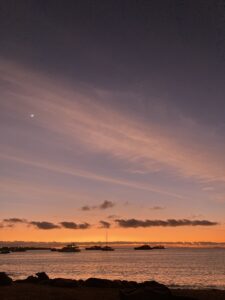
A sunset at Playa Mann on San Cristóbal, Galápagos.
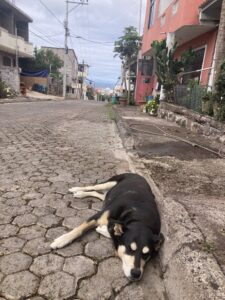
The streets and sunsets of Puerto Baquerizo Moreno, San Cristóbal.

A street in Puerto Baquerizo Moreno, San Cristóbal, Galapagos.

Our first course in the Galápagos was Island Biogeography, focused on the mechanics of island formation and how an island’s location and geography affect the species that move to and evolve on it. The Galápagos, with its extensive list of endemic species (‘endemic’ meaning that it is only found in a single area, in this case the Galápagos), is a prime location for learning these concepts. Our knowledge was also augmented by extensive field studies. Our first major one was a 3-day trip to the nearby island of Santa Cruz.

Santa Cruz is the most populated island on the Galápagos, with 15,000 people, and as such, it is generally considered the ‘main’ island, at least for tourism operations. To get there from San Cristobal, you must take a 2-hour ‘water taxi’; while I personally never have much trouble with boats, the high speed and rough seas were an issue for more seasick-prone people.
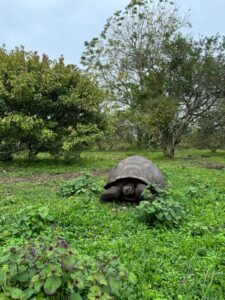
A Galápagos giant tortoise in the El Chato highlands of Santa Cruz, Galápagos.
A Galápagos giant tortoise in the Santa Cruz highlands. This one was probably about 2 and a half feet tall!

Once on Santa Cruz, we spent the first day on the southern half of the island, visiting a tortoise sanctuary and a highland preserve to get a better understanding of the Galápagos’ famous giant tortoises, and how they serve an important role in the Galápagos’ terrestrial ecosystems.

The second day was focused more on the aquatic environment; we traveled to the northern end of the island and spent the day on a boat to North Seymour Island, a small island (less than 1 square mile in size!) just north of Santa Cruz. There, we took a snorkeling trip to see the local marine wildlife and took a small hike on North Seymour to observe the nests of various seabirds like the blue-footed booby and magnificent frigatebird.
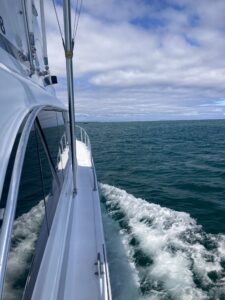
The view off a speedboat in the Pacific Ocean.
Sailing to North Seymour, off the coast of Santa Cruz.

The rest of the second day and the first half of the third day, we essentially had to ourselves to explore Santa Cruz’s main town of Puerto Ayora. It was a significantly larger town than Puerto Baquerizo Moreno, with more shops, restaurants, and hotels, but definitely felt more ‘touristy’ than San Cristóbal did.  However, having spent a couple weeks on San Cristóbal at this point, it was good to get a feel for a different island in the archipelago.  Plus, the tourist aspect gave us a good opportunity to buy souvenirs!

Kai
Final Moments in Galway

Sadly, the time has finally come for me to head back to the U.S. I am so sad to be leaving Galway, my friends, and overall this amazing experience. Once I finish my finals, my family will be joining me here in Ireland for the holidays, and then I will be going back home. 

Throughout these last few weeks here, I have spent my time being so thankful for all of the wonderful memories I have made. I have loved meeting so many new friends, living with strangers who have become some of my favorite people, and exploring Europe. I know that I will be happy to be home and settled back into a routine, but I am going to miss Galway so much. There truly is nothing comparable to the time I have had studying abroad here, and am so grateful I got to do it. 

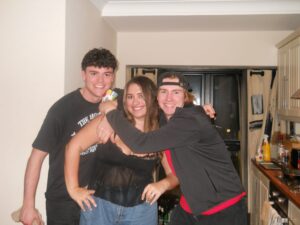
Two boys and a girl standing and smiling
Me and two of my Irish roommates
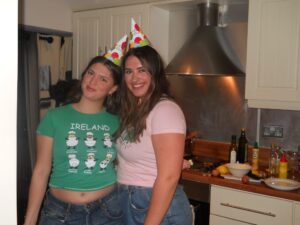
Two girls wearing party hats smiling
My friend Fran from Boston!
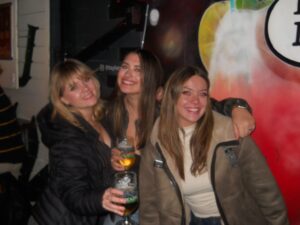
Three girls smiling, holding drinks
Liza and Ciara from Australia

2 weeks later…

Finally, I am back at home in Oregon. Just as predicted, so sad to be done with my study abroad, but still reminiscing on all of the good times. I finished up my finals and said my good byes to all of my new friends. It was so hard to leave all of them, especially those who live all the way across the world. Two of my best friends that I have made are from Australia, and I don’t know when the next time I will see them will be. Even though it might be a while until I see all of my friends again, I know we will keep in touch and keep each other updated about our lives. 

After we finished finals, my family came to Ireland and we explored the country before heading home. We visited King Johns Castle in Limerick, as well as spent Christmas in Killarney. We did the Ring of Kerry, Blarney Castle, visited the Guinness Storehouse in Dublin, and stayed in Northern Ireland. 

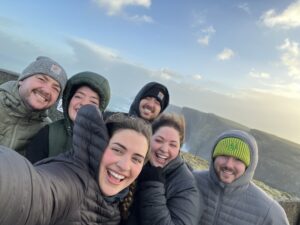
6 people stand in the wind smiling
My family and I at the Cliffs of Moher on an especially windy day
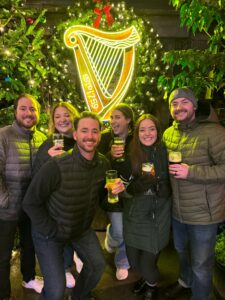
6 people stand in front of a Guinness sign smiling
Me, my sisters and brother in laws!
Two girls smile holding drinks
My sister Lindsay and me.
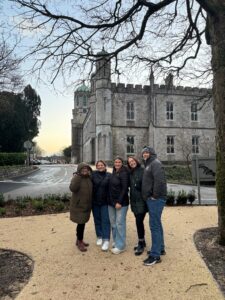
5 people stand in front of an old building
My family and I at the University of Galway
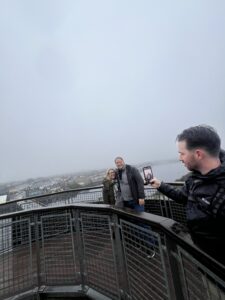
Someone takes a picture of a man taking a picture of a couple
At the top of King John’s Castle


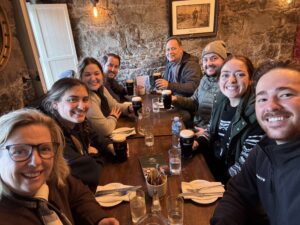
A family sitting at a table at lunch
My family and I on our first day back together
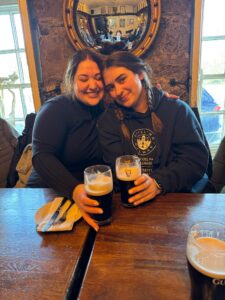
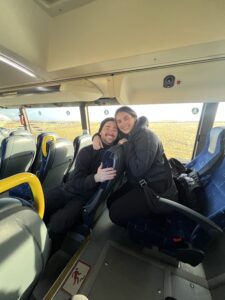
Two people smiling and hugging on a bus
My boyfriend and I on the way home from the Cliffs

And now, I am back home, waiting to start my final semester at Linfield. It’s so bitter sweet to be done with this experience, and I can only be thankful that I had the opportunity to do so. I am thankful for all of the help from IPO, and their constant support and availability. They made me feel safe and supported, even from across the world. If anyone is thinking about doing a study abroad, I highly encourage it. Like I’ve said, it was one of the best experiences of my life, and you won’t regret the memories you will make. 

I hope to visit Ireland again soon, because I will forever be connected to Ireland and Galway. 

Thanks for following along!

Best,
Annie 

Arrival in the Galápagos

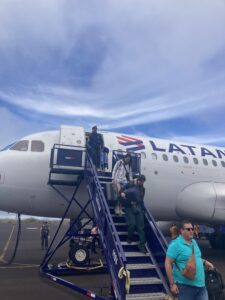
After seven weeks on the Ecuadorian mainland, it was finally time for us to transfer to the Galápagos, where we would spend the remaining ten weeks of the semester. USFQ’s Galápagos campus is located on the island of San Cristóbal, the second most populous island in the archipelago. To get there, we took a flight from Quito direct to San Cristóbal with a short stopover in Guayaquil to pick up some additional passengers.

Disembarking a plane in the Galapagos

Disembarking at San Cristóbal.

My first impressions of the Galápagos, upon arrival, reminded me in some ways of the arid parts of Hawai’i, where I grew up and still live; the mix of low, dry vegetation with rocky shores and sandy beaches was similar to parts of O’ahu in the dry summers. However, there were two major differences that were immediately apparent; first, the lack of mountains and second, the extent of human habitation.

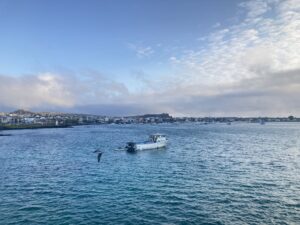
San Cristobal is estimated to have a population of around 7,000 people, the vast majority of whom live in a single town, Puerto Baquerizo Moreno. While that might still sound like a lot of people, consider that McMinnville has a population of around 35,000. So Mac – which most people probably wouldn’t consider to be a very large town – has around five times as many people as the entirety of San Cristóbal!

The harbor at Isla San Cristobal
The bay of Puerto Baquerizo Moreno. Most of the town is visible from here.

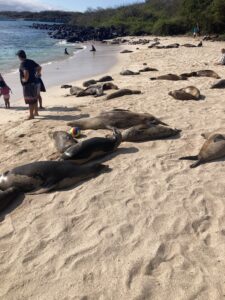
Obviously, though, this is to be expected – after all, the Galápagos is famous not for any big towns and crowds but rather for its wildlife and natural environment. And indeed this was also evident; for instance, we encountered sea lions almost immediately after arriving, laying about on the beaches and even in the streets in parts of town close to the shore. While I’ve seen seals and sea lions in the wild before, the sheer number that were sprawled out on the beach was shocking.

Sea lions sleeping on a beach
Sea lions lounging on the beach at Playa Mann, right next to campus.

The USFQ campus is located on the northern end of town, right in front of Playa Mann, the town’s main beach. Like in Quito, we all lived with local host families; this time, I lived with a family of four. The environment there was really different from my host experience in Quito, but it wasn’t a bad change. While we had the weekend to re-orient to life on the islands, when Monday came around, we went right back to work to take our first Galápagos classes.

Kai
The Ecuadorian Páramo

After our week in the Amazon, our Tropical Ecology course shifted focus from the Amazon rain forest to the mountainous highlands that surrounded Quito. While this cold, grassy environment might not be the first thing you think of when you hear “tropical”, since they are in the tropics regardless, they can still be considered a tropical environment.

The highlands of the northern Andes are known as the páramo, and are classified by low shrubs and grasses, high winds, and fluctuating temperatures, much like many other mountainous environments around the world. Much like with the Amazon, our understanding of this environment was deepened by a long field study, although this one was only three days, quite a bit shorter than the almost week-long Amazon trip.

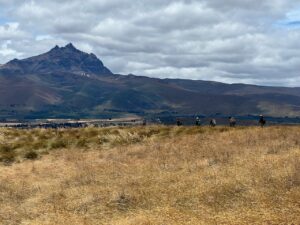
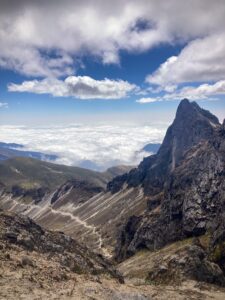
The Ecuadorian highlands, with Rumiñahui in the background.
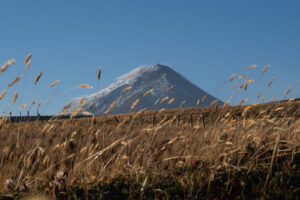
A shot of Cotopaxi in the Ecuadorian highlands.

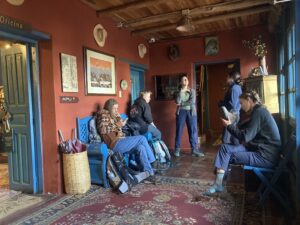
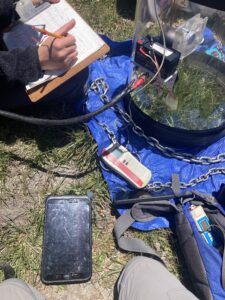
During this trip, we were based out of a mountain lodge on the slopes of Rumiñahui, a small mountain just north of the Cotopaxi volcano, arguably Ecuador’s most famous mountain. It was an older but very cozy place, and stayed nice and warm during the nights, when the temperatures would sometimes drop below freezing due to the altitude, dry climate, and high winds. Our fieldwork on-site consisted of soil sampling and observational work, using soil nutrient and chemical analysis devices to determine the quality and water-carrying capacity of the soil; the soils of the South American páramos also function as massive water reservoirs, meaning that they are extremely important to not only Ecuador’s natural ecosystems but its human residents as well. We also spent a lot of time hiking around the nearby mountains and identifying local plant and animal species so as to better understand these mountain ecosystems.

Our survey group getting ready to conduct fieldwork.
Field survey equipment for soil sampling in action.

Overall, while the páramo trip might not sound quite as exciting as our week in the Amazon, I personally found it to be really interesting and enjoyable, with a lot of time to ourselves to explore this area of the Ecuadorian Andes on our own terms in addition to our class activities. However, our time in the mainland was coming to an end; soon, we would be transferring to the USFQ’s Galápagos campus, where we would be spending the rest of the semester.

While it was a shame to be leaving soon, the prospect of going to the Galápagos – the location this program is focused on, after all – was extremely exciting to all of us.

Kai
Into the Amazon

Our second main course was focused on Tropical Ecology, and our new professor’s approach was a very hands-on.  In his opinion, the best way to study a complex tropical ecosystem like the Ecuadorian Amazon, was to go there ourselves and observe it in-person. So that was exactly what we did – spending five days deep in the Amazon rainforest, miles and miles from any major city. It was so isolated that even reaching our field station took an entire day!

Our journey began at the Quito airport, where we took a 2-hour flight over the eastern cordillera of the Andes to a city known as Coca. From there, we embarked on a small motorboat that took us about 40 kilometers down the Río Napo.  Due to a drought in the area, our captain had to navigate shallow waters that made the journey take an additional two hours. We then disembarked at an oil drilling company’s base camp. Oil drilling is a major subject of debate in the Amazon, as it is a big part of Ecuador’s economy, but is obviously very destructive to the environment.

From the oil company camp, we rode by bus, which took us down an access road for another 50 kilometers and 2 hours (the road was unpaved and very windy) through the jungle.   We then took yet another motorboat which took us the last 50 kilometers down the Río Tiputini to USFQ’s Tiputini Biodiversity Station, 3 hours later. After a full dawn-to-dusk day, we arrived at our destination. There was no road, settlement, or infrastructure for miles.  Coca, the nearest major town, was now over 60 miles away.

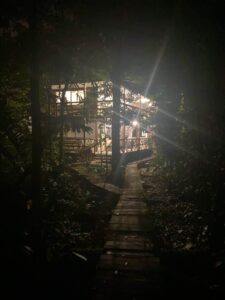
Our field station in the dark of night.
 Our field station at nighttime.
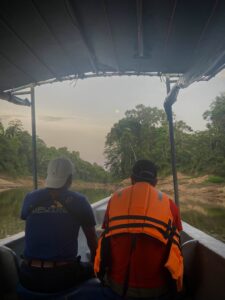
Traveling by boat down the Tiputini River.
Traveling down the Tiputini River by boat.

The next day, we went into the jungle. We spent the first day hiking and simply observing the incredible jungle, to get accustomed to the terrain, climate, and wildlife. As someone who grew up hiking in the jungles of Hawai’i, I thought I knew humidity, but nothing compares to the Amazon. It was so bad that during our downtime, we would turn on the generator and sit in the lab, the only building with A/C, for hours.

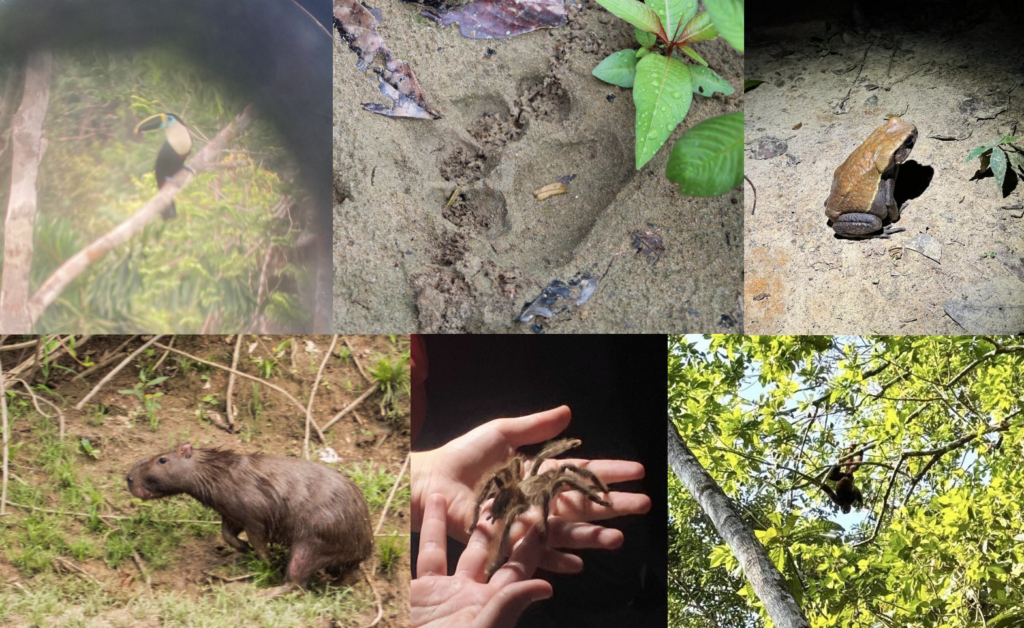
The dense jungle foliage and multitude of dangerous spiders and insects were also a cause for concern, making hikes generally a strenuous experience. However, it was well worth it in the sheer variety of wildlife we saw – from tropical birds like macaws and the hoatzin to simians like the squirrel monkey and golden-mantled tamarin to aquatic mammals like the capybara and giant river otter. We even found prints from a jaguar, but never saw the animal itself. And, of course, there were countless insects from giant centipedes to the infamous bullet ant.

A collage of many animals in the Amazon.

A small (blurry) collage, moving clockwise: a white-throated toucan, jaguar print, giant toad, capybara, tarantula, and howler monkey.

Our later days were focused on interactions between indigenous peoples living in the Amazon and the “outside world”. Many of the Amazonian tribes have only recently been connected to the industrial world (two tribes even remain uncontacted), which has led to many negative interactions with Ecuadorians. These range from personal disputes between tribespeople and outsider hunters and fishermen to manipulative contracts and agreements made by oil companies to allow drilling on tribal territory, with little given in return. To further augment our understanding of the local peoples in the area, we visited a nearby indigenous village that had been connected by a road about 10 years prior.

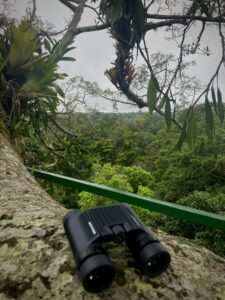
The view of the foliage-covered hillside from a treetop in the Amazon.
The view from a treetop in the Amazon.
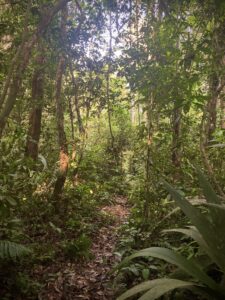
A trail in the Amazon covered by lots of trees and plants.
A trail in the Amazon.

At the end of our stay, we had a lot of time to reflect on our experience during the long journey back home. While we were only in the Amazon for about five or six days, it was genuinely a life changing experience that will stick with all of us for a long time.

Kai
Quito Surroundings

In the second week of our GIS class, Geographic Information Systems and Science, we had our first field study!  As someone who picked out my Environmental Studies degree because of my positive experiences with conducting field work, I was looking forward to getting out there and getting our hands dirty.

This first trip was to the Mindo cloud forest, a highland jungle area northwest of Quito. Because of the difficult mountain terrain around Quito, we had to take a roundabout way to the north to reach Mindo, but once we arrived we were blown away. Compared to Quito’s dry arid grasslands, the jungles of Mindo were a completely different world. We spent three days there in total, staying in the Bellavista Lodge, which was a super nice place with a really cool room layout where you used a central ladder to access the different floors with each floor being its own “room”.

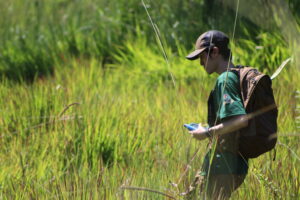
We spent most of the time hiking and logging points on GPS units to upload and work with later on, but we also had plenty of time to explore the area on our own time.

A photo of me walking through a field, holding a GPS unit.
Myself,  conducting some field work.
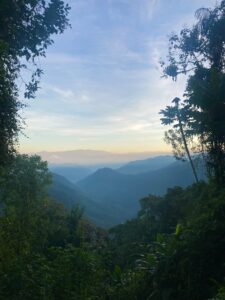
The view of a sunrise coming over the Mindo valley.
The morning sunrise in Mindo.

One of the biggest things about Mindo was its great diversity of wildlife, so we kept our eyes peeled for various jungle animals and we were not disappointed. We spotted several mammals, including a couple tayras – omnivorous animals related to weasels and wolverines – and a kinkajou, which is a tree-climbing animal that kind of looks like a lemur at first glance but is actually closer related to raccoons.

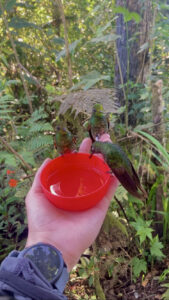
The most common and diverse animals we saw, however, were easily the birds. There were a wide array of tropical birds including toucans, trogons, and lots of hummingbirds. The hummingbirds, especially, were so unafraid of humans that if you held a cup of sugar water, they would just land on your hand to drink it!

Hummingbirds drinking from a cup in my hand.
Some hummingbirds on my hand in Mindo.

Some hummingbirds on my hand in Mindo.

My friends and I also would make our own trips to the surrounding areas outside of class. We took advantage of one three-day weekend to go down south and visit Baños, a famous tourist town located in a low river valley that led into the Amazon jungle.  As a result, like Mindo, it was a much more tropical environment than Quito’s highlands and had a variety of things for visitors to see and do.

One of the biggest surprises to us was how inexpensive everything was – while we had expected a big touristy destination like Baños to be expensive, it was actually very affordable – our lodging, for example, was a hostel that cost less than $10 per night which was surprising, considering how nice the premises were.

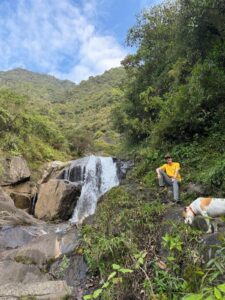
Me sitting by a waterfall in the mountains with a dog.
Hiking in Baños

Overall, the start of this second month in Ecuador was filled with a lot of travel and adventure in a welcome change of scenery from the mountainous dry terrain of Quito. However, the real adventure is yet to come – the next course, focused on tropical ecology, will feature a week-long trip to the heart of the Amazon Rainforest.

Kai
Amsterdam and Family Visit

The last two weeks here were full of preparing for finals, traveling, and seeing family! My aunt, uncle, and grandparents came to visit for the weekend and it was so nice to see family, and show them around Galway!

We spent a day at the Cliffs of Moher, as well as a couple of days in town, walking around the Christmas markets. 

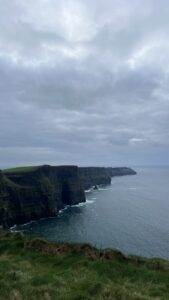
Large cliffs over the ocean
The Cliff of Moher

Seeing them made me both excited to go home and see the rest of my family, but also so sad to leave! I only have about three weeks left until I head home, so I am making the most of these last few weeks.

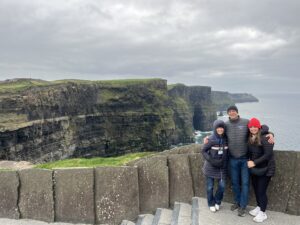
Three people standing and smiling in front of the Cliffs of Moher
My family and I, in front of the Cliffs of Moher

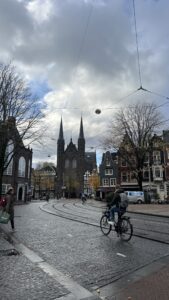
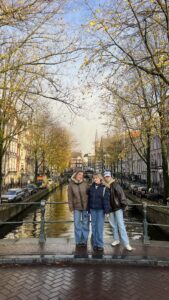
After my family visited,  three of my friends and I took our last group trip, going to Amsterdam! We spent our time there walking the canals, and even took a boat tour of the canals one day. We also watched the new Gladiator 2 movie, visited museums, and my favorite part – ice skating! 

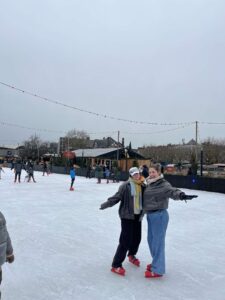
Two girls posing for a photo on an ice rink
Ice skating!
A biker biking in front of a cathedral in Amsterdam.
Amsterdam
Three girls posing in front of a canal in Amsterdam.
A canal in Amsterdam

I loved Amsterdam and being able to see another country, while we had the ability to travel so easily here in Ireland. 

We have finals coming up soon, and after that, the rest of my family will be joining to visit Ireland before we head home! I can’t believe my time has almost come to an end, but I will make the most of the last couple of weeks! 

Annie

Thanksgiving in Ireland

Happy Thanksgiving! 

This past week was Thanksgiving, and I wasn’t sure how that would look here in Ireland! 

One of my American friends and I got together and thought it would be fun to cook Thanksgiving dinner for everyone.

We have made a bunch of friends from outside the U.S., and mainly Ireland, so we hosted a Thanksgiving for them!

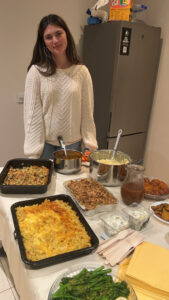
A girl is standing in front of a table full of food
My friend who cooked with me.
Thanksgiving stuffing
The stuffing I made.
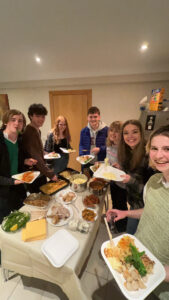
Group of people gathered around a table with food.
My friends before eating!

We couldn’t find turkey, so we cooked chicken instead.  But other than that, we had all of the traditional Thanksgiving dishes. We made mashed potatoes, gravy, green bean casserole, stuffing (I made it from scratch for the first time!), and a lot more! It was so fun to be able to cook for our friends and show them how we would celebrate Thanksgiving back home!

After we ate, we had dessert and played lots of games!

Such a fun Thanksgiving in Ireland! 

Annie 

Life in Quito

After one week of Spanish classes, the “true” classes for our program in Ecuador began. While the Spanish classes had taken place the week before the official start of the semester, when we showed up to campus the next week it was completely packed! As someone in the ecology and evolution track, my first class was focused on Geographical Information Systems (GIS), a computer program that allows one to display and analyze data on maps for data visualization. It’s not an easy program to learn, but thankfully I had actually taken a GIS course at Linfield about 2 years prior so I was already familiar with the basics.

However, there’s more to a study abroad program than just going to class, and our group (there were 22 of us in total, across both my track and the other track, which was focused on marine ecology) made sure to make the most of our time in Quito outside of class and over the weekends.

One of the first highlights of the trip for me was a climb up Rucu Pichincha, a 4,700-meter (15,400-foot) peak located immediately west of Quito. We accessed the trailhead by a cable car and proceeded to hike towards the peak. Fifteen thousand feet of elevation is no joke.  Even though the trail itself was never particularly steep, the thin air wore us out quickly and 5 of the 8 people in our group ended up turning around before the peak. But the three of us who did make it up to the top were treated to a great view of not only Quito but also the mountains on the other side of Rucu Pichincha.

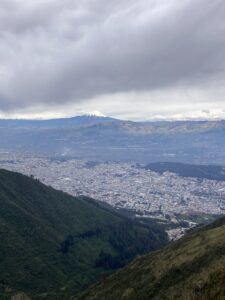
A view of the city of Quito from halfway up Rucu Pichincha. The Cotopaxi volcano is visible in the background.

A view of the mountains west of Rucu Pichincha from the summit. Sharp dramatic mountains rise up out of the valleys covered in clouds below.

The view of Quito from partway up the trail with Cotopaxi in the background (left), and the view to the west from near the summit of Rucu Pichincha, at about 15,000 feet.

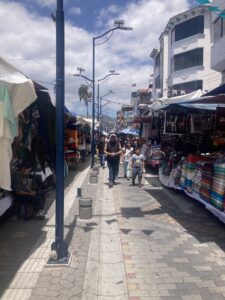
We also traveled a short distance to visit the town of Otavalo, located about 2 hours or so north of Quito. A vibrant center of the traditional lands of the indigenous Otavalo Kichwa people, Otavalo is famed for its Saturday market.  On busy days, the market can spread across a third of the city and is claimed to be the largest artisan market in South America. It certainly felt like it, as the stalls seemed to stretch on forever, no matter where you went.  People were selling various goods ranging from basic souvenirs to handicraft jewelry and clothing, to expensive artisan sculptures and art pieces. You’d be hard-pressed to not find anything you were looking for there.

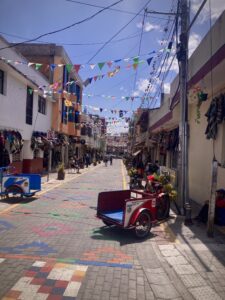
A small street in the town of Otavalo. The street is paved with colored bricks and many flags hang across the street from the rooftops above.A street in the town of Otavalo in the main square. The path is crowded and lined with many market stalls.

The streets of Otavalo during the Saturday market, around the outskirts of the stalls (left) and in the central square (right).

Overall, I feel I am beginning to settle well into Ecuadorian life. The food is excellent, the people are nothing but kind and friendly, transport is cheap and easy to find, and the university is a vibrant campus with lots of student life. What more could you possibly ask for?

Kai

Getting Ready to go to Spain

Hi, I’m Sofia and I will be studying abroad in Spain this coming spring. I am very excited and a little anxious to go. My mom majored in Spanish and studied abroad in Spain when she was in college, so she has sparked my love for the language and drive to go to Spain this spring.

A little bit about me: I love the beach, playing soccer, surfing, listening to music, going on adventures, and drinking coffee. I can’t wait to go and I am excited to blog all of my experiences!

-Sofia

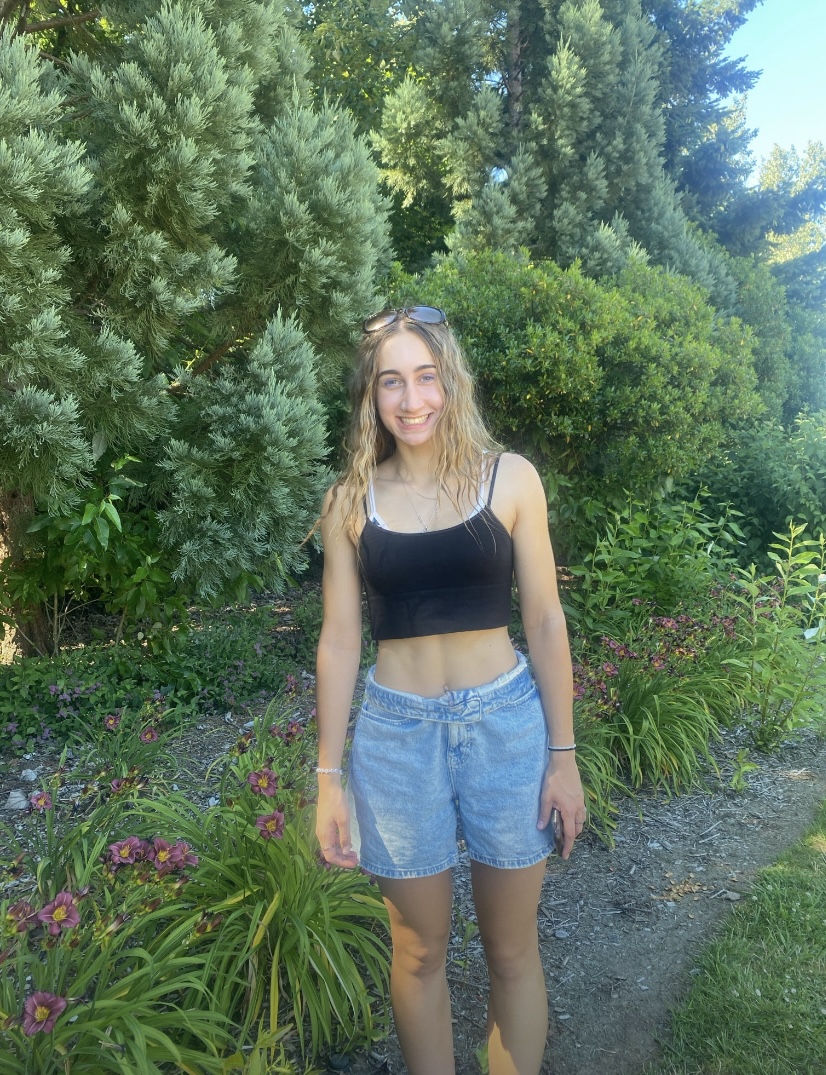
This is a photo of me from this past summer standing outside in front of some trees and flowers at a park called Foothills in Lake Oswego, Oregon
Me at Foothills Park this past summer