This post was written by sophomore Kate Stamper, who is majoring in Wine Studies and minoring in Studio Art
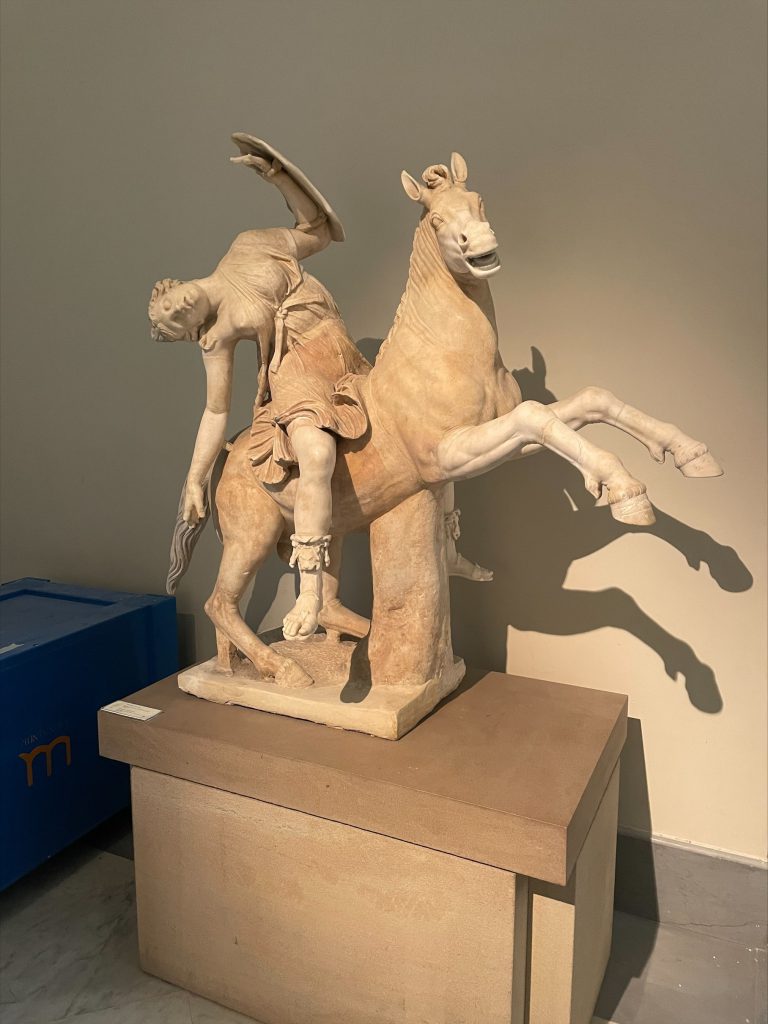
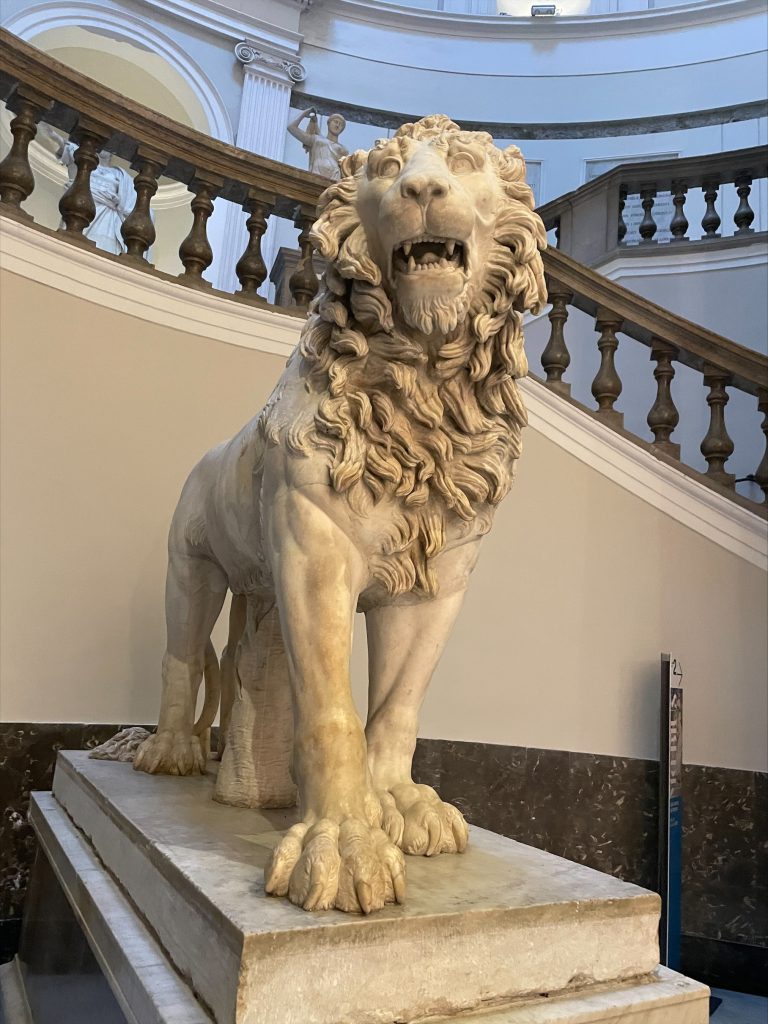
Today was a gorgeous day in Ercolano. For me, the day started with a delicious Italian cappuccino and cornetti pastries. Our first stop: The Archeological Museum of Italy in Naples.The entrance was a gorgeous ornate wooden door, followed by rows upon rows of ancient Greekand Roman sculptures. Every room had anoverwhelming amount of works, eachsculpture more life-like than the next. The ethereal beauty started to fade after a couplerooms and the sculptures actually started tocreep me out a bit.
A nice break from the sculptures was a modern art exhibit comparing ancient roman children’s toys to Barbies and Disney characters throughout the past couple decades. I spent a solid half hour in that room because of an interactive art piece that used pegs to create a pointillism style art piece.
Many of the sculptures and artifacts depicted vessels like amphorae which were used to store wine. It was interesting to see them outside of a textbook and see the pottery up close and in person. Many of our winemaking techniques and technologies have evolved from Greek and Roman winemaking. The process is largely the same, but the materials we use are a bit more refined now.
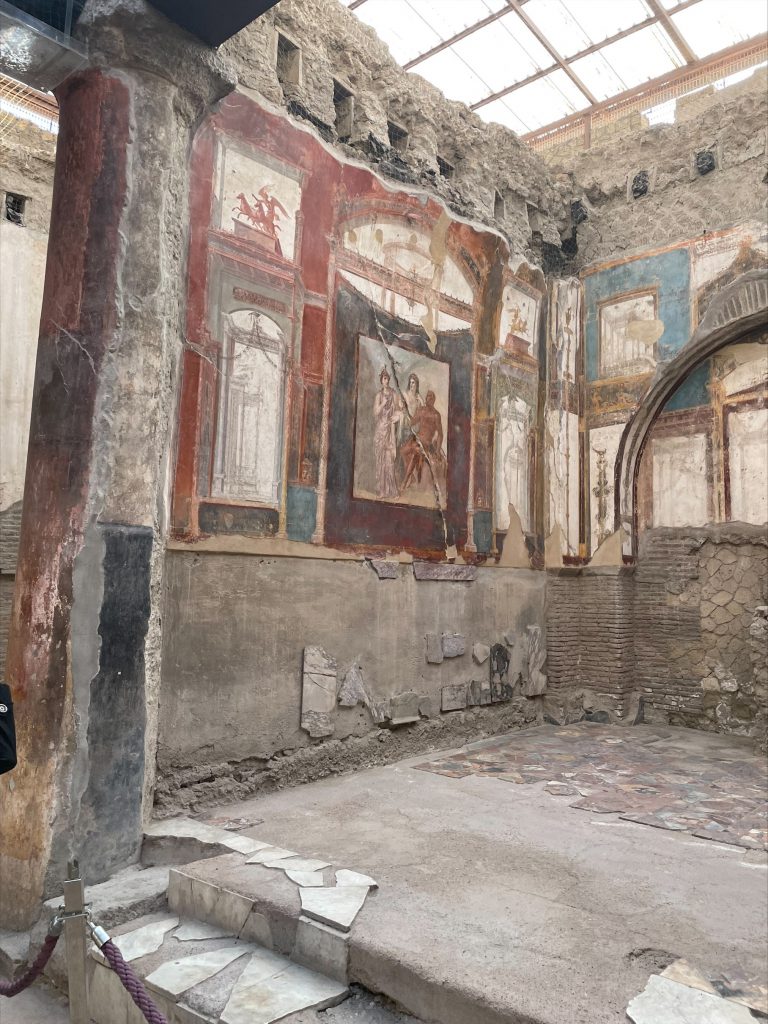
After the museum, we stopped for lunch at a pizzeria with a stunning view of the sea in Ercolano. This was only a short walk from our next destination: Herculaneum. This ancient city was preserved by the same eruption which coated Pompeii in pyroclastic material. The key difference between the sites is the nature of the materials which coated each city. Herculaneum contains many wooden objects like doors and furniture, which did not survive in Pompeii. The structure of the city is very different as well. Herculaneum used a brick-laying method involving diamond-shaped stones which were much sturdier and more earthquake-resistant than the architecture in Pompeii.
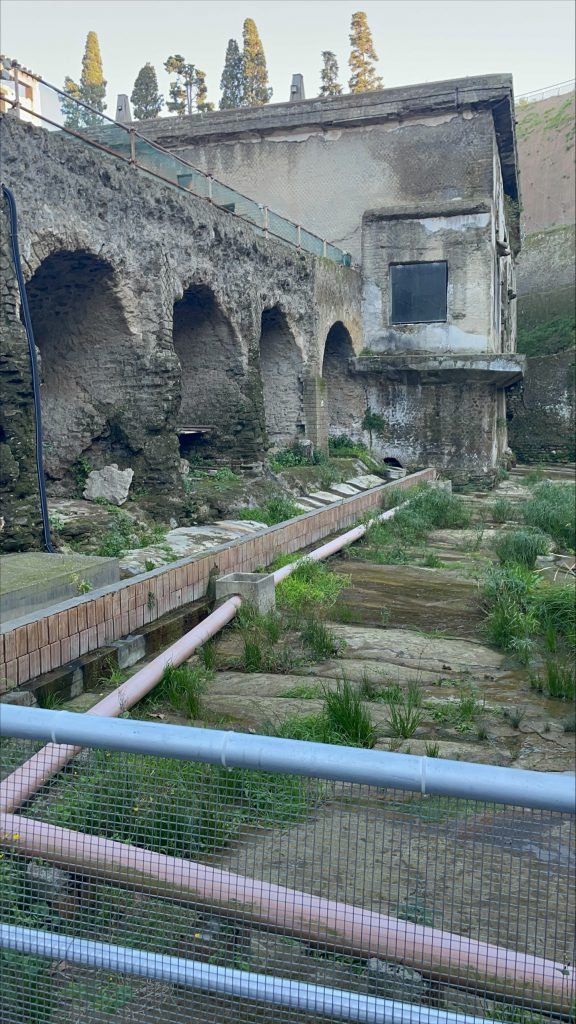
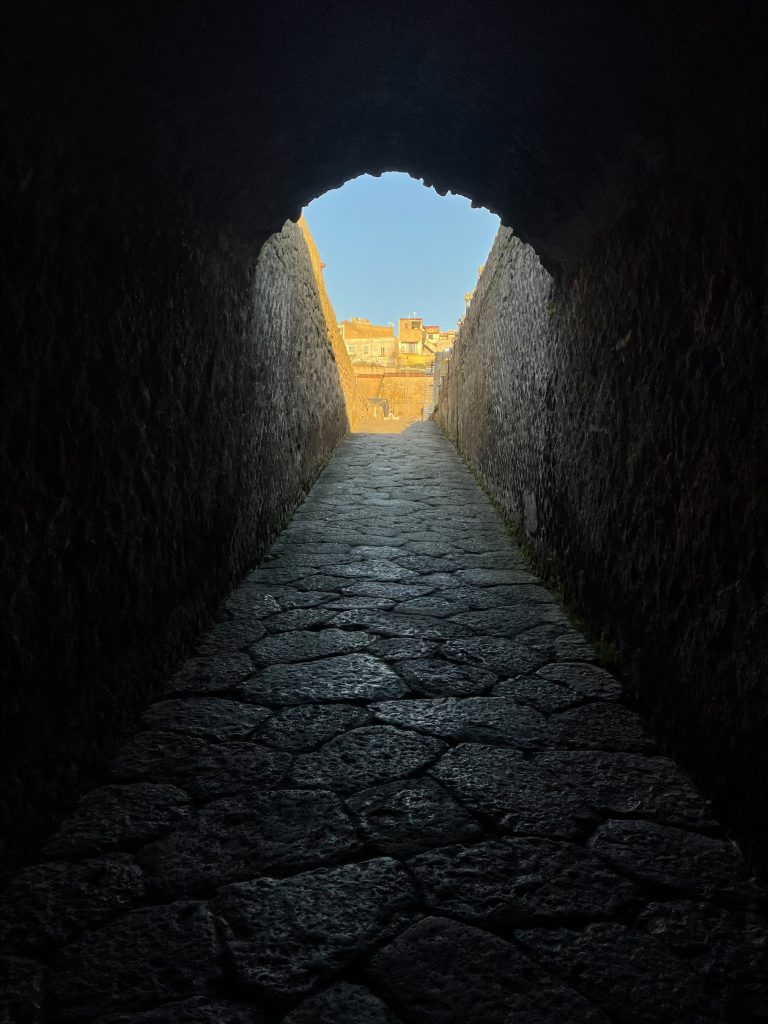
Walking through Herculaneum felt like taking a walk through the past. The grooves in the roads from ancient chariots are still visible in the cobblestone streets. Ancient paintings and mosaics help mark important buildings and give hints about their purposes. It was fun to imagine the streets bustling with life thousands of years ago.
Between the sculptures at the museum and the ruins at Herculaneum, I was able to understand the purpose and role wine played in Roman life. Wine was important, and it was consumed by everyone in Roman society. In American society less than half of us drink wine, but that isn’t truein many European countries. Wine is much more than a beverage, it is a product of culture and holds an incredible amount of traditions in cultures across Italy and the world. Wine is a way of life for many Italians today, just as it was for many Romans and Greeks.