Deprecated: Function WP_Dependencies->add_data() was called with an argument that is deprecated since version 6.9.0! IE conditional comments are ignored by all supported browsers. in /chroot/home/a1e0f025/dab19c68f8.nxcli.io/html/wp-includes/functions.php on line 6131 Deprecated: Function WP_Dependencies->add_data() was called with an argument that is deprecated since version 6.9.0! IE conditional comments are ignored by all supported browsers. in /chroot/home/a1e0f025/dab19c68f8.nxcli.io/html/wp-includes/functions.php on line 6131

To Santa Cruz

Adjusting to life on the Galápagos can be a little difficult at first. Quito is a massive city with tons of things to do and places to see, while within a few days on San Cristóbal you will have seen everything you possibly can within walking distance of Puerto Baquerizo Moreno. To some people this might feel stifling or trapping, but I personally enjoyed the change of pace. Besides, we also had our classes to keep us busy.
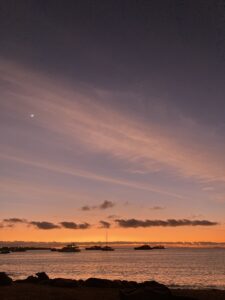
A sunset at Playa Mann on San Cristóbal, Galápagos.
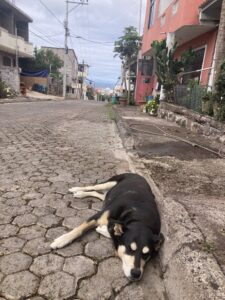
The streets and sunsets of Puerto Baquerizo Moreno, San Cristóbal.

A street in Puerto Baquerizo Moreno, San Cristóbal, Galapagos.

Our first course in the Galápagos was Island Biogeography, focused on the mechanics of island formation and how an island’s location and geography affect the species that move to and evolve on it. The Galápagos, with its extensive list of endemic species (‘endemic’ meaning that it is only found in a single area, in this case the Galápagos), is a prime location for learning these concepts. Our knowledge was also augmented by extensive field studies. Our first major one was a 3-day trip to the nearby island of Santa Cruz.

Santa Cruz is the most populated island on the Galápagos, with 15,000 people, and as such, it is generally considered the ‘main’ island, at least for tourism operations. To get there from San Cristobal, you must take a 2-hour ‘water taxi’; while I personally never have much trouble with boats, the high speed and rough seas were an issue for more seasick-prone people.
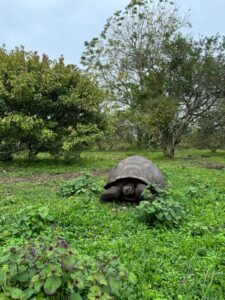
A Galápagos giant tortoise in the El Chato highlands of Santa Cruz, Galápagos.
A Galápagos giant tortoise in the Santa Cruz highlands. This one was probably about 2 and a half feet tall!

Once on Santa Cruz, we spent the first day on the southern half of the island, visiting a tortoise sanctuary and a highland preserve to get a better understanding of the Galápagos’ famous giant tortoises, and how they serve an important role in the Galápagos’ terrestrial ecosystems.

The second day was focused more on the aquatic environment; we traveled to the northern end of the island and spent the day on a boat to North Seymour Island, a small island (less than 1 square mile in size!) just north of Santa Cruz. There, we took a snorkeling trip to see the local marine wildlife and took a small hike on North Seymour to observe the nests of various seabirds like the blue-footed booby and magnificent frigatebird.
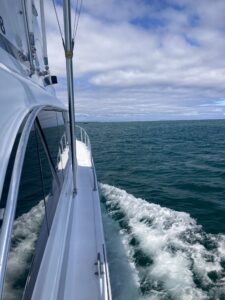
The view off a speedboat in the Pacific Ocean.
Sailing to North Seymour, off the coast of Santa Cruz.

The rest of the second day and the first half of the third day, we essentially had to ourselves to explore Santa Cruz’s main town of Puerto Ayora. It was a significantly larger town than Puerto Baquerizo Moreno, with more shops, restaurants, and hotels, but definitely felt more ‘touristy’ than San Cristóbal did.  However, having spent a couple weeks on San Cristóbal at this point, it was good to get a feel for a different island in the archipelago.  Plus, the tourist aspect gave us a good opportunity to buy souvenirs!

Kai

Final Moments in Galway

Sadly, the time has finally come for me to head back to the U.S. I am so sad to be leaving Galway, my friends, and overall this amazing experience. Once I finish my finals, my family will be joining me here in Ireland for the holidays, and then I will be going back home. 

Throughout these last few weeks here, I have spent my time being so thankful for all of the wonderful memories I have made. I have loved meeting so many new friends, living with strangers who have become some of my favorite people, and exploring Europe. I know that I will be happy to be home and settled back into a routine, but I am going to miss Galway so much. There truly is nothing comparable to the time I have had studying abroad here, and am so grateful I got to do it. 

Two boys and a girl standing and smiling
Me and two of my Irish roommates
Two girls wearing party hats smiling
My friend Fran from Boston!
Three girls smiling, holding drinks
Liza and Ciara from Australia

2 weeks later…

Finally, I am back at home in Oregon. Just as predicted, so sad to be done with my study abroad, but still reminiscing on all of the good times. I finished up my finals and said my good byes to all of my new friends. It was so hard to leave all of them, especially those who live all the way across the world. Two of my best friends that I have made are from Australia, and I don’t know when the next time I will see them will be. Even though it might be a while until I see all of my friends again, I know we will keep in touch and keep each other updated about our lives. 

After we finished finals, my family came to Ireland and we explored the country before heading home. We visited King Johns Castle in Limerick, as well as spent Christmas in Killarney. We did the Ring of Kerry, Blarney Castle, visited the Guinness Storehouse in Dublin, and stayed in Northern Ireland. 

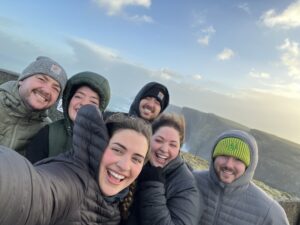
6 people stand in the wind smiling
My family and I at the Cliffs of Moher on an especially windy day
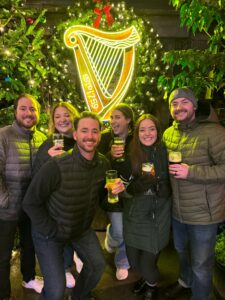
6 people stand in front of a Guinness sign smiling
Me, my sisters and brother in laws!
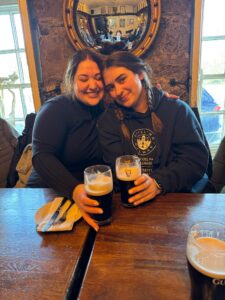
Two girls smile holding drinks
My sister Lindsay and me.
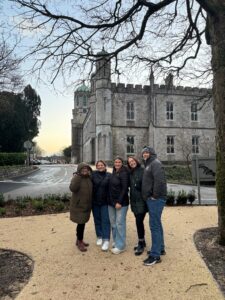
5 people stand in front of an old building
My family and I at the University of Galway
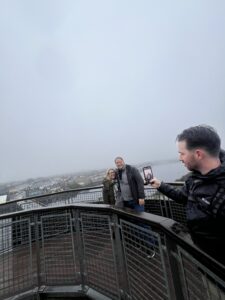
Someone takes a picture of a man taking a picture of a couple
At the top of King John’s Castle


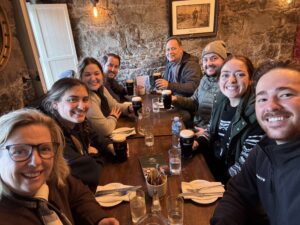
A family sitting at a table at lunch
My family and I on our first day back together
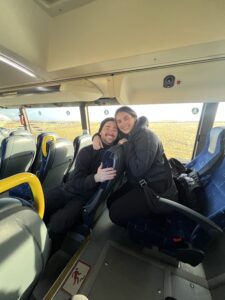
Two people smiling and hugging on a bus
My boyfriend and I on the way home from the Cliffs

And now, I am back home, waiting to start my final semester at Linfield. It’s so bitter sweet to be done with this experience, and I can only be thankful that I had the opportunity to do so. I am thankful for all of the help from IPO, and their constant support and availability. They made me feel safe and supported, even from across the world. If anyone is thinking about doing a study abroad, I highly encourage it. Like I’ve said, it was one of the best experiences of my life, and you won’t regret the memories you will make. 

I hope to visit Ireland again soon, because I will forever be connected to Ireland and Galway. 

Thanks for following along!

Best,
Annie 

Arrival in the Galápagos

After seven weeks on the Ecuadorian mainland, it was finally time for us to transfer to the Galápagos, where we would spend the remaining ten weeks of the semester. USFQ’s Galápagos campus is located on the island of San Cristóbal, the second most populous island in the archipelago. To get there, we took a flight from Quito direct to San Cristóbal with a short stopover in Guayaquil to pick up some additional passengers.

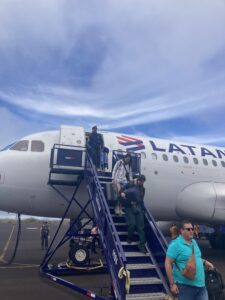
Disembarking a plane in the Galapagos

Disembarking at San Cristóbal.

My first impressions of the Galápagos, upon arrival, reminded me in some ways of the arid parts of Hawai’i, where I grew up and still live; the mix of low, dry vegetation with rocky shores and sandy beaches was similar to parts of O’ahu in the dry summers. However, there were two major differences that were immediately apparent; first, the lack of mountains and second, the extent of human habitation.

San Cristobal is estimated to have a population of around 7,000 people, the vast majority of whom live in a single town, Puerto Baquerizo Moreno. While that might still sound like a lot of people, consider that McMinnville has a population of around 35,000. So Mac – which most people probably wouldn’t consider to be a very large town – has around five times as many people as the entirety of San Cristóbal!

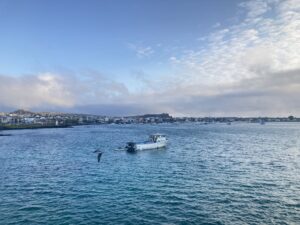
The harbor at Isla San Cristobal
The bay of Puerto Baquerizo Moreno. Most of the town is visible from here.

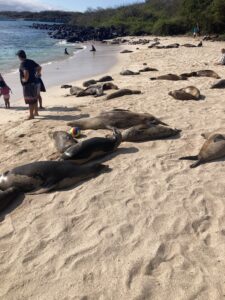
Obviously, though, this is to be expected – after all, the Galápagos is famous not for any big towns and crowds but rather for its wildlife and natural environment. And indeed this was also evident; for instance, we encountered sea lions almost immediately after arriving, laying about on the beaches and even in the streets in parts of town close to the shore. While I’ve seen seals and sea lions in the wild before, the sheer number that were sprawled out on the beach was shocking.

Sea lions sleeping on a beach
Sea lions lounging on the beach at Playa Mann, right next to campus.

The USFQ campus is located on the northern end of town, right in front of Playa Mann, the town’s main beach. Like in Quito, we all lived with local host families; this time, I lived with a family of four. The environment there was really different from my host experience in Quito, but it wasn’t a bad change. While we had the weekend to re-orient to life on the islands, when Monday came around, we went right back to work to take our first Galápagos classes.

Kai

The Ecuadorian Páramo

After our week in the Amazon, our Tropical Ecology course shifted focus from the Amazon rain forest to the mountainous highlands that surrounded Quito. While this cold, grassy environment might not be the first thing you think of when you hear “tropical”, since they are in the tropics regardless, they can still be considered a tropical environment.

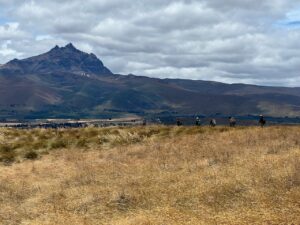
The highlands of the northern Andes are known as the páramo, and are classified by low shrubs and grasses, high winds, and fluctuating temperatures, much like many other mountainous environments around the world. Much like with the Amazon, our understanding of this environment was deepened by a long field study, although this one was only three days, quite a bit shorter than the almost week-long Amazon trip.

The Ecuadorian highlands, with Rumiñahui in the background.
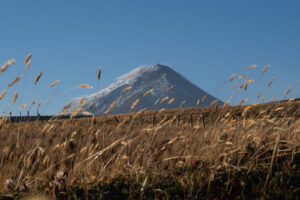
A shot of Cotopaxi in the Ecuadorian highlands.

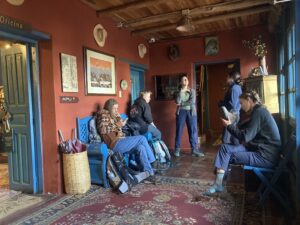
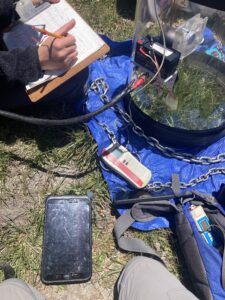
During this trip, we were based out of a mountain lodge on the slopes of Rumiñahui, a small mountain just north of the Cotopaxi volcano, arguably Ecuador’s most famous mountain. It was an older but very cozy place, and stayed nice and warm during the nights, when the temperatures would sometimes drop below freezing due to the altitude, dry climate, and high winds. Our fieldwork on-site consisted of soil sampling and observational work, using soil nutrient and chemical analysis devices to determine the quality and water-carrying capacity of the soil; the soils of the South American páramos also function as massive water reservoirs, meaning that they are extremely important to not only Ecuador’s natural ecosystems but its human residents as well. We also spent a lot of time hiking around the nearby mountains and identifying local plant and animal species so as to better understand these mountain ecosystems.

Our survey group getting ready to conduct fieldwork.
Field survey equipment for soil sampling in action.

Overall, while the páramo trip might not sound quite as exciting as our week in the Amazon, I personally found it to be really interesting and enjoyable, with a lot of time to ourselves to explore this area of the Ecuadorian Andes on our own terms in addition to our class activities. However, our time in the mainland was coming to an end; soon, we would be transferring to the USFQ’s Galápagos campus, where we would be spending the rest of the semester.

While it was a shame to be leaving soon, the prospect of going to the Galápagos – the location this program is focused on, after all – was extremely exciting to all of us.

Kai