Deprecated: Function WP_Dependencies->add_data() was called with an argument that is deprecated since version 6.9.0! IE conditional comments are ignored by all supported browsers. in /chroot/home/a1e0f025/dab19c68f8.nxcli.io/html/wp-includes/functions.php on line 6131 Deprecated: Function WP_Dependencies->add_data() was called with an argument that is deprecated since version 6.9.0! IE conditional comments are ignored by all supported browsers. in /chroot/home/a1e0f025/dab19c68f8.nxcli.io/html/wp-includes/functions.php on line 6131

Weekend in Avignon

An essential part of the study abroad experience (in my opinion) is making the most of your weekends. Before I even left for France, I was dreaming of the places I could visit on the weekends. So far, I’ve visited five French cities through either weekend or day trips, and this is my review of one my favorites so far.
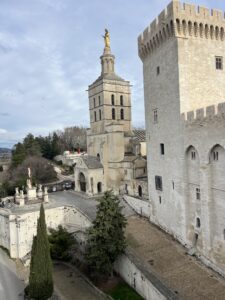
Exterior view of large castle, made of white brick. Blue skies and short trees in the background.
Palais des Papes
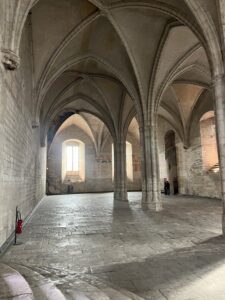
Interior view of castle, large empty room with archways supported by two center beams. Made of grey stone.
Inside of Palais des Papes

I spent my first Friday in France visiting the city of Avignon. We toured Palais des Papes (Pope’s Palace) and an ancient Roman aqueduct. To my American brain, it’s hard to even process how old these things are. The Palais des Papes is from the 1300s and is my favorite historical site I have visited so far. The palace is huge, and covered in intricate carvings and paintings.  We were not allowed to photograph many of the most beautiful paintings,  so you have to go in person to see it all.
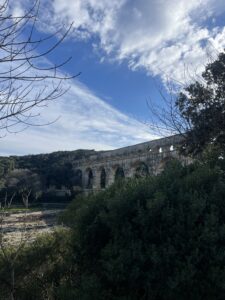
Distant view of roman aqueduct, resembles a stone bridge. Bright blue sky in the background and greenery surrounding the aqueduct.
Ancient Roman Aqueduct

After this, we visited an ancient roman aqueduct. It was actually never completed at the time, but it still stands as an incredible reminder of the Romans’  influence on France.

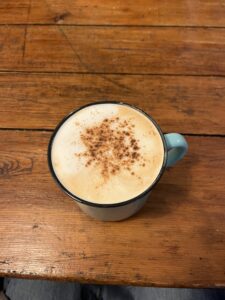
However, my favorite part of the trip was when my friends and I stopped for a coffee break in a small cafe owned by an older Colombian man. Not only because I had a delicious cappuccino,Top view of a blue coffee cup with foam and orange-brown powder sprinkled on top, sitting on top of a wooden table but also because of the conversation we shared. The owner grew up in Colombia, moved to Mexico, then Brazil, then California, and finally settled in Avignon, France. He speaks five languages, and casually discussed his experiences and what they taught him about culture and human relationships. We all left that cafe feeling like we’d gained a lot more than just a boost of caffeine.
À bientôt !

Ella
 

Adjusting to Aix

It keeps hitting me randomly throughout the week that I’m in France! Studying abroad has been an adjustment period like nothing I’ve ever experienced. My body has been accommodating a new time zone, language, home, culture, diet, routine, and pretty much everything else that makes up one’s life. It’s both as hard as I was expecting, and so much easier. I’ve been surprised by how quickly I began to adapt to this new way of life. Learning by watching others, asking questions, and —unfortunately—embarrassing myself more times than I can count. But, that’s the best way to learn because you will never make the same mistake twice!

That isn’t to say it hasn’t been hard. There have been moments where it feels incredibly overwhelming to have everything around me be entirely unknown. To get myself through these moments, I remind myself these feelings are incredibly normal and I shouldn’t feel guilty about them because they will pass. And every time, they have.

After landing in Aix-en-Provence, I was quickly directed to the bus station to meet my host mother. It was a whirlwind of emotions. I was tired, nervous, excited, and disoriented. On the car ride to her small apartment tucked into the suburbs of Aix, it hit me that this would be my life now. My jetlagged brain fumbled its way through describing my flights in French, and translating her responses in my head.

Since that first day, I have gotten more and more used to my new life here. I have been enjoying my daily routine of walking through the streets of the city center, grabbing a coffee or a pastry in between my classes, and taking in the sun.

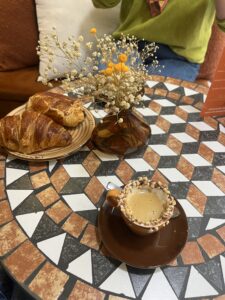
Small cup of espresso with nuts on the rim and two pastries in the background, on a patterned table
Delicious praline espresso for a coffee break!

Southern France is known for its sunlight, and so far it has not disappointed! We’ve had a few rainy days here and there, but nothing compared to what I’m used to back in Oregon. I’m constantly amazed by this city’s beauty and by the rich history weaved throughout the architecture. I can not wait to keep discovering everything the city of Aix-en-Provence has to offer me. 

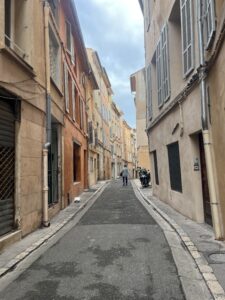
Street in downtown Aix, with brown buildings on either side
Beautiful streets in Aix’s city center

À bientot!

Ella
Culture Shock in Glasgow


When I was in high school I participated in a service trip to Central America. While there, we were told that we should avoid throwing toilet paper into the toilet as the plumbing could not handle it. Of course, it took a couple days to get in the habit of throwing our toilet paper away. But any mistake meant having to fish it out so as to not clog the plumbing, and that served as a powerful reminder.

After two weeks abroad, I flew back to the United States. I was in the JFK airport and I threw toilet paper in the toilet because there wasn’t a trash can in the stall. When I realized what I had done, I started crying because I thought I was going to have to fish it out. After I remembered I was back in the United States, I started crying harder because it felt so ridiculous to be crying over toilet paper and I felt overwhelmed because I couldn’t orient myself to what country I was in and what culture I should be conforming to. That’s the first time I experienced culture shock – alone in an airport bathroom.

My second experience with culture shock came four years later during a month long study abroad experience in India. One of the most profound moments was driving through the slums of Kolkata, where I witnessed firsthand the challenging living conditions that many people face in lower-income countries. It was a powerful reminder of how fortunate we are to have the lifestyle we do in the United States. With my first experiences with culture shock being triggered while living in less developed countries, I naively believed that I would not experience culture shock during my time in the United Kingdom. I assumed that the culture would be very similar to that of the United States. And while in many ways it is, Scotland has surprised me with the cultural differences I have had to adjust to.

All these adjustments have been minor, but so constant that they are noticeable in my day-to-day life. Scotland is the first place I have seen where drivers drive on the left. Just as they drive on the opposite side of the road as Americans, so too are their steering wheels on the opposite side of the car. Because of this, the first time I ordered an Uber, I very nearly confidently climbed into the driver’s seat. Since then, I have adjusted to the different traffic and pedestrian rules. Thankfully, I haven’t tried to get in the drivers seat on any more Uber trips.

The second instance of culture shock hit me the first time I used a sink in Scotland. The faucets are split, with hot water coming out of one and  cold water coming out of a different one, so you have to decide if you want to wash your hands in ice cold or scalding water. I am still trying to wrap my mind around this design.

The final adjustment I have had to make is remembering that every individual outlet  has an on/off switch, so I have to remember to turn them on before use. It only took me one time waiting 30 minutes for a burner to heat up before I realized that I forgot to turn on the outlet for the stove, to always double check my outlets. Despite these daily occurrences, I believe I will adapt quickly.

My experiences in Central America, India, and the United Kingdom have taught me that we can’t control what will trigger culture shock and when. We must remember to be open to new experiences and be gentle with ourselves when the seemingly little/insignificant things set us off.

~Isabella Dixon

Last Weeks in the Galápagos

Time was running short on our stay in the Galápagos – there was only one more 3-week class ahead of us, and after that, for legal reasons (the government is very strict about how long foreigners or even mainland Ecuadorians can stay on the islands), we would have to leave pretty much immediately.

Our final class was focused on plants in the Galápagos, with a focus on the relations between native and invasive species. Due to the Galápagos’ remoteness, much like my home state of Hawai’i, its native wildlife has evolved on its own separate from the rest of the world. As such, this was a pretty interesting class subject for me, although I personally was a little disappointed at its relative lack of field work compared to the other classes where we made trips to other islands.

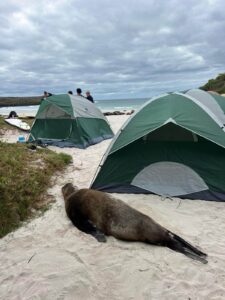
Outside of class, we did our best to make the most of our remaining time in the islands. After learning that camping permits were pretty cheap and easy to acquire, we decided to go camping at Puerto Chino, a beach on the south shore and the farthest (and nicest) beach that could be accessed without having to take a boat.

A sea lion sleeping next to tents set up on a beach.
Staying at Puerto Chino.
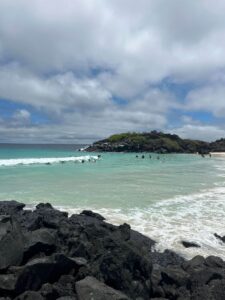
A sandy bay with people surfing.
Staying at Puerto Chino.

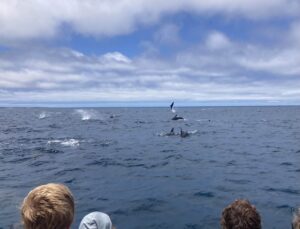
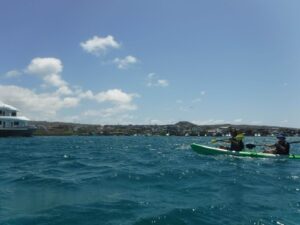
We also did what is called a “360” on San Cristóbal, essentially taking a boat all the way around the island and visiting various spots along the way, including Kicker Rock, a famous snorkeling and diving spot, and Punta Pitt, the easternmost point of the Galápagos. There, we got lucky enough to see a massive dolphin pod! The size of it was genuinely like nothing I had seen before, with probably at least a hundred dolphins if not more – that moment was one of the most standout points of the semester. We spent the rest of our time hanging around town and at the beaches, making the best of the time we had left, including renting some kayaks and paddling around Puerto Baquerizo Moreno.

People watching dolphins jump out of the ocean.
Dolphins at Punta Pitt and kayaking in the harbor.
Two people kayaking in a harbor.
Kayaking in the harbor.

But before we knew it, the weeks flew by and it was time to leave. It was difficult especially since we were all leaving at different times to go on our way, so we had to say goodbye to each other basically one at a time. It wasn’t long before I found myself back at the airport in Quito for the long trip home, but the experiences I had in Ecuador and the Galápagos will stay with me forever.

People standing for a photo at the airport saying goodbye.Friends saying good by at the airport.

Goodbyes at the airport.
Kai

A Few Days Before Korea!

Hello everyone! My name is Riley Rama and I will be studying at Yonsei University in South Korea this Spring! I am from Guam and I came to Linfield to play soccer.

It has been a long wait since I applied to study abroad, and I am very excited. My love for the country first started when I visited the Incheon airport for a layover. The small experience I had there inspired me to learn the language and come back to study abroad.

I am excited to be sharing my experiences and I hope that I can make many great connections while I am there!

Enjoying the view at the Gateway Arch
Me at the Gateway Arch during Winter Break


A Trip to Cambodia

For Lunar New Year, many people were telling us to go abroad during the break. So that is exactly what a few of my friends and I chose to do. With much heated debate, we settled on going to Cambodia and Vietnam for a nine day trip.

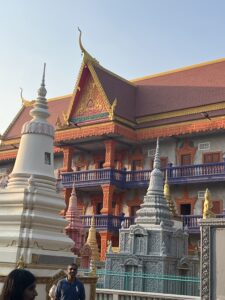
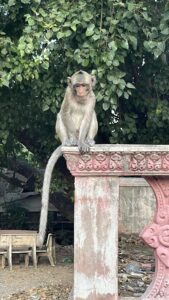
We first chose to go to Phnom Penh, Cambodia’s capitol. We were able to see the Cambodian history museum and go to a traditional Buddhist temple over there! The temple is colloquially known as the Monkey Temple because of the local monkey population over there. Often visitors are able to hold out food to them and have the monkeys take the food from their hands.

Photo of the Monkey Temple in Phnom Penh, Cambodia.
Monkey Temple Phnom Penh, Cambodia
Monkey sitting on one of the railings in Monkey Temple Phnom Penh, Cambodia
Monkey sitting on railing of Monkey Temple Phnom Penh, Cambodia

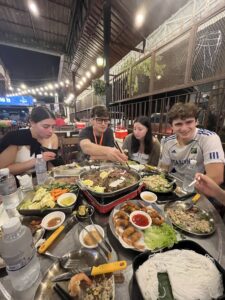
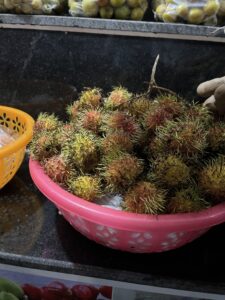
We were also able to try many new foods while in Cambodia. One such food is the fruit called Rambutan. It is similar to eating a lychee with a fluffier outside. We also ate traditional street food. One of our friends was even able to eat a fried tarantula. We also ate traditional barbecue over there where.

We ordered a set of food for each of us and cooked it ourselves! For me personally, my favorite traditional Cambodian food is amok. Amok is a traditional steamed fish curry which is usually served with rice inside wrapped banana leaves or a coconut shell.

Four people eating a family style dinner in Phnom Penh, Cambodia
Family style dinner Phnom Penh, Cambodia
Bowl of Rambutan
Rambutan Bus stop between Phnom Penh and Siem Reap, Cambodia

We then took a long bus ride to Siem Reap in Cambodia. There we were able to see Angkor Wat, the biggest religious site in the world. It was originally a Hindu memorial site honoring a king in Cambodia’s history. However, now it is a national heritage site and a museum! The temple spans over 400 acres of land with many different entrances for the different castes in Hindu society at the time. The temple was intended to worship Vishnu the Hindu god of protection and Lakshmi, his wife and goddess of wealth and success.

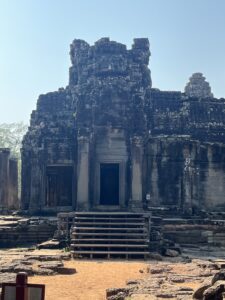
Along with Angkor Wat, Siem Rip has five more famous temples. My friends and I chose to attend two more. The smiley face temple, traditionally known as Bayon,  showcased thousands of smiling Buddhas. We also visited the Ta Prohm Temple known for their massive Banyon trees. The temple was created by Jayavarman VII during the 12th century in dedication to his mother in the traditional Buddhist style.

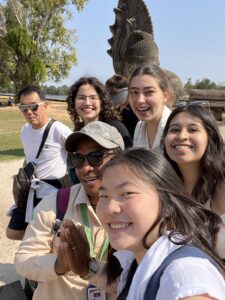
Four young women taking a photo with tour guide at Angkor Wat in Siem Reap, Cambodia
From top to bottom, left to right: Başak Brozdoğan, Celina Ghnein, Tour Guide Che, Emilie Ouslati, and Taila Patterson. Angkor Wat in Siem Reap, Cambodia
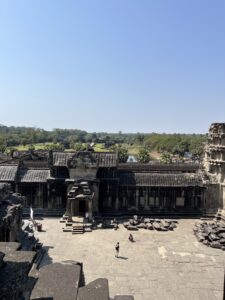
Scenic view from the top of Angkor Wat in Siem Reap, Cambodia.
Scenic view from the tomb at the top of Angkor Wat in Siem Reap, Cambodia
Photo of Smiley Face (Bayon) Temple's outside in Siem Reap, Cambodia.
Photo of Smiley Face (Bayon) Temple’s outside in Siem Reap, Cambodia.
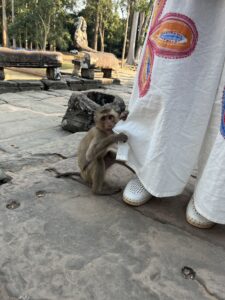
Monkey gripping onto pant leg at Smiley Face (Bayon) Temple in Siem Reap, Cambodia

Taila

Field Ecology

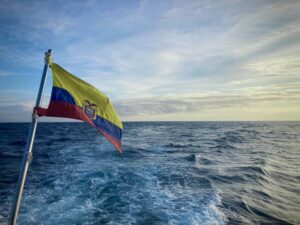
After our mid-semester break, we started on our second-to-last course, Field Ecology. As someone with past experience in field research and who wants to continue doing it in the future, I was looking forward to this course, and it did not disappoint. On our first week, we spent the day on a field excursion to the island of Española, located almost directly south of San Cristóbal. As it is about the same distance as Santa Cruz, it was about a 2-hour boat ride to reach the island through fairly rough seas, although thankfully the water had calmed by the time we reached the island.

An Ecuadorian flag flying off the stern of a boat.

Sailing to Española.

Compared to the three other ‘major’ islands we had visited so far – San Cristóbal, Santa Cruz, and Isabela – Española was considerably smaller (37 square miles – less than a quarter of the size of the already-small San Cristóbal!) and had no human population. However, it is best known for its status as one of if not the only breeding sites of the waved albatross, which makes it a popular location for seabird enthusiasts.

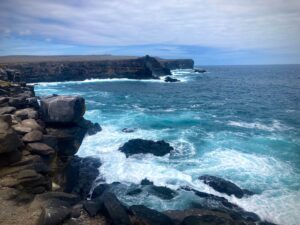
Cliffsides along the coast of Espanola, Galapagos.

Rocky cliffs on the south shore of Española. Apart from these, the island is extremely flat and barren as can be seen in the distance.

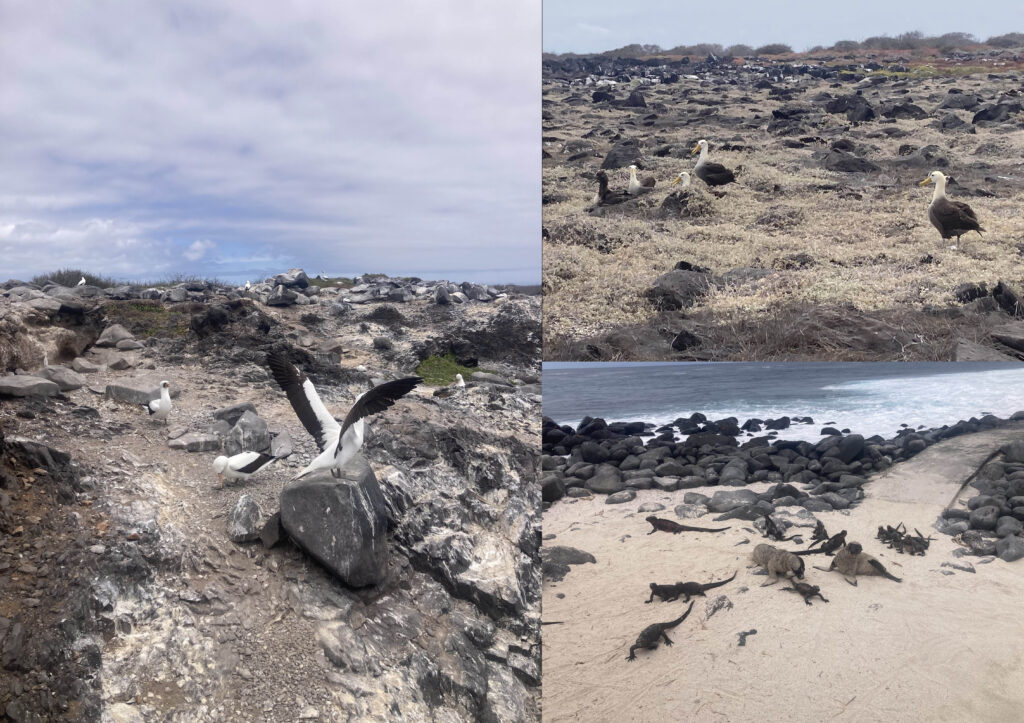
We spent some time first snorkeling near the northern part of the island at a point known as Gardner Bay before landing on the island itself at Punta Suarez, on the island’s western tip, to observe the local wildlife, which included the albatrosses as well as several other seabirds, in addition to sea lions and marine iguanas, unique among lizards for their swimming and diving abilities.

A small collage of wildlife seen in the Galapagos.

Top left clockwise: waved albatross, sea lion pups among marine iguanas, and Nazca boobies.

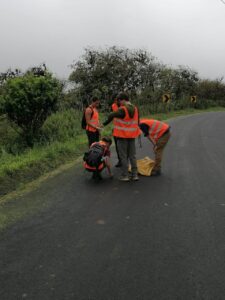
The second and third weeks of the class were focused on a local study on San Cristóbal that focused on incidences of bird roadkill on the island’s main road. As a part of this study, we had to go out several times and basically search for and collect (in a sanitary manner, of course!) dead birds along the side of the road.

A group of students standing by the road in reflective gear doing bird sampling.

Bird sampling along the road.

Definitely morbid and unpleasant work, but that’s simply what the project entails sometimes – when, in this case, you need to know how many birds are getting killed on the road within a certain period, well, the only way to really find that out is to go out and see. So while it was definitely not anyone’s idea of a good time, I think it was a useful project to get us used to the idea that not all field science is necessarily “fun” work – this tied into other elements of the class that discussed field research and science from an ethical perspective, which I think was also a very interesting discussion to have that opened up new perspectives on how field research should be conducted.

Kai

Landing in Hong Kong

A red eye to Narita and a five hour flight to land in Hong Kong near midnight the next day – it was my first time ever flying to another country by myself. With this new experience under my belt, I checked into a hotel for the night and went to campus the next day. The airport in Hong Kong is on the Lantau island whereas Hong Kong Baptist University’s campus is on the island of Kowloon.

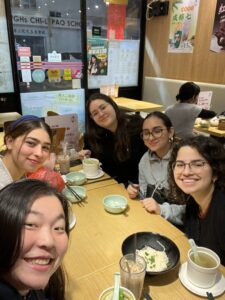
Girls around a table having tea and soup on a cold day.

A couple of days later we had our orientation for the exchange students. I was able to meet many new people and take a tour around the campus. After the tour was over, we broke into groups to tour the city a bit more. On this night, we chose to eat traditional Shanghainese food and drink some soup due to the chilly temperature.

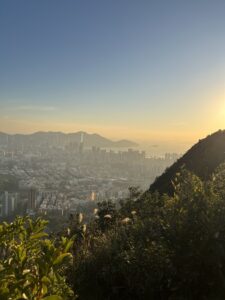
Beautiful sunset.

A few days later, some of the people from the tour wanted to go for a hike. We chose to hike Lion’s Rock which is located near our school. One of the girls, who is on exchang for a year, was able to point out our school for us at one of the peaks.

The entire distance of Lion’s Rock is about 7 miles and a five-hour hike. However, my group only chose to do the front half of the hike and forgo the first two hours of hiking. It was such a clear day, that we were able to see almost all of the island from where we were standing. We could even see monkeys during our trip there!

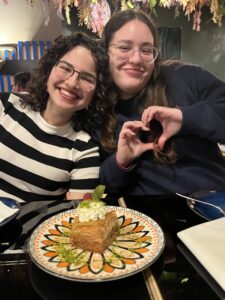
2 girls celebrating a birthdy with cake.

About a week later it was one of our friend’s birthdays (the girl on the right). For her birthday she wanted to showcase some of her culture to us and took us to a local Lebanese restaurant. In the restaurant we had many traditional foods like hummus, fattoush, and Lebanese baklava!

Taila

Break in the Galápagos

After the end of our Island Biogeography course, we had a one-week mid-semester break to round out our first month in the Galápagos. Although we had visited Santa Cruz before as part of our previous class, many of us wanted to explore more of the other islands in the Galápagos, so we decided to spend most of the week away from San Cristóbal.

Since we had been to Santa Cruz before, we decided to make our main objective the island of Isabela. The largest island on the Galápagos, but only the 3rd most populated, Isabela is known for its tall volcanoes and unique wildlife. To get there, we had to travel by boat again via Santa Cruz, and between the boat rides and a 4-hour “layover” in Santa Cruz, it took the whole day to reach the island.

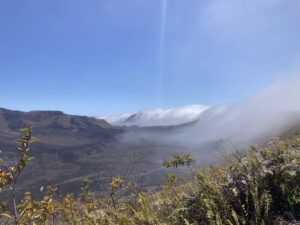
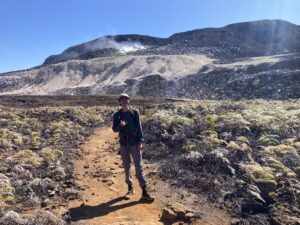
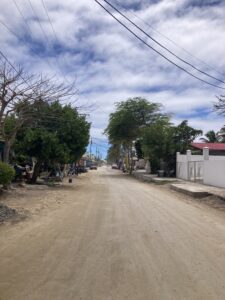
The main town on Isabela, Puerto Villamil, was much smaller and less developed than the other ‘main towns’ of the islands we had visited.  It had just a few paved roads and the rest being either made from brick or even just dirt and sand. For the first day, we went up to the highlands and hiked in the crater of Volcán Sierra Negra, where we saw active sulfur deposits. It was a very different change of scenery compared to the rest of the Galápagos, reminding me somewhat more of the Andes that we had spent time in on the mainland.

A large volcanic crater with clouds creeping over the rim.The author in a large volcanic crater.

Hiking Sierra Negra.

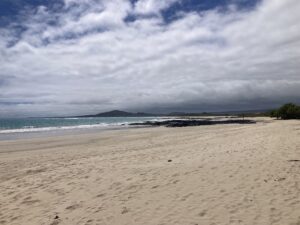
We spent our second and third days on Isabela, mostly around town, surfing some waves by the beach and biking along the coast to the Wall of Tears.  This was a remnant of the Galápagos’ past as a prison colony where prisoners were forced to build a wall by hand in a cruel act of pointless labor.

A sand street in Puerto Vilamil, Isabela, Galapagos.A long beach on Isabela, Galapagos.

The streets of Puerto Ayora, and one of the beaches where we surfed.

On our fourth day, a few of us decided to take a boat tour to see more of the island. Like all islands of the Galápagos, only a tiny fraction of Isabela is accessible by car and as such, if you want to see other parts of the island you need to take a boat. We decided to travel around the southwestern coast, which would allow us to see a wide variety of marine and terrestrial life on and around Isabela.

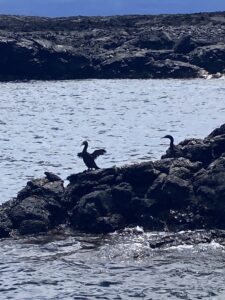
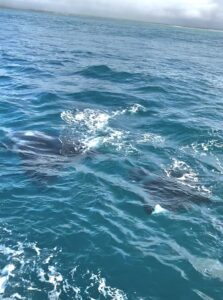
Flightless cormorants drying their wings in the Galapagos.Manta rays just below the surface of the water out in the ocean.

Some flightless cormorants and manta rays west of Isabela.

Over the course of the day-long trip, we traveled along the coast, stopping at various points to go onshore or go snorkeling.  We saw a huge variety of life – among the highlights were orcas, manta rays, Galápagos penguins, flightless cormorants, several sharks, and seahorses!

On the fifth day of our break, we returned to Santa Cruz.  We spent two more days there, exploring the island and Puerto Ayora a little further, before heading back to San Cristobal to spend the weekend relaxing before our next class started off.

Kai

First Week in Spain

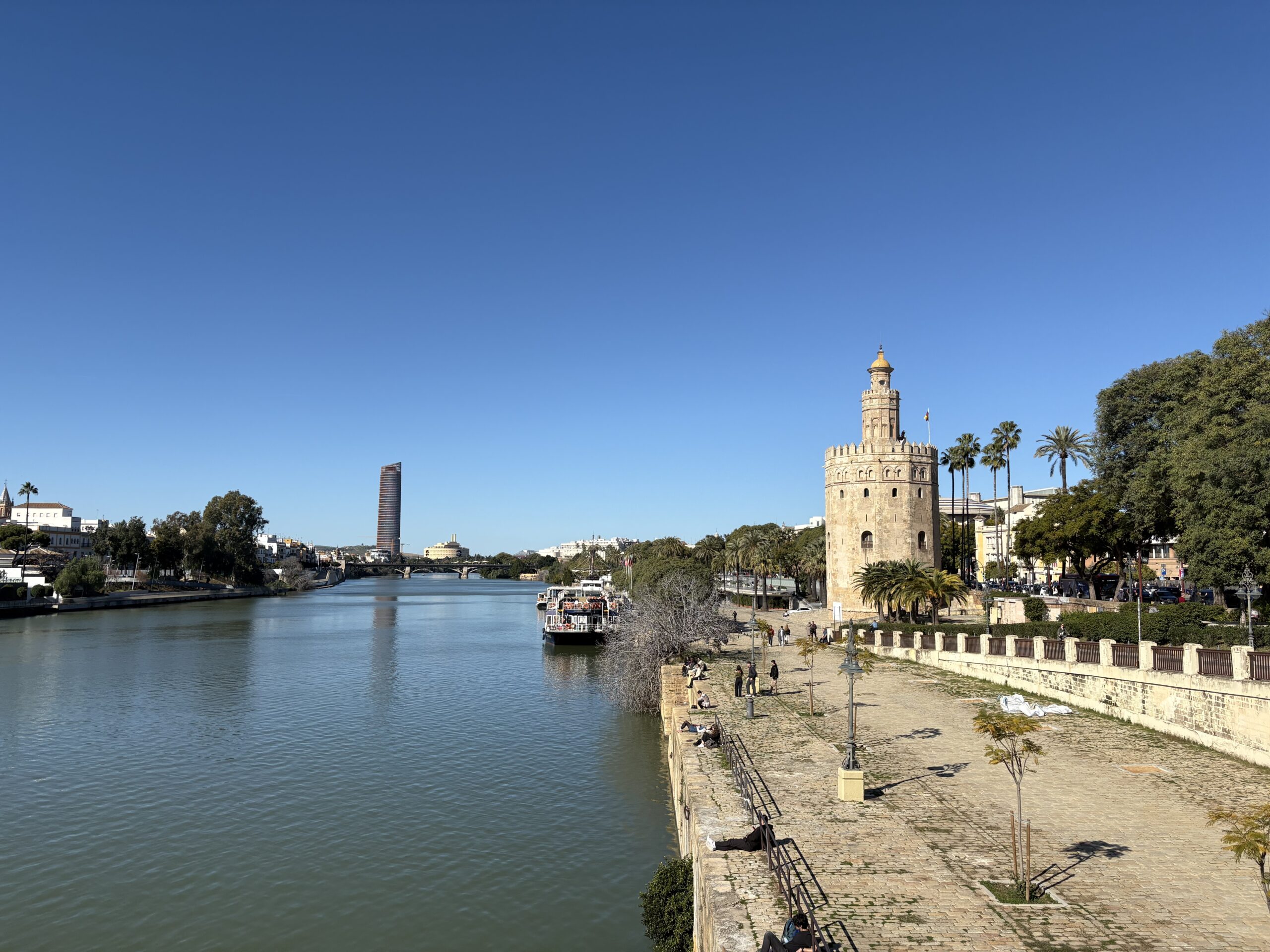
What a great first week it’s been! The first couple of days I was settling in, with a couple orientations and then I started classes. The first photo is of my walk to school- where you can see the Torre de Oro on the right, a monument from the 13th century. El Centro, where I am talking my classes, is about a 20 minute walk from my host family’s apartment, and on the way I cross the Guadalquivir River.

A photo of a blue/green river from the view of a bridge, with a tall building to the right called La Torre de Oro, with green trees to the right of that and a pathway below next to the river
View of La Torre de Oro on my walk to school

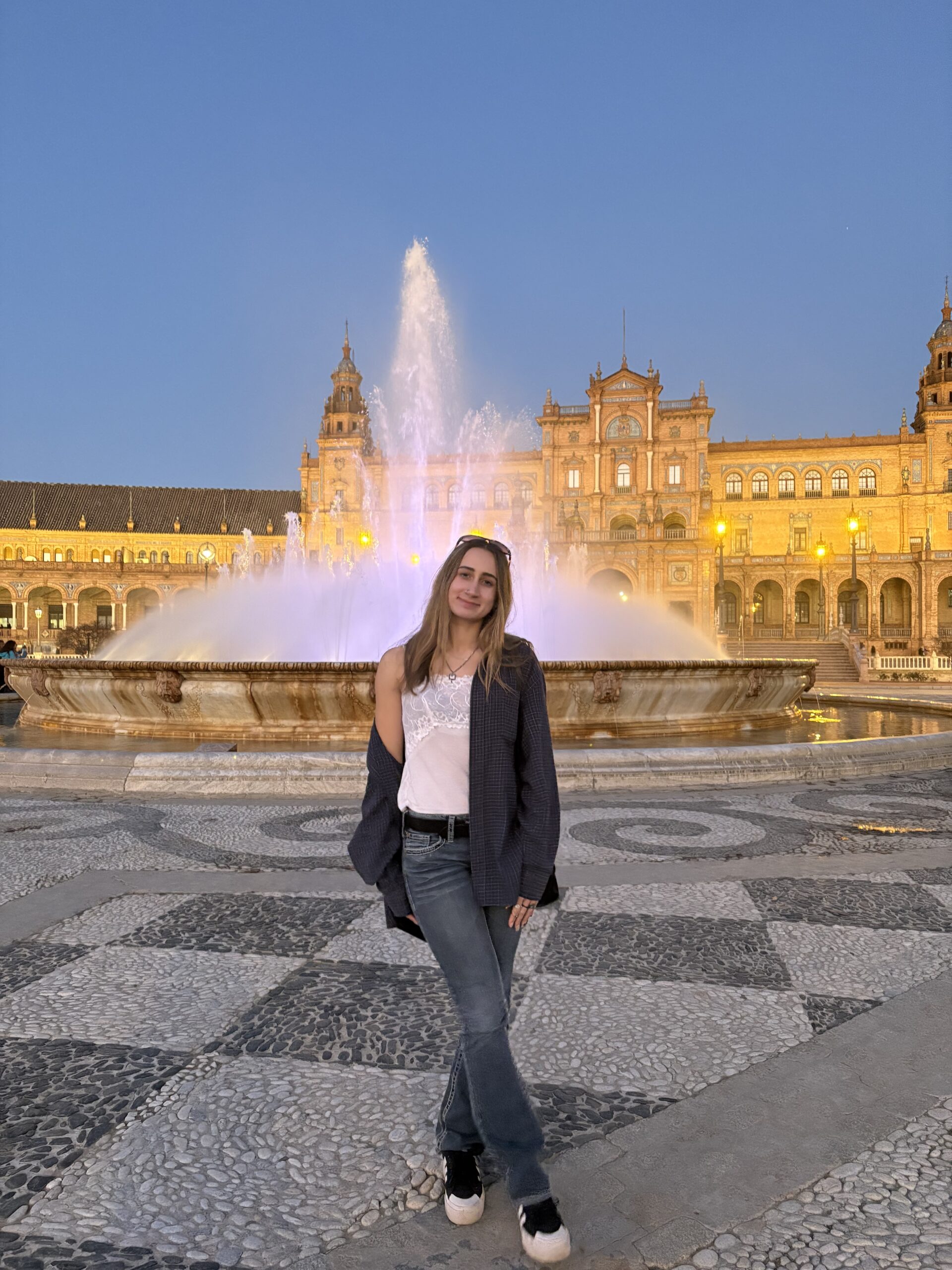
Tuesday night we went for a paseo (a little walking tour) and saw the Plaza de España. I didn’t realize until I was there that I have actually already been to the Plaza de España- almost 8 years ago now! They filmed some of Star Wars there. Also, while we were walking through the Parque de María Luisa, which is right next to the Plaza de España, they were filming the newest Walking Dead.

A photo of me in front of the water fountain in a big plaza called La Plaza de España, with a checkered pattern on the ground and a glowing golden building in the background
La Plaza de España

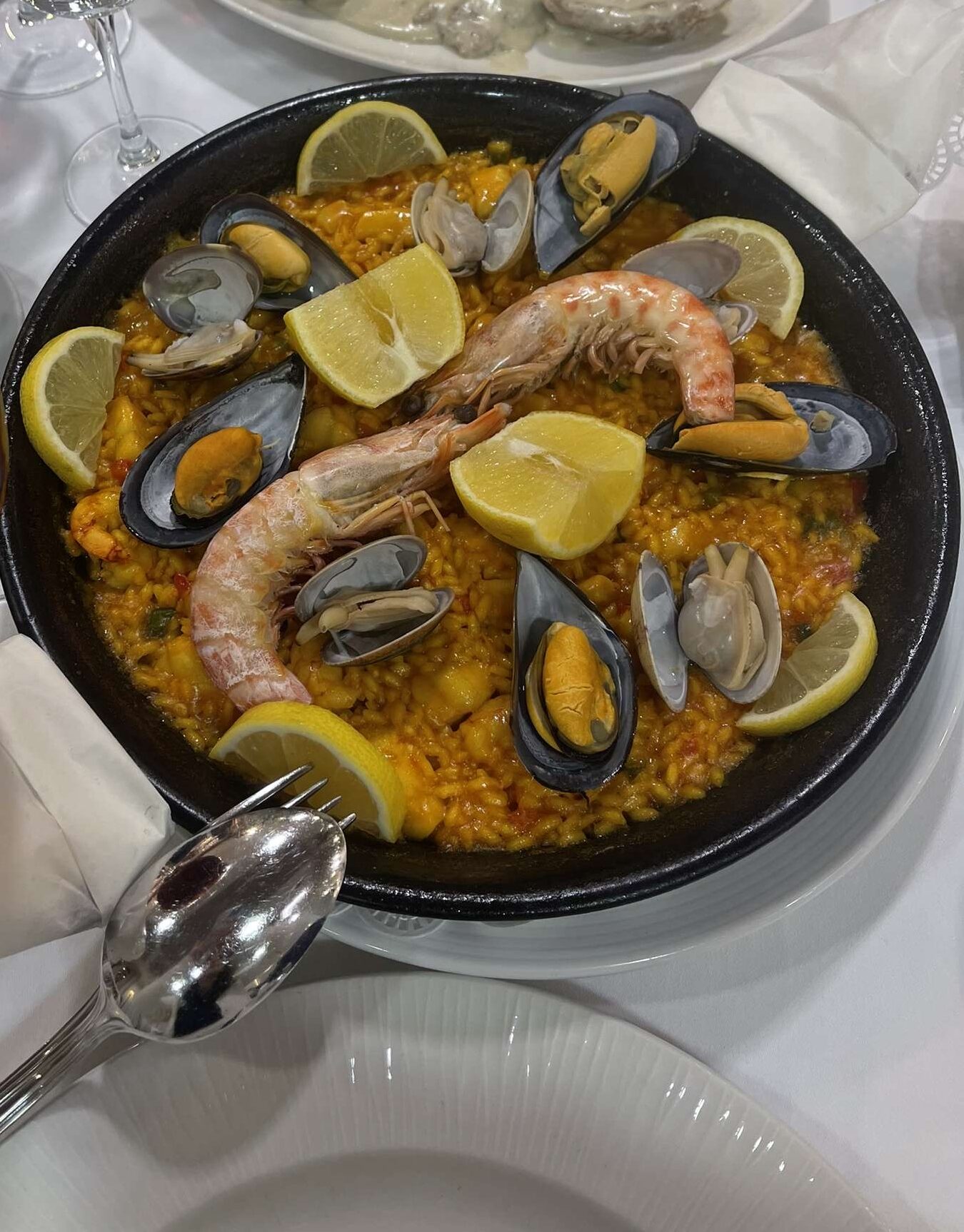
Thursday night we had our first session of intercambios. This is an exchange between the local university students and the students in our program, where we speak with them in both spanish in english so that we both improve our speaking skills. Afterwards, some friends and I explored Seville with one of the students from the University of Seville and ate dinner at a local Spanish restaurant, El Cairo. We tried paella de mariscos (seafood), which we enjoyed a lot.

A plate of paella with shrimp, oysters, clams, lemon, and rice, displayed with silverwear
Dinner on Thursday night- seafood paella

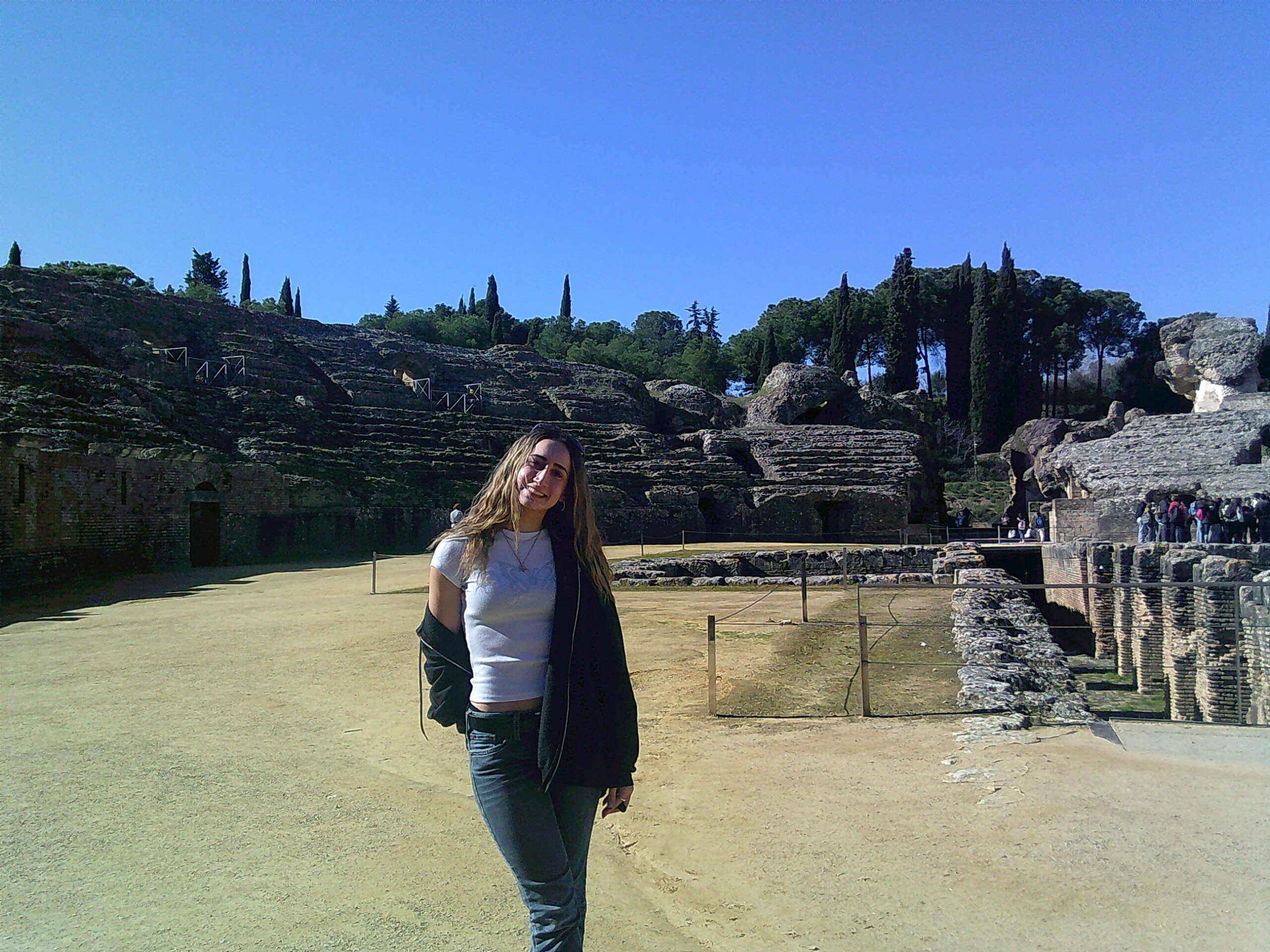
Finally, on Friday we went on a day trip to Itálica, which is just 15 minutes outside of Seville and explored some Roman ruins. This day trip is one of many included in the Seville program, and we were guided by SSA professors who shared insight into the background and evolution of this historic site.

A photo of me at the Itálica roman ruins, with rocky ruins and trees in the background.
At the Itálica Roman ruins

~Sofia