For Lunar New Year, many people were telling us to go abroad during the break. So that is exactly what a few of my friends and I chose to do. With much heated debate, we settled on going to Cambodia and Vietnam for a nine day trip.
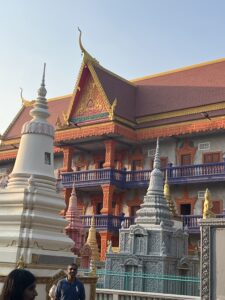
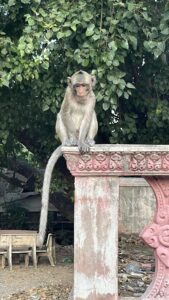
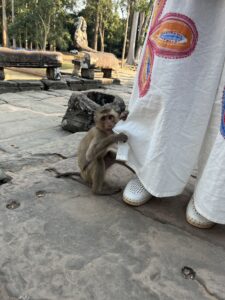
We first chose to go to Phnom Penh, Cambodia’s capitol. We were able to see the Cambodian history museum and go to a traditional Buddhist temple over there! The temple is colloquially known as the Monkey Temple because of the local monkey population over there. Often visitors are able to hold out food to them and have the monkeys take the food from their hands.
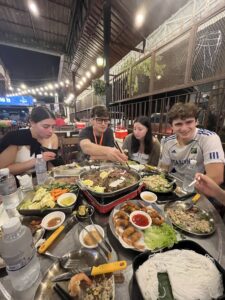
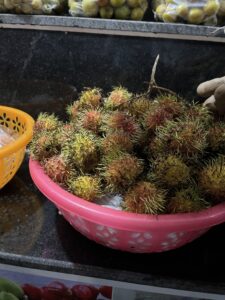
We were also able to try many new foods while in Cambodia. One such food is the fruit called Rambutan. It is similar to eating a lychee with a fluffier outside. We also ate traditional street food. One of our friends was even able to eat a fried tarantula. We also ate traditional barbecue over there where.
We ordered a set of food for each of us and cooked it ourselves! For me personally, my favorite traditional Cambodian food is amok. Amok is a traditional steamed fish curry which is usually served with rice inside wrapped banana leaves or a coconut shell.
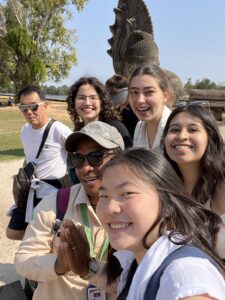
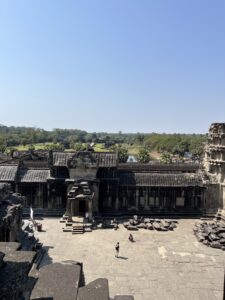
We then took a long bus ride to Siem Reap in Cambodia. There we were able to see Angkor Wat, the biggest religious site in the world. It was originally a Hindu memorial site honoring a king in Cambodia’s history. However, now it is a national heritage site and a museum! The temple spans over 400 acres of land with many different entrances for the different castes in Hindu society at the time. The temple was intended to worship Vishnu the Hindu god of protection and Lakshmi, his wife and goddess of wealth and success.
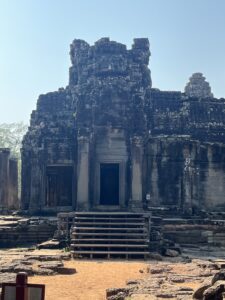
Along with Angkor Wat, Siem Rip has five more famous temples. My friends and I chose to attend two more. The smiley face temple, traditionally known as Bayon, showcased thousands of smiling Buddhas. We also visited the Ta Prohm Temple known for their massive Banyon trees. The temple was created by Jayavarman VII during the 12th century in dedication to his mother in the traditional Buddhist style.
Taila