Deprecated: Function WP_Dependencies->add_data() was called with an argument that is deprecated since version 6.9.0! IE conditional comments are ignored by all supported browsers. in /chroot/home/a1e0f025/dab19c68f8.nxcli.io/html/wp-includes/functions.php on line 6170
Deprecated: Function WP_Dependencies->add_data() was called with an argument that is deprecated since version 6.9.0! IE conditional comments are ignored by all supported browsers. in /chroot/home/a1e0f025/dab19c68f8.nxcli.io/html/wp-includes/functions.php on line 6170
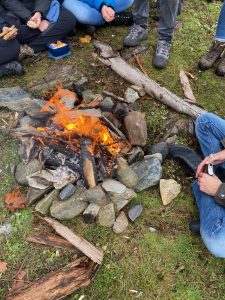
During the month of November, I would normally celebrate Thanksgiving with my family by having a big feast, but this year was different. I actually didn’t celebrate Thanksgiving. Instead I celebrated Guy Fawkes Night, also referred as Bonfire Night. It is a night to remember the failed attempt of the assignation of King James I, also known as the Gunpowder Plot of 1605. The night is celebrated with fireworks and giant bonfires.
November 28th marked the first day of snow in Nottingham. It was a great experience as everyone ran out of their rooms to go play in it. Just like Oregon, it does’t happen often. (Last picture, left to right: Tanner Coulter, Maike Rößler, Bel Florence)
Christmas is my families favorite holiday out of the year. Normally I spend a few days before Christmas baking cookies, cooking different appetizers, and spending time with my family watching movies. This year it’s a bit different. I will be heading to my friend Charlie’s home to celebrate with his family. I am not sure how everything will work, but I am looking forward to it.
Starting the new year before my friends and family is a bit strange. I will be traveling from Charlie’s to my friend Jame’s house to celebrate with him and his friends. I am looking forward to see how England traditions and US traditions differ in how we celebrate the new year. I am also excited to explore the town of Essex, the birthplace of two of my favorite Harry Potter Actors, Rupert Grint and Maggie Smith.
I am looking forward to spending the holidays in England and to see how they differ from the US!
The realization that I have only a few weeks left in Norway has hit me hard. Everywhere I look, I feel like I see aspects of my life in Norway that I’ll miss. Cultural quirks, observations, routines. Some of them are as follows:
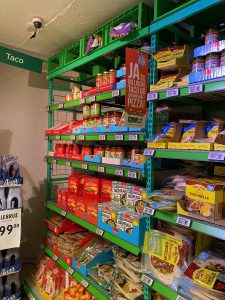
The corner of the grocery store dedicated to taco supplies. Tortillas, shells, sauce, with meat and cheese in easy reach. Norwegians are one of the largest consumers of tacos in the world, and this has bled into the layout of many grocery stores.
Speaking of grocery stores and tortillas, lomper. Lomper is a Norwegian-style tortilla, made from potato and flour. It’s a bit thinner and more flexible than typical tortillas, and has an almost velvety feeling when you touch it. They’re versatile and delicious, and I’m already trying to think how I can get them in the United States.
Kiwi, a popular and common grocery store in Norway.The infamous corner of the store dedicated to tacos.
The dedication to personal space on public transport. As someone who is selfish with the room I take up on public transportation, I feel right at home on a bus in Oslo, where people would rather stand than fill up the empty seat next to someone else. The few times someone has sat down directly next to me, despite other options, I was shocked and felt the side-eyes from those standing around me.
The deep love of bundling up. “Cozy”, as a concept, is imbued in Norwegian culture. My personal theory is that no matter the temperature, Norwegians want to feel warm and cozy. As a cold weather lover, I tend to wear just enough layers that I do not freeze. Yet, Norwegians can always be seen in several layers, pulling out their scarves and gloves long before the temperature truly calls for it.
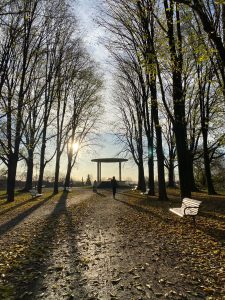
The perfect opportunity to take a cozy walk.Another reason to get cozy– lunch outdoors while on a hike!Personal space isn’t just limited to the bus. The park is a great place to be on your own!
And my favorite, the greeting of “hei hei” (hey hey). When I first started hearing cashiers in grocery stores, Norwegian students I met, and anyone else I encountered start with “hei hei”, I was almost confused because of how childish it sounded. In the United States, I don’t know anyone who would greet someone else with “hi hi” as opposed to just “hi” of “hey”. Except, now I love it. I feel like I’ve entered into an inside joke when I reply in the same manner at the store checkout. I already know I’ll repeat it until annoyance once my semester here is over, even if just to remember the small ritual.
Things have been moving very quickly in Spain. I’ve gotten to the point where I’ve realized that I only have one month left here and a lot of things I still want to do. So, I’m going to keep this post short.
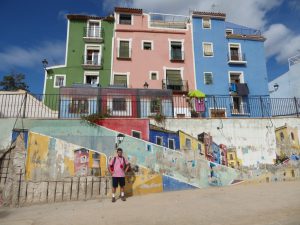
Villajoyosa is a costal town full of brightly-colored buildings. It’s one of the most beautiful and calm towns I’ve ever been to in my life. And with my pink shirt, I fit right in.
So what’s happened this last month? Well, let’s start with my finger. A little over a month ago, I was on a class field trip for my Tourism and Food Culture class. We were at a local restaurant and had just finished making traditional Spanish tapas. As we were enjoying our delicious creations, the classmate sitting next to me wanted some water, so I grabbed the jug to pour her some. When I turned to put the jug in front of me, it collided with my wine glass, which shattered on impact.
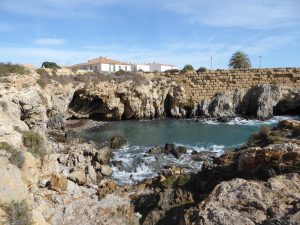
Out of courtesy for the casual reader, the author has decided not to include any images of his wounded finger. Instead, this blog will only include pleasant photos…such as this one, taken of a cove on the island of Tabarca.
I don’t know exactly how the glass cut my finger, but either way it was a messy situation. Initially, I didn’t realize that I’d been cut. It was only when one of the chefs asked if I’d been cut that I looked down at my bloody finger. Quietly and quickly, I rushed to the bathroom to avoid a scene.
The pink saltwater lake of Torrevieja. Although the water wasn’t very pink that day, the foam from the salt was really neat…and fun to step in.
The restaurant employees tended to my finger very well, helping me cover up the wound and giving me sweets to prevent dizziness. But after about 15 minutes in the bathroom, they told me I’d have to go to a medical clinic nearby to get stitches.
Thankfully, there was a clinic just down the block where I was able to receive emergency services. I had a really cool Cuban doctor and while he stitched my finger up, we talked about our countries. Also, it was funny to see him giving instructions to a young medical student, who was having trouble opening the packaged materials for the procedure. The procedure was very quick: anesthetic, four stitches, pay, fill out the claim form online, and get reimbursed fully by the insurance company (included in my study abroad program). So, despite the brief but intense burning pain of the anesthetic, it was quite an enriching cultural experience.
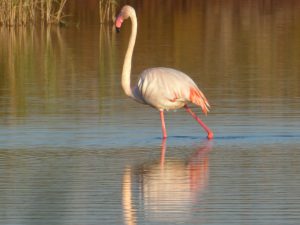
A wild flamingo in one of the saltwater lakes of Santa Pola. It was difficult to get to the lakes, but the trip was well worth it.
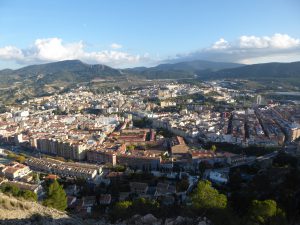
On a less gruesome note, I’ve been doing lots of traveling nearby. Just in the last few weeks, I’ve been to Villajoyosa, the island of Tabarca, Torrevieja, Santa Pola, and Alcoi. Among my favorites to visit was Villajoyosa, a precious coastal town of about 30,000 people with colorful buildings and a laid back beach vibe. I also really enjoyed hiking in the mountains of Alcoi with my Japanese flatmate. Last weekend, we spent over four hours soaking in the views and wildlife. The next day, I went with an American friend to Santa Pola, a coastal town full of foreigners and retirees. There, we visited some saltwater lakes, where we saw WILD FLAMINGOS! Although we had to walk through brush and play frogger on a busy highway, the flamingos were well worth the pain.
One of the most special parts about studying abroad is being able to spend a long period of time in a foreign community. With time and effort, you start to become part of the community and make meaningful friendships with the local people. I think that short trips, like the ones I’ve done these past few weeks, are really great for experiencing new things and interacting with your local host community. Oftentimes, you can gain really interesting cultural insights and see many fascinating things nearby. Plus, with local travel you’ll save lots of money, time, and energy!
The city of Alcoi, pictured from the mountain trails. We saw many mesmerizing views and even vultures in a nature reserve.
With that being said, I’d also encourage future study abroad students to do the occasional long-distance trip. Local travel is great, but to get a more complete picture of your host country’s landscape, culture, and history, I think it’s important to spend a weekend or two in other areas.
It’s a bit late here and I’m tired, so I’ll sign off for now.
One of the amazing aspects of studying abroad is the ability to travel wherever. Even in these dark times of the pandemic, so long as the appropriate precautions are taken, traveling is heavily encouraged! I have had the special privilege to travel several times since my stay out here has begun and it has led me to understanding so much of the rich and diverse culture that is right around the corner here! I mean, travel in any direction and things start to change. I have been to the Czech Republic, Poland and I even found myself in Bulgaria! I emphasize the word privilege because these countries and the cities and/or small towns I have found myself in, have opened my eyes not only to the general culture but also, the family values, religious values, burial traditions, and so much more!
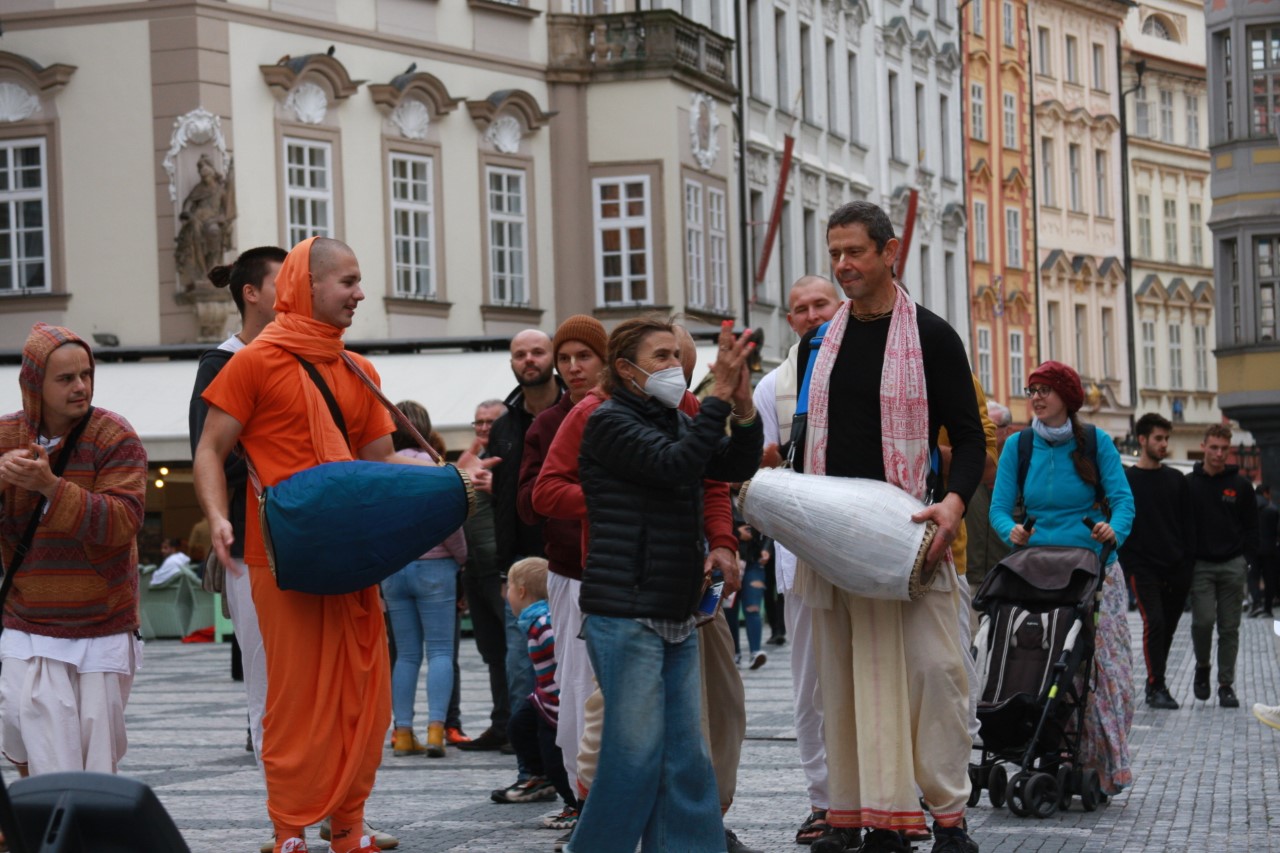
My first excursion, if you will, was to Prague in the beginning of the semester. It was only 6 hours away by train and once a part of the Austrio-Hungarian empire, but my goodness how quickly things can change. One of my colleagues quickly made the side remark that people were already starting to dress more alternatively here. The Bohemian tradition still runs very deep and within five minutes of getting off the train it was explicit. The history here ran twice as deep. From Old Town to the Jewish Quarter and all the way up to the Prague Castle – this city, like many others, holds a plethora of stories to tell.
Bohemian street music in Prague.
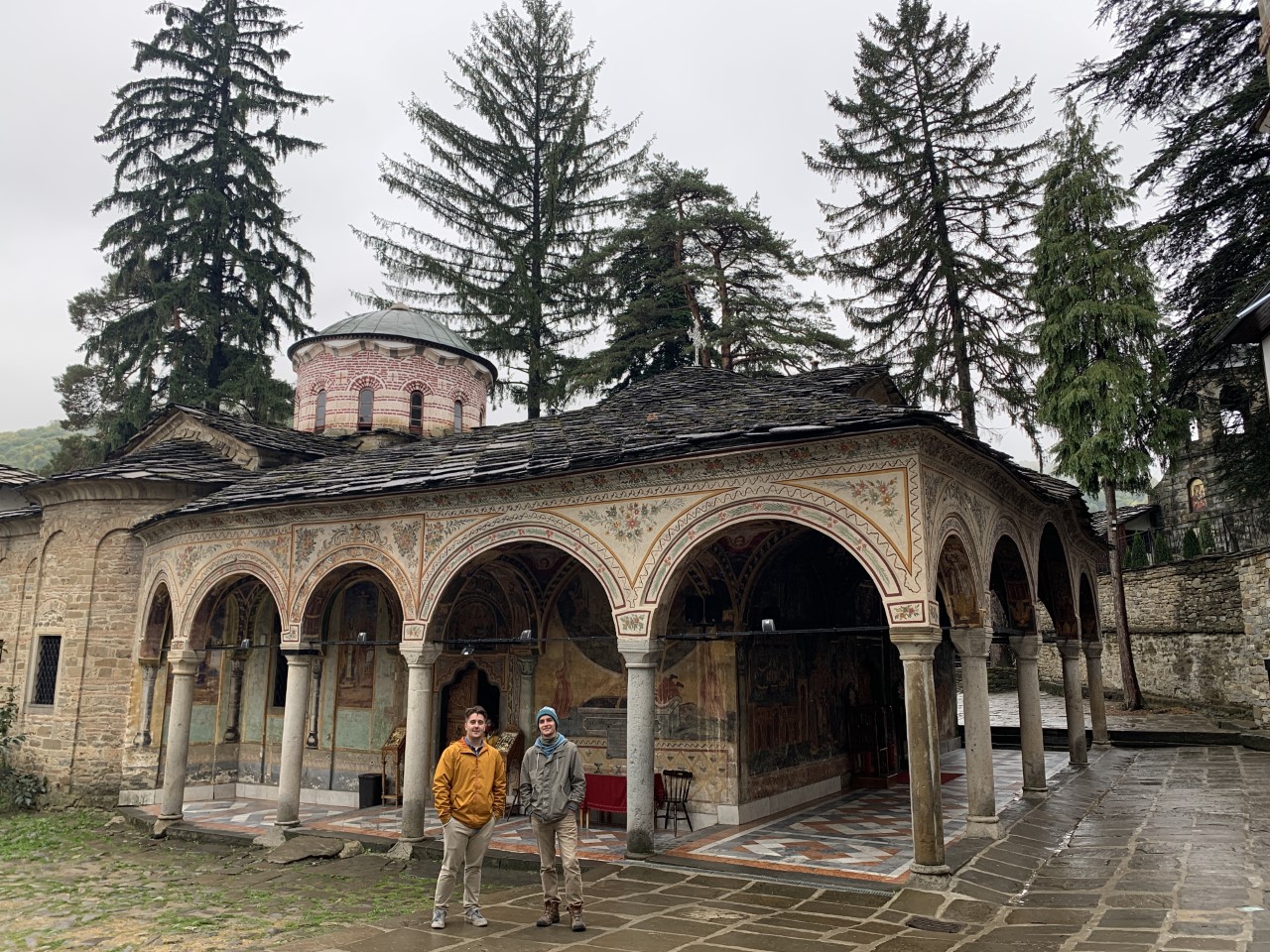
My second excursion was to Bulgaria over my fall break. Another one of my colleagues and Linfield student has family there and we had the treat of being able to stay with them. Two hours outside of the city of Sophia, there is located the small town of Troyan. It is filled with tiny, quaint farms that are blocked side by side with little romantic courtyards filling the middle. Here I grew a stronger understanding of the Orthodox Church and how that really aids in creating the fundamentals of the family structure here. This is something I will cherish.
We were able to see one of the oldest monasteries in Bulgaria, learn some of the brutal history behind religious wars and struggle and see some of the old remnants of the Eastern block from the late portion of the 20th century.
Chris and I (Dmitri) standing in front of one of the oldest monasteries in Bulgaria.
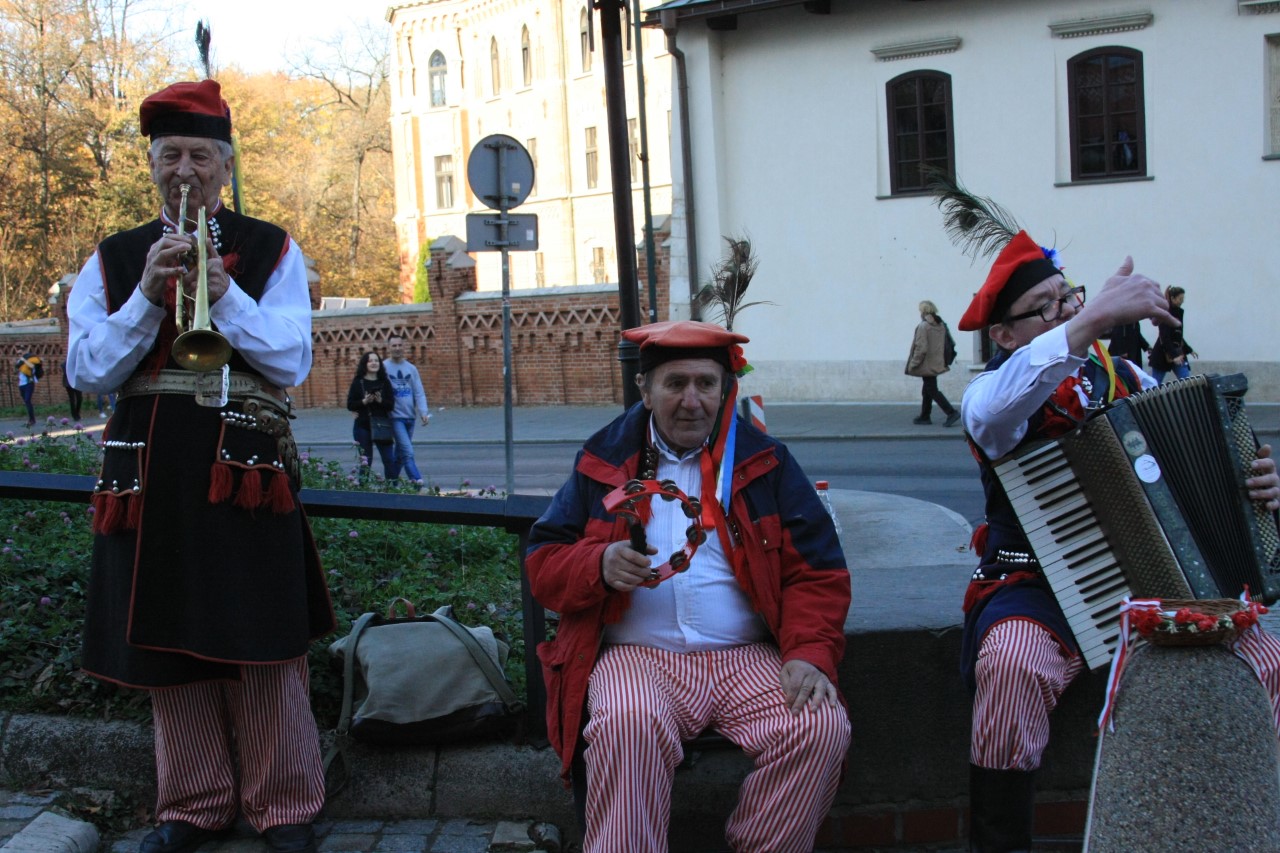
Third, was my recent trip to Poland. Much like Troyan, the signs of the Eastern block can still be seen. However, we spent the majority of our time in Krakow, a prospering city that mostly went untouched by the fabled War. This trip was primarily centered around the Jewish population and included a very hard, yet very needed, trip to Auschwitz. We also had the lovely opportunity to attend traditional Polish music performances. (Which if you have never listened to it- DO IT -RIGHT NOW. You can thank me later.)
A traditional band playing in the streets of Krakow.
Traveling here is vastly different to the United States. Sure, you may get some different aspects of our own culture as you go state-to-state or town-to-town, but it all varies so quickly out here it truly can make your head spin.
Traveling!!! It’s one of the most essential and exciting parts of studying abroad. Each trip presents loads of opportunities for seeing more of your host country and the world. During these first six weeks of my study abroad journey in Spain, I’ve done lots of traveling. Here are a couple of the cities I’ve visited in Spain:
A view of Tarragona from atop a Roman Circus, which dates back to the 1st century.
-Tarragona, a city of just over 100,000 people in the Cataluña region of Spain. An hour away from Barcelona, Tarragona is by no means a well-known city. Most people that I’ve talked with here in Alicante say they’ve never been to Tarragona but they have visited Barcelona multiple times.
However, there’s a lot to do and see in Tarragona. First of all, there are various Roman ruin sites that are spectacular (Tarragona gets its name from “Tarraco,” the ancient Roman city). With my flatmate from Japan, I went to a Roman circus, an amphitheater and an aqueduct.
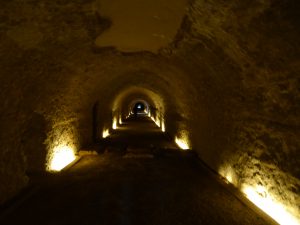
An illuminated tunnel in Tarragona’s Roman circus.
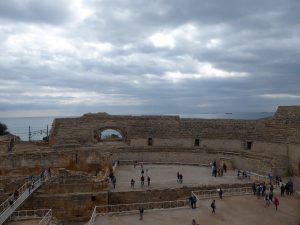
Each ruin site possessed its own intrigue and unique features. The circus, built in the first century, featured illuminated tunnels that were breath-taking. Although the amphitheater didn’t have any tunnels for us to explore, it was just minutes away from the beach, which gave us a really nice panoramic view.
Even though it was a cloudy, Oregon-like day, we enjoyed the beautiful oceanfront views of Tarragona’s Roman amphitheater.
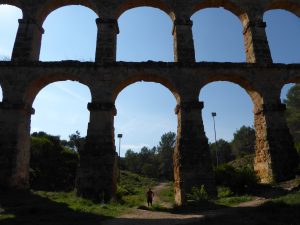
And then the aqueduct. By far my favorite of the ruin sites in Tarragona, the aqueduct is located just outside the city. We took a bus and then had to hike some nature trails to see the aqueduct, pero valió la pena (but it was worth the pain). Despite being built in the first century and no longer serving any aquatic purposes (the river is dried up), the aqueduct of Tarragona remains a very sturdy and symmetrical piece of Roman architecture.
Likely built during the reign of Caesar Augustus, the Roman aqueduct of Tarragona is a sight. Its symmetricality and enormity are mind-bending (I felt tiny).
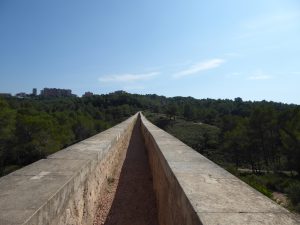
Oh, and did I mention that we walked across the aqueduct? And that, yes, it was perfectly legal? Walking across a two-thousand year old aqueduct/bridge/whatever-you-wanna-call-it is one of the coolest things I’ve done abroad and in my life.
Walking atop the Tarragona aqueduct. Despite having been built nearly two thousand years ago, it remains structurally sound for tourists to walk on.
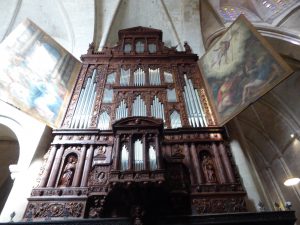
In Tarragona, my flatmate and I also visited a Gothic cathedral and the central market. Both were enormous and offered us glimpses into Catalonian culture and history. The cathedral featured impressive works of art from the Gothic and Renaissance eras. One of the most impressive features of the cathedral was a gigantic organ that stretched all the way to the ceiling. The outdoor garden was also delightful, with fountains full of turtles and koi fish to entertain us during a mask break.
The organ of Tarragona’s cathedral is enormous! Some very wealthy folks must have paid for it…
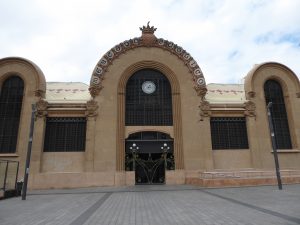
Later that day, we visited the central market of Tarragona. In Spain, nearly every city has a central market with local food and vendors. The markets also tend to be of significant historical value, so they can be really good places to learn about the city. In the central market of Tarragona, there were lots of meat products and fresh produce, but I ended up buying a bag of candies. Apparently the candies weren’t from the region but they were delicious anyways.
I bought some delicious candy at the central market of Tarragona.
-Granada, a city in the south of Spain that possesses a unique blend of Moorish and Andalusian features. Last weekend, I visited Granada as part of my study abroad program’s itinerary. So, with 18 other Americans and our program director, I squeezed into a travel bus at 8am for a four hour ride–just the beginning of a non-stop trip that was fascinating but energy depleting.
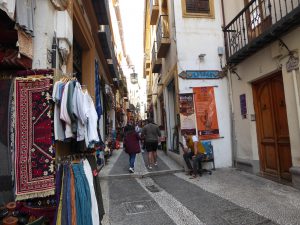
A street in Granada famous for its Arabic stores.
Fatigued and looking for rest, we arrived at our hotel. However, most of our rooms weren’t ready! So we had to scramble to store our belongings in the rooms that were open before heading to the Royal Chapel of Granada.
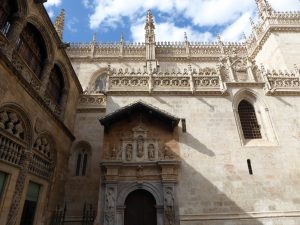
The Royal Chapel from the outside. No photos are allowed inside, but you can see the tombs of Spain’s most famous monarchs, Isabella and Ferdinand.
Things went more smoothly on our tour of the chapel. We were able to see lots of artwork (including original works of Botticelli) and even the tombs where King Ferdinand and Queen Isabella were buried hundreds of years ago. And outside the chapel, a woman was singing what appeared to be an Arabic hymn. The experience was surreal.
After visiting the chapel, we had a little down time, so I wandered around the Arabic shopping district. In the stores, I saw lots of lamps, earrings, necklaces and other shiny items from different parts of the Arabic world. I also stopped for some tea and a dessert at an Arabic tea shop. ¡Qué rico!
That night, most of the group went to see a flamenco show. I bought my ticket late, so I had to go solo to another show. While I was a bit bummed to not have any company, I soon discovered the joys of solo traveling. On my way to the flamenco show, I heard some music coming from the main plaza. And to my delight, lots of people were dancing there! So, I joined them for a bit before resuming my journey to the flamenco show. Considering all the spectacular things I experienced in Granada, my favorite was dancing with the community that night in the plaza.
If you ever find yourself in Andalusia, go see a flamenco show!
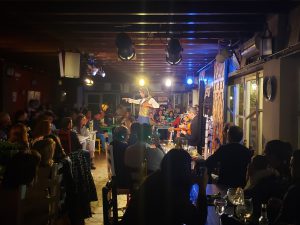
And then the flamenco show! The one I attended was in a restaurant and man, was it intense! There was loud singing, powerful string strumming, fiery dancing and toe tapping, and by the end, one of the dancers was spraying the audience with his sweat. Thank goodness I wasn’t near the stage!
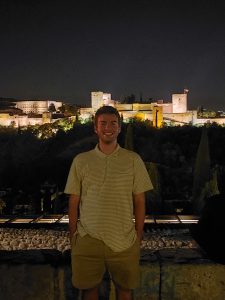
The Lookout Point of Saint Nicholas. La Alhambra and the city of Granada were beautiful from above.
After the show, I met up with one of my classmates at the Lookout Point of Saint Nicholas. From there, we were able to see La Alhambra illuminated and city lights. It was so beautiful, but by the time we got back to the hotel it was already Sunday and we were completely exhausted.
We woke up at 8am to eat breakfast and clear out our rooms. Then the highlight of our trip: La Alhambra.
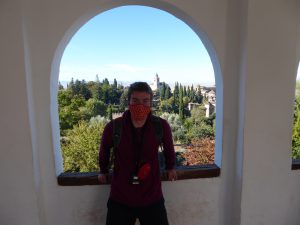
The views from La Alhambra are breathtaking.
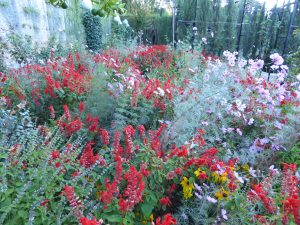
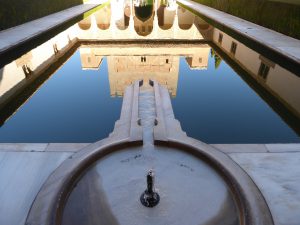
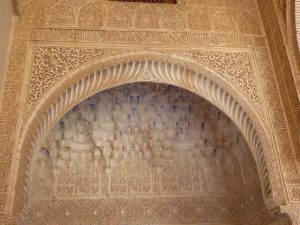
Words cannot describe how perfectly beautiful La Alhambra is, but I’ll do my best: flowers, green shrubs, water fountains, views of Granada, Moorish palaces that were built hundreds of years ago. Our guide said that the water was an important symbol of life for the Moorish royals–a point made by the presence of water all around us. Gorgeous. And the garden, the butterflies, the architectural designs, the views…Argh!!! Sometimes words are just insufficient so I’ll leave you with photos and sign off with that.
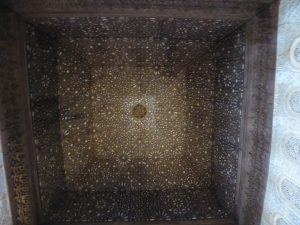
Although most of the gardens were installed in the 20th century, they are spectacular.The Sultan’s roof features impressive symmetry and lighting techniques.Water, a symbol of life for the Moors, is everywhere at La Alhambra.3 hours of La Alhambra was not enough. If you visit, don’t blink because you will miss lots of details!
I have officially been in my modules (classes) for one month and have been living on campus for two! It has taken a bit to get acclimated to the differences between Linfield and UoN.
Currently, I am enrolled in 3 modules which equal about 15 credits at Linfield. I am taking Introduction to Comparative Politics, Politics at University, and Democracy and its Critics. Each of these modules is laid out differently than any of Linfield’s classes. Two of my modules are lecture-seminar models and my other module is online self-directed.
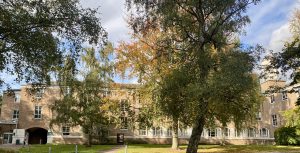
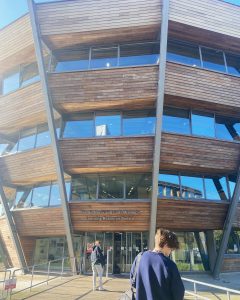
The Law and Social Science building is the main building my lectures and seminars are held. IT has two main lecture halls, each holding a couple hundred students. It is also home to the School of Law and the School of Politics & IR.
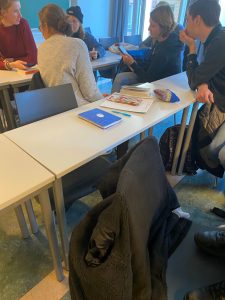
The lecture-seminar model has taken some time to get used to. Instead of having a class where the professor teaches but also student engagement (questions, activities, presentations, etc.) is involved, we have lectures where professors just teach and seminars with someone different where student engagement happens. We also have weekly optional lecture engagement sessions where we can ask the convenor (not always the professor doing the lectures) questions related to the module. The online self-directed module is very similar to an OCE course at Linfield. I have weekly slides I go through with a few activities attached to them.
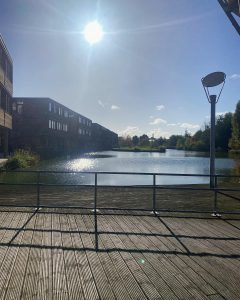
Djanogly Learning Resource Centre is one of the libraries on Jubilee campus. Inside there are tons of study spaces and computers. This building is unique in that it has a single floor that spirals upwards to the top. It is on a lake, so no matter what window your are seated at, you can look out and see geese and swans swimming on the water.
In all of my modules, homework is not common. My final marks (grades) are based on either two papers or a paper and exam. Because these papers and exams are worth a big portion of our marks, we are given the prompts and dates in our syllabus at the beginning of the modules. This allows us, students, to start ahead of time and ask questions during our seminars and lecture engagement sessions.
This is the lake that the Djanogly Learning Resource Centre is surrounded by. Throughout the day you can see geese and swans swimming on top of the water as you walk on by/ In the distance, there is an island where students can go to study or eat their meals.
Campus life is similar to Linfield but there are some key differences. At UoN, there are two types of halls, catered and non-catered. I live in a catered hall which means I have a dining room to eat breakfast & dinner on the weekends and brunch & dinner on the weekends. For lunch, I am given £25 pounds a week to use at any of the cafes, bars, and restaurants on University Park or Jubilee campuses. In all; the halls, we have a common/game room with a TV, a study room with a printer, and a TV room. My hall is a bit different than others because we have one of the four bars on campus. In the halls at Linfield, you are encouraged to decorate your door, leave it open, and socialise with your neighbours in the hall, but at UoN it is a bit different. We are not allowed to decorate our doors or necessarily leave them open. It is common for people to go to the pantries (sink kettle, microwave, and toaster) on their floor to socialise.
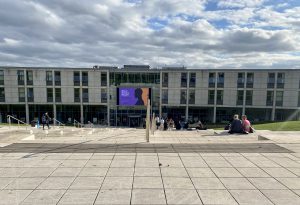
The Portland building is the home to the Student Union, Portland Printing, Portland Clothing, and a few restaurants. Students will get lunch and study inside or outside.
Outside of the halls, our Student Union and ResX team, similar to ResLife, puts on various events throughout the campus. So far they have done massages in halls, food catering, scavenger hunts, poster sales, pop-up thrift shops, movie nights, game nights, and other campus-wide socials. Most of these events are attended by freshers (first-year students) and not so much by the second and third years. Just like Linfield, food is a hot commodity at these events, especially Domino’s pizza. It is also pretty normal to see evening events with a bar because the majority of students are 18 years old, the legal drinking age in England. Across campus in the halls, they put on formal dinners each term where students dress up. They have the dining staff do a proper multi-course meal served with wine and other drinks. It is a fun time to get with your hall friends and enjoy a fancy meal together.
I only have a few months left here and so much more to explore and experience!
One of the biggest things I have been repeatedly surprised by during my time in Norway is not about any cultural norm or something I had to adjust to, but rather the content of my class, Fairytales and Creativity. It is a class in the education department, and since I am studying history and international relations, I found I am greatly under-prepared for the depth of some of the things we discuss. I do not know what I thought the class would be, maybe focusing more on history and culture. But every week, I am surprised by how fairy tales and stories can benefit children and how they can be incorporated into a curriculum.
My favorite example is something called the Brotherhood activity. My class used Snow White as an example. The basic premise is that children complete the phrase “Snow White is like all those who….” with descriptors they think apply to the character. This could be as simple as inserting “ are lonely” or “deserve second chances”, but it can also be phrases like “have had to leave their home” or “have experienced the loss of a loved one”. By doing this, children are diving deeper into the story, and often pulling out subtle threads that are not necessarily the central plot or moral lesson. As well, when kids answer with phrases about grief, loss, abuse, or other difficult topics, the activity can often allow them to talk about their own experiences and emotions safely, because they are not talking about themselves. By talking about how Snow White lost her father or was forced to flee her home, children can openly discuss and process heavy topics that might otherwise be hard to face. Learning this activity absolutely blew my mind, but it made perfect sense how using a story to create a space where children can safely talk about complicated topics is useful for teachers to know.
This kind of eye-opening lesson genuinely happens to me every week, and even though I have no plans to become a teacher, I still feel empowered and better off for having learned these things.
My classmates and I discussing how a fairytale we have pulled up on our phones can be used in a classroom.My typical set up in class, taking notes and working on an essay for class.
A lot of people might think the most ideal time to visit Bergen, Norway might be spring or summer, when hiking up to a view of the fjords isn’t accompanied by torrents of rain and the harbor is clear skies only. This would definitely make for better pictures, the kind you see on postcards, but I think Bergen in October is a truer Bergen. The second largest city in Norway, it is also one of the rainiest places in the world, which is the Bergen I experienced on my week off from classes when I took a small trip there.
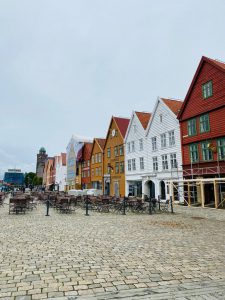
Bryggen, the colorful houses Bergen is known for
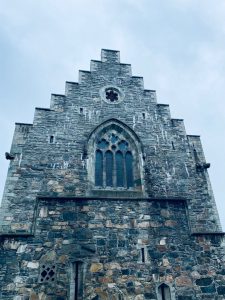
During the rare moments when the rain lightens up, or even pauses entirely, Bergen city center is a wonderfully cobble-stoned area to wander, full of the classic colorful houses Bergen is known for, including the historical site Bryggen. Additionally, a history fan like myself can even wander further up the harbor to see the Bergenhus Fortress, a historical fortress with roots in the 13th century.
Bergenhus Fortress on a rainy day
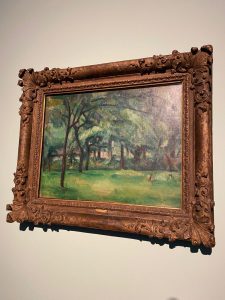
What this grand amount of rain means is that there is no shortage of indoor ways to experience Bergen. The most obvious of them being the KODE museums— four art museums surrounding a large lake and quaint gazebo (also beautiful tourist attractions) that showcase some of the best Norwegian art has to offer. Two were open during my visit— the first an exhibit of Paul Cézanne hosted in a Renaissance Revival mansion and the second a whole gallery of famous Norwegian artists, most notably Edward Munch.
Farm in Normandy by Paul Cézanne
My favorite way to pass the hours indoors, however, was the University of Bergen’s Cultural History Museum. To put it lightly, it is easy to get lost in there for hours. The collection is endless, from Viking-era jewelry to a glass replica of a Norwegian stave church to a modern-day collection about plastics in the ocean and Norwegian plastic consumption. Every floor and every room offers something new.
In my last blog post, I talked about gratitude. And just to be clear, I’m still grateful to be able to study abroad in a country as beautiful and historically rich as Spain.
But with spending more time in a foreign country, you take notice of the little differences. While many of those little differences are exciting, oftentimes they can be confusing and stressful.
By talking about these little differences, I’m not trying to scare you out of studying abroad. Rather, my intent with this blog is to portray my experiences in the most authentic way possible. Part of that includes talking about the challenges that I face.
So in this blog post, I will be describing some of the little differences I’ve encountered here as a study abroad student, as well as some of the strategies I’ve used to navigate these sometimes challenging situations. I should also note that some of the little differences are enjoyable for me and that even if they aren’t, at least the experience will help me build up character and understand more about our planet.
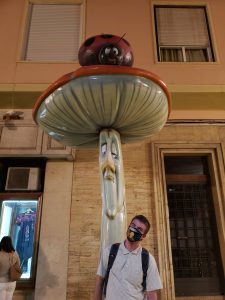
Alicante’s weird mushroom street. Talk about little differences!
Here are some of the little differences I’ve encountered thus far:
1. Spanish Hours: As with many other little differences that I list here, this one maybe isn’t so “little.” Let me explain: Many Spaniards wake up early, go to work, and then around noon take an hours-long break (la siesta). Then they finish work at night, eat dinner, watch TV or socialize, and go to bed late.
How has this impacted me? There have been times where I’ve gone to a store around siesta time only to find out that it’s closed until later. This happened my first week here, so I wasn’t able to buy a SIM card until day four…Which means that I didn’t have any internet on my phone (which is really hard when you’re trying to navigate a new city and can’t use Google Maps!!!).
Thankfully, my host family and classmates helped me navigate the city the first few days. And now I know to go to stores in the morning or late afternoon. Not around siesta time.
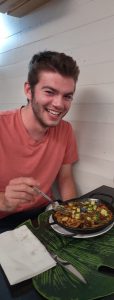
Eating vegetarian paella on a night out in Tarragona with my Japanese flat mate. Most paella has meat, so it was a real treat for me to try the famed Spanish dish. It was rich with mushrooms, rice, veggies, herbs, and fruit.
2. Food: As I just mentioned, Spaniards eat dinner really late (9 or 10 pm). Also, they usually only eat three times a day, which means that you better eat a lot for each meal and hope that you don’t get cravings between meals.
In general, I enjoy the food here. My host family prepares most of my meals, but I also go out with friends to eat. My host family eats dinner at 9pm, so that was definitely an adjustment for me. I had to let my body adjust to the meal gap between lunch and dinner, which took some time. Even now, sometimes a craving will hit and I’ll buy my own snack.
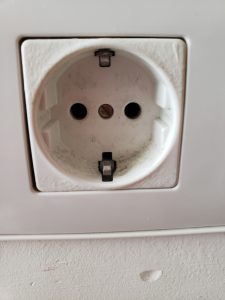
3. Mechanical stuff: In Spain, things work differently than in the US. Some of the mechanical differences I’ve encountered include vending machines, electrical plugs (bring a plug adapter to Europe), keyboards, and so many more! Maybe it’s partly because I’m a mechanical klutz but things are definitely built differently here. Many other international students have described in agony to me their struggles with apartment keys. I encountered this problem the first time I tried entering my apartment and had to ring the doorbell because I couldn’t figure out how to open it. My host mom showed me again how to use the key and I haven’t had any problems since.
Wall outlet. Bring a couple plug adapters and charge adapters to Europe. You won’t be able to charge your precious devices without them!
Ah, but the keyboards! I’m still trying to adjust to the Spanish keyboard, which has a bunch of symbols that I don’t know how to use. I’m used to typing in Spanish on my own computer but I struggle when I have to use a desktop keyboard for my internship. Slowly but surely I’m getting better at using the Spanish keyboard. I only started my internship last week, so the keyboard is still a struggle.
I’m not even going to talk about the vending machines (I know how to use them now). Next little difference!
4. Cultural misunderstandings: Again, maybe not such a little difference but it happens often so I’m putting it on this list. Some of the cultural misunderstandings can be attributed to language. Spaniards talk really quickly, so sometimes it’s hard for me to understand them. Since I’m more used to Latino colloquialisms, some of the Spanish vocab (“alubias” instead of “frijoles” for “beans,” and “aseo” instead of “baño” for “bathroom”) were confusing at first. Visual cues and speaking Spanish constantly are some strategies I’ve used to adapt.
A hilarious language misunderstanding happened on my third day in Spain. I was eating lunch with my extended host family when someone asked me if I wanted some “keh-choop.” I looked at everyone with profound puzzlement as they repeated the word over and over again, trying to clue me in on the word. Then they showed me the bottle of ketchup. Keh-chup! Keh-choop! Same thing, just different pronunciations. How embarrassing!
Another point of cultural misunderstanding: In Spain, people can be quite intense and persistent. You might say no to something and they will continue to press you for approval. A couple of weekends ago, my host sister asked me if I wanted more dessert. I said no, but she kept pressing me. Not wanting more food is seen as a sign that you don’t like the food, so I had to tell her that I enjoyed the dessert but that I was full.
Being firm and direct with your communication is key in Spain, especially when you want or don’t want something. Many times, I’ve confused store clerks with indirect communication, making the transaction more tedious for both of us. So…the direct communication part is something I’m still working on.
5. History: Spain is rich with history! There are so many castles, monuments, and cathedrals to explore. I recently got back from vacation in Tarragona (a city near Barcelona) where I got to visit several Roman ruins. Next weekend, I’ll be going to Granada on a trip sponsored by our Alicante University program. And in Alicante, I’ve visited the Castle of Santa Barbara and two bomb shelters from the Spanish Civil War.
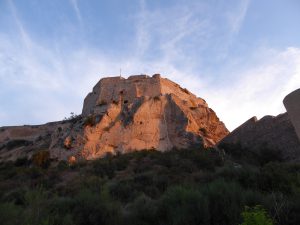
The Castle of Santa Barbara in Alicante, pictured from below. We had a group trip to the castle on the first week of our program. There’s so much history everywhere in Spain!
The details from my trips will be the subject of my next blog post.
La Ciotat, the birthplace of moving picture cinema… and Bocci Ball. On my second week here we took a group excursion with the entire school to the wonderful coastal not-so-sleepy retirement village of La Ciotat. Upon first sight, we thought La Ciotat appeared like a small beautiful city by the sea, but seemingly un-busy. With more young people opting to live in the big cities, France’s rural populations like La Ciotat are aging. However, when we arrived that morning at ten we found the city to be a veritable hub of activity. There were people swimming across the bay right past several large group water aerobic classes. On the boardwalk, there were all ages of electric scooters, bikes, and joggers making their way home from the market with groceries hung on each handlebar. And yes, there was an entire park filled with organized Bocci ballplayers.
As we traversed the town, our guides pointed out several important places like the Eden Theater, where the Lumiere brothers showed the first-ever moving picture of a train entering the La Ciotat station. Having shown the first film ever to an audience means we saw the first and oldest movie theater in the world. Next, we saw the routine morning market and stopped by to get some lunch materials such as baguettes, cheeses, and fresh produce.
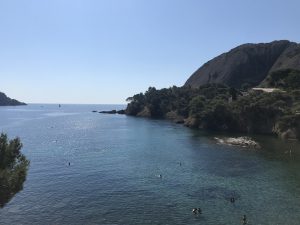
The beach we swam at in La Ciotat. Calanque and Parc du Mugel (France)
After the market, we went up the coast a short way by bus and hiked out to this rocky beachfront. Although lacking in sandy beaches to lay on, it made up for it with several tall rock out-croppings to dive off. As someone from the rainy, freezing north-west coast jumping into relatively warm-salty crystal clear waters of the Mediterranean was almost as shocking as jumping into the 50 F (10 C) waters back in Oregon. The sea was so calm that we could see down to all the reflective gray fish swimming just meters below us. We spent our time cheering each other on as we dove from cliffs and exploring the inlet.
I am embarrassed to say that our very apparent American enthusiasm must have unfortunately overpowered the other more reserved French beach-goers where we swam that day. This is the case with almost anywhere we go as a large group, especially because many of the students don’t speak much French. The stark contrast of American English being spoken enthusiastically between one another is quite harsh on the ears when compared to the subtle tones of most French conversationalists.
It is not just the language though, during orientation we were told that the French are often less reserved in certain public settings where other countries’ social conventions would have them be more outgoing. Although, it is important to remember this distinction is only a generalized observation and not the rule. It is all part of the cultural exchange experience, where we gain perspective of our place in the world while understanding someone else’s.
G
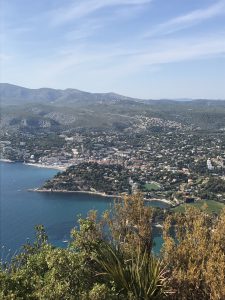
View of city La Ciotat from le Sémaphore du Bec de l’Aigle lookout point (France) On our way, our bus driver took us on a scenic route out of town up a winding road that led to a beautiful lookout where we could see several towns, beautiful mountains, and the horizon of the Mediterranean.