Deprecated: Function WP_Dependencies->add_data() was called with an argument that is deprecated since version 6.9.0! IE conditional comments are ignored by all supported browsers. in /chroot/home/a1e0f025/dab19c68f8.nxcli.io/html/wp-includes/functions.php on line 6170
Deprecated: Function WP_Dependencies->add_data() was called with an argument that is deprecated since version 6.9.0! IE conditional comments are ignored by all supported browsers. in /chroot/home/a1e0f025/dab19c68f8.nxcli.io/html/wp-includes/functions.php on line 6170
Now one last thing that made this Fall Break so special was that it was Golden Week. Golden Week is the anniversary of the founding the People’s Republic of China, which was officially founded on October 1st 1949. From the beginning of October, the country was celebrating the 70th anniversary of, well, the country. Beijing was filled with festivities including a national parade which was televised all over China.
If you weren’t an official and had an invitation, you couldn’t get anywhere near Tiananmen on Oct. 1st. The morning we left Shanghai, the national parade was being broadcasted in the living room of our hostel. We all gathered around to watch. People from the United States, Europe, South America, and China, all gathered to watch soldiers march in the streets, dancers perform in ornate traditional clothing, and Xi Jinping deliver a salute and order. It was a celebration of China, and we were all there to witness it.
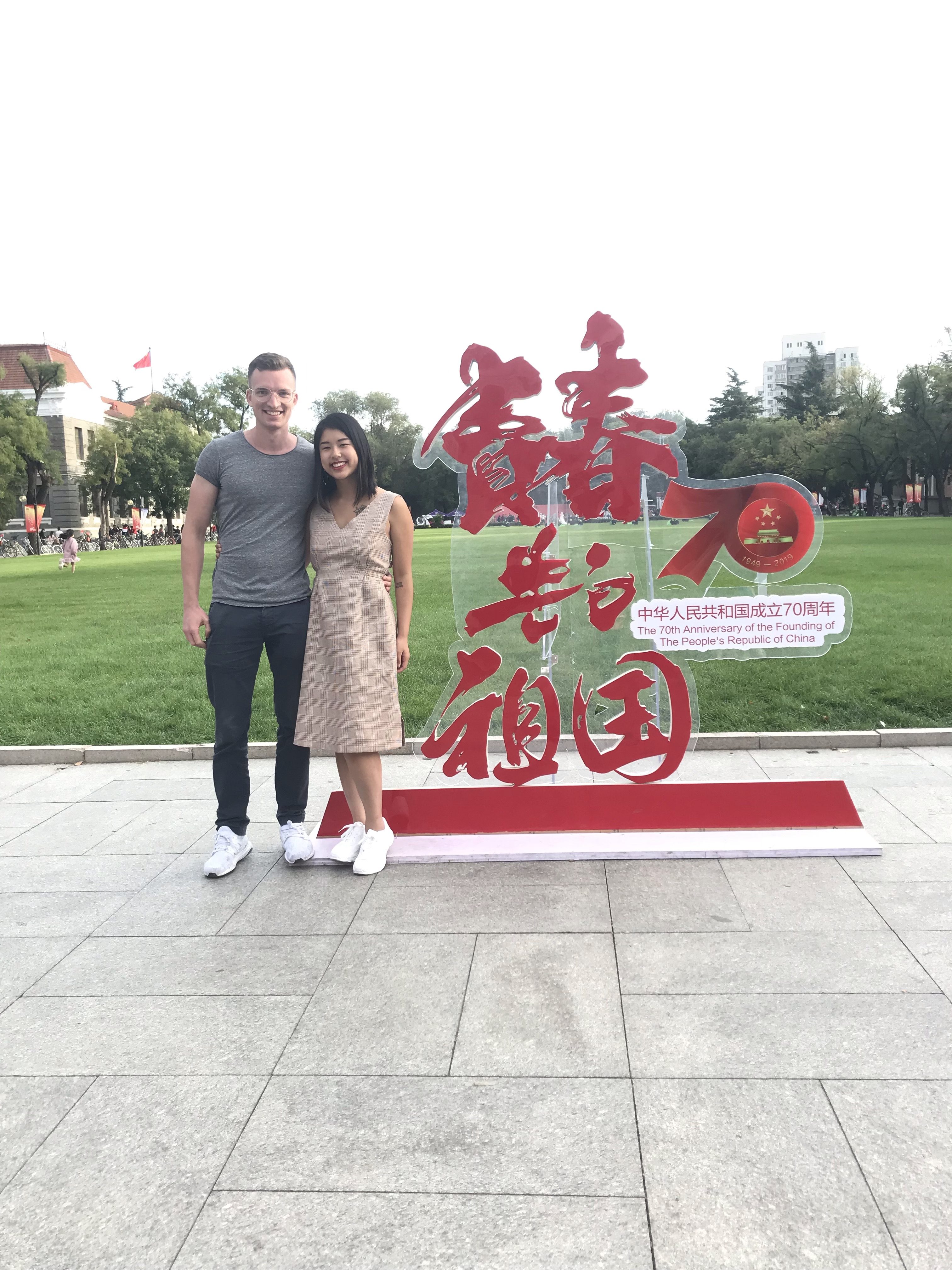
70th Anniversary decor can be seen everywhere in Beijing. Here is a picture on Tsinghua’s campus with my friend Michi from Germany!
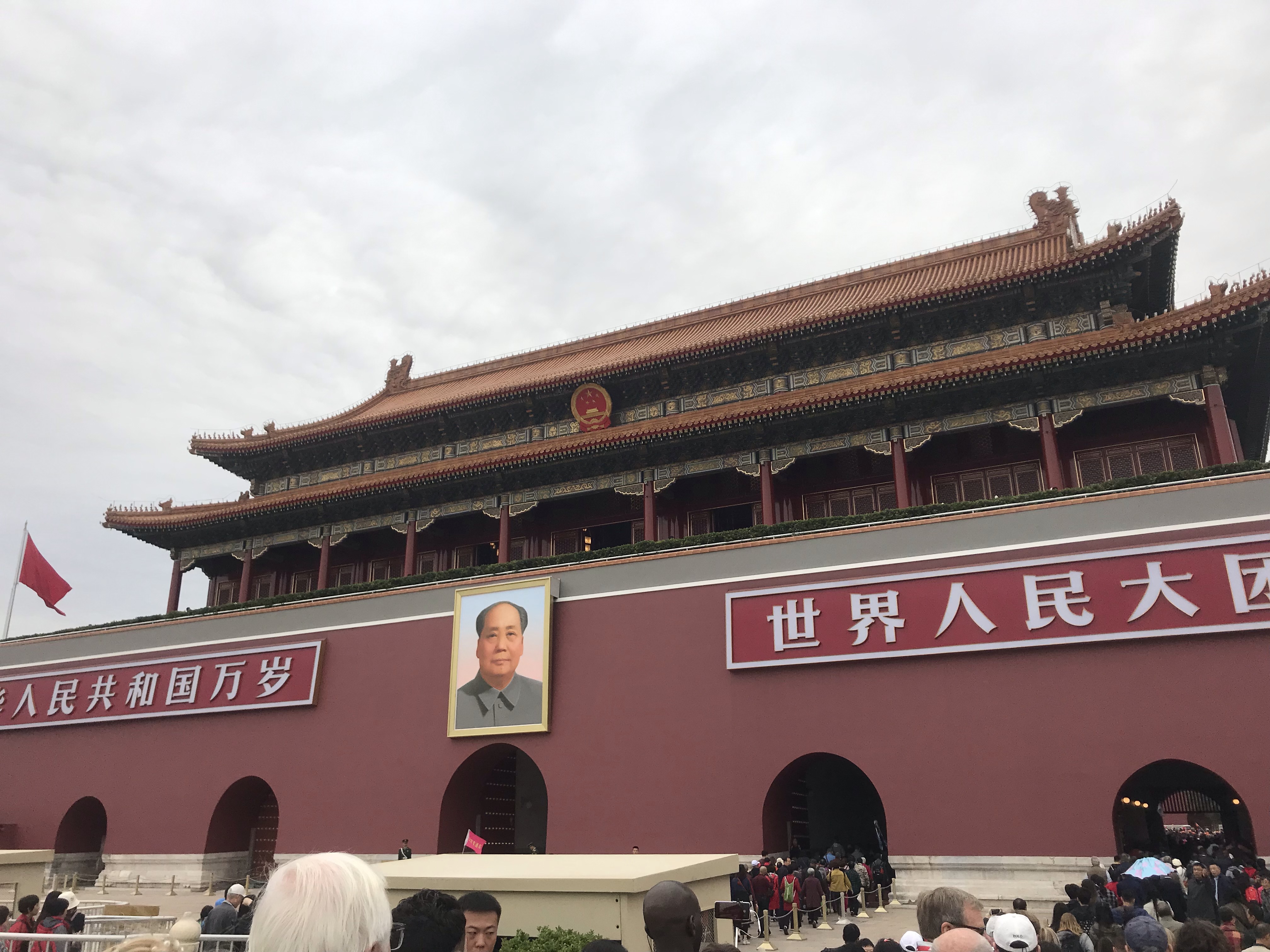
This weekend our program’s excursion included a trip to one of the most famous sites in all of China. We took a trip to see Mao! Not actual Mao, although you can see him for a short period in the morning if you wish. It’s dubbed the Mao-soleum, and people from all over the country come to visit and see Mao Zedong’s preserved body. What we really went to see was Tiananmen Square and the Forbidden Palace!
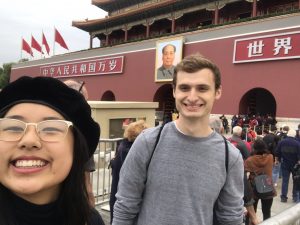
Chairman Mao!Selfie with Chairman Mao’s picture in Tiananmen
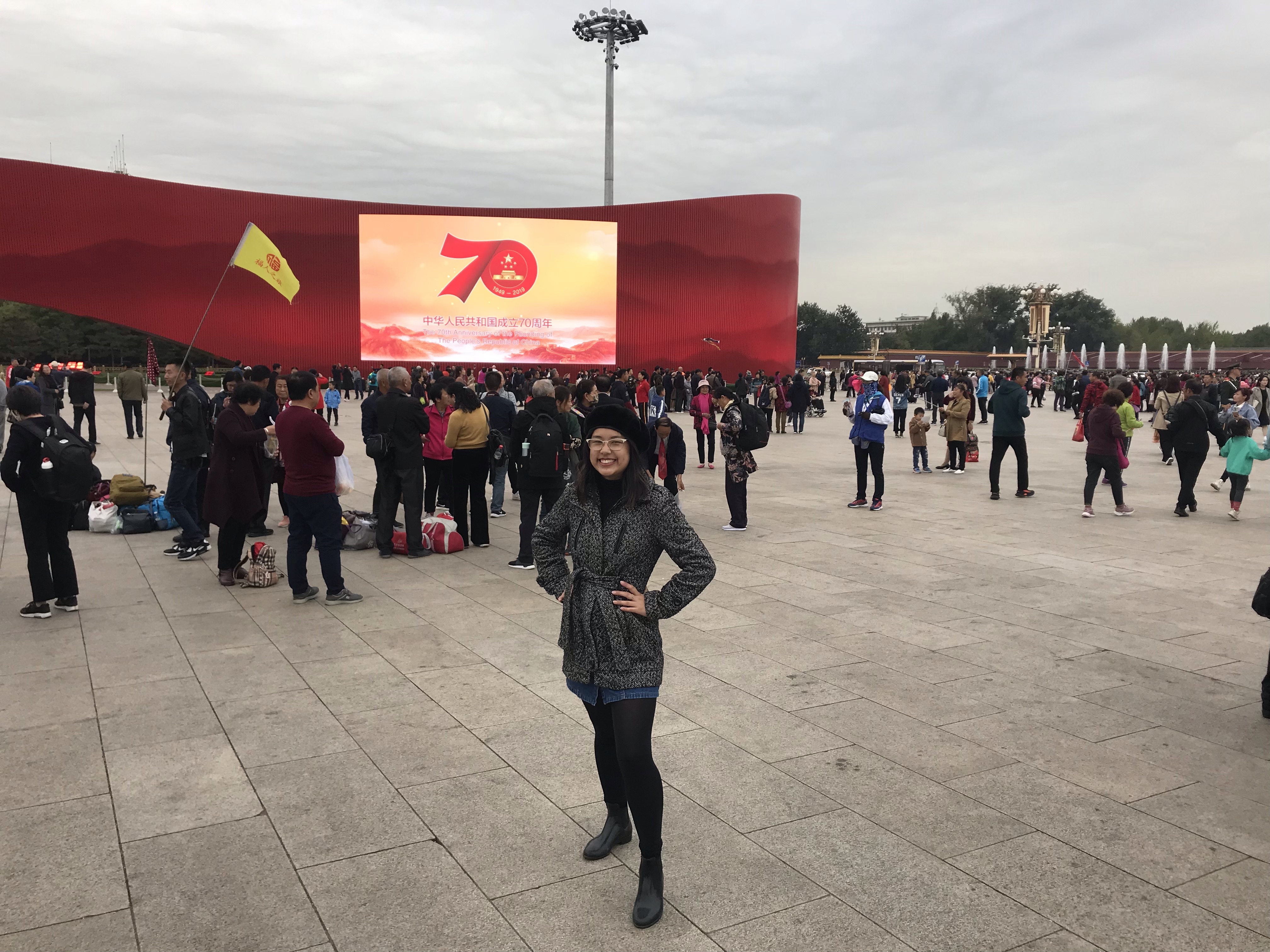
You’ll see many tourists at Tiananmen Square and the Forbidden City, as its a very popular tourist destination for Chinese nationals who don’t live in Beijing. My Chinese teachers said that Mao Zedong is especially special to the older generations from the countryside, and many come to see him and pay their respects. The Square was packed when we went, and looked quite festive!
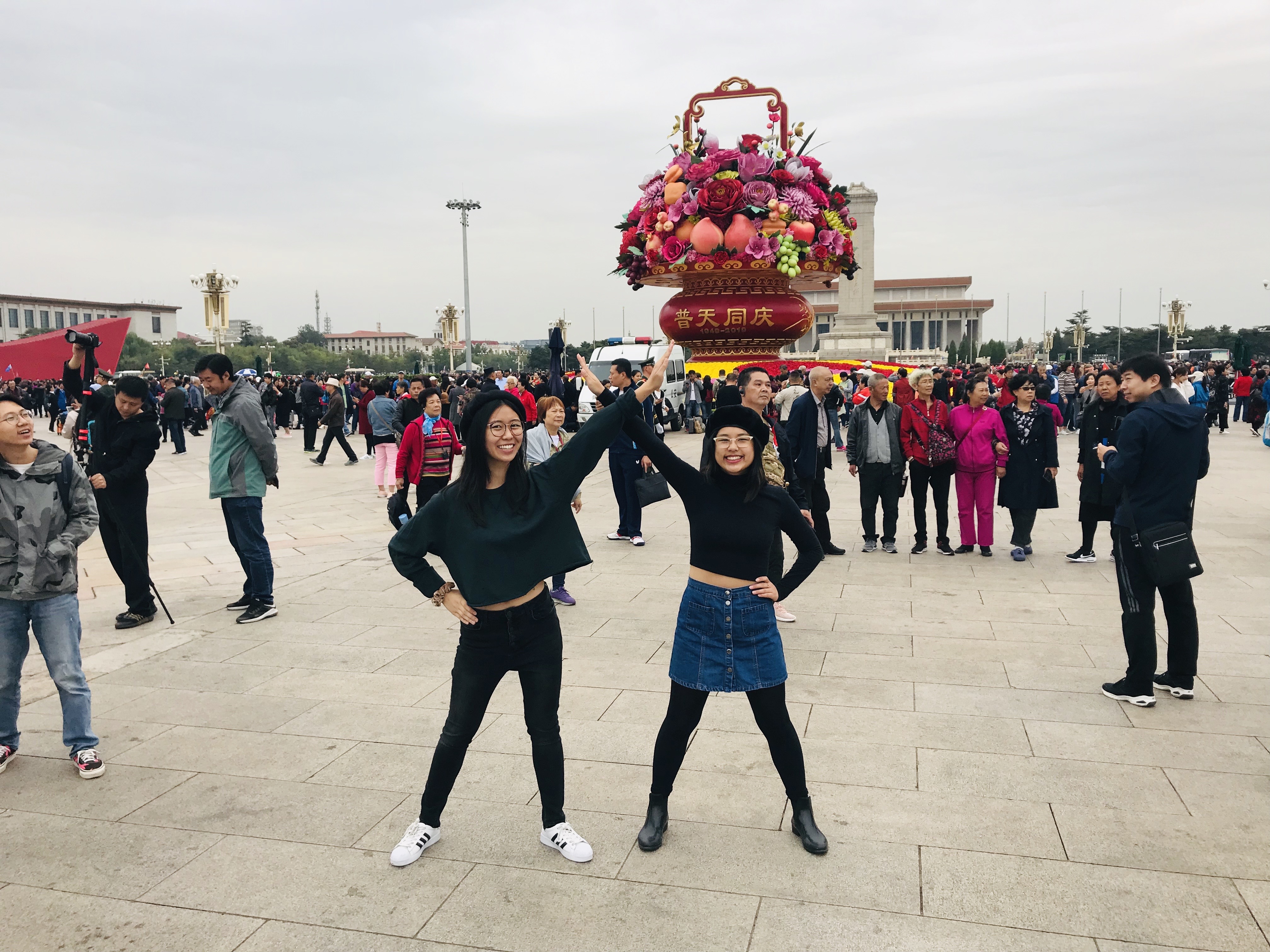
Tiananmen Square for the 70th AnniversarySarah and I in Tiananmen
It decorated for the 70th anniversary, with flowers and red and gold decorations, lucky colors in Chinese culture.
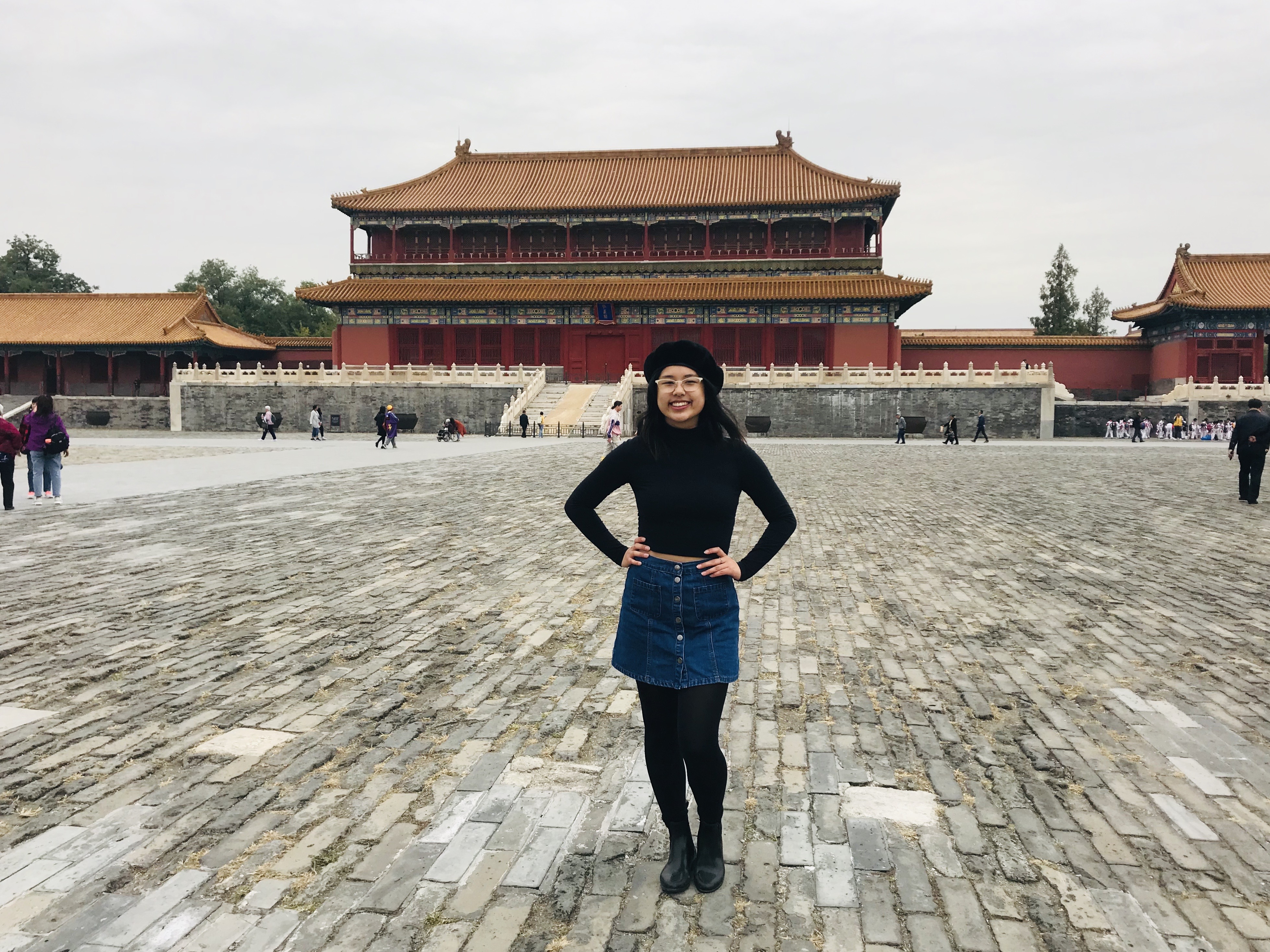
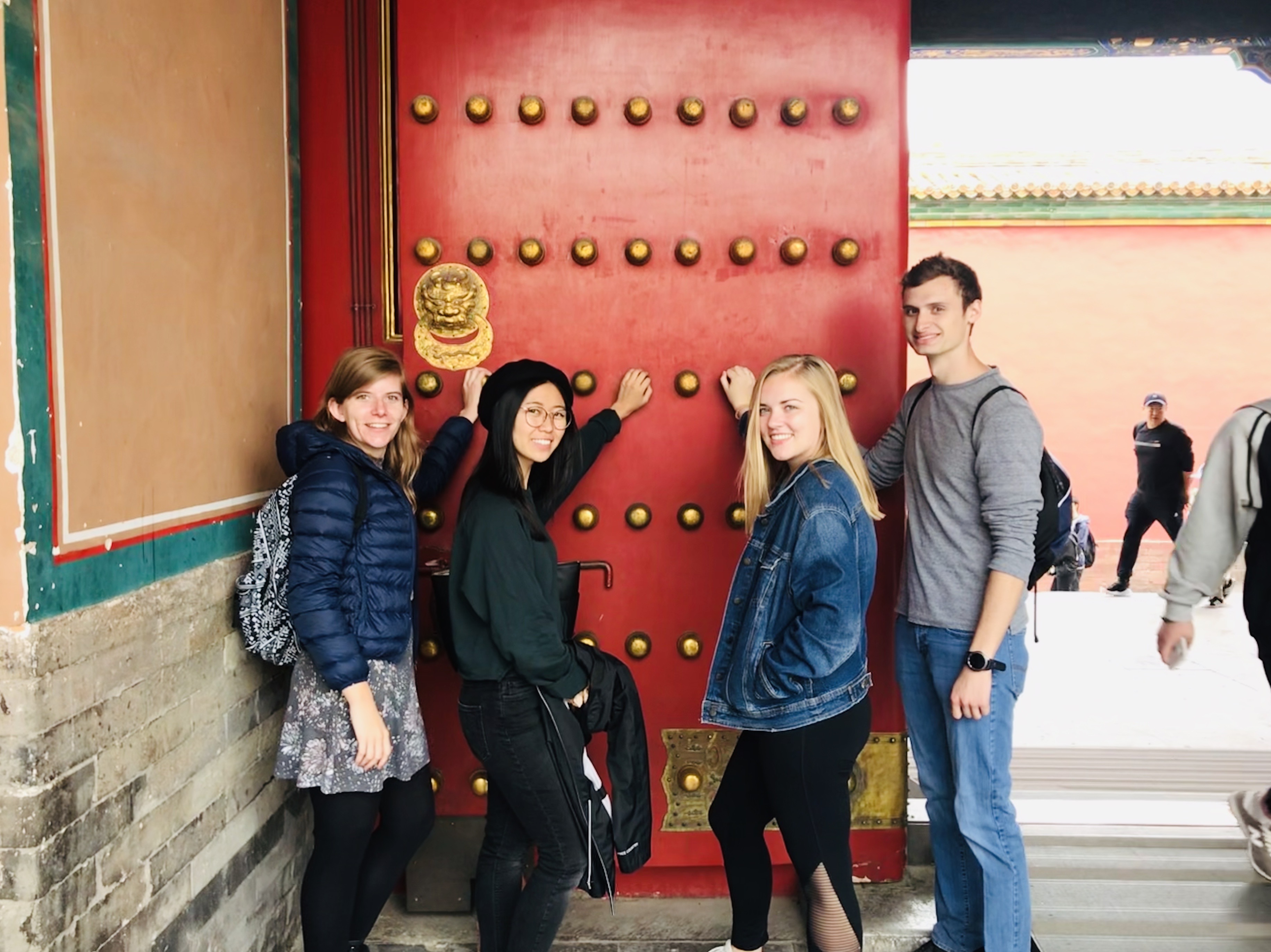
After some photos and general wandering, we entered the Forbidden City which is right next to Tiananmen. Not only is the Forbidden City the backdrop to some of your favorite kung fu movies, but it is the former Chinese imperial palace from the Ming dynasty to the end of the Qing dynasty. I can’t even imagine living there. The grounds are massive with multiple palaces and a huge garden. It’s quite amazing to be able to stroll around on ground that has been there for centuries. One of the most impressive things about visiting these famous sites, is that they’re in impeccable condition. China does a very nice job of protecting its sites, despite the hundreds of thousands visitors and tourists that come see them. We finished the day off with some tasty treats including this Chinese snack of sugared hawthorn berries, also known as 糖葫芦 (tanghulu).
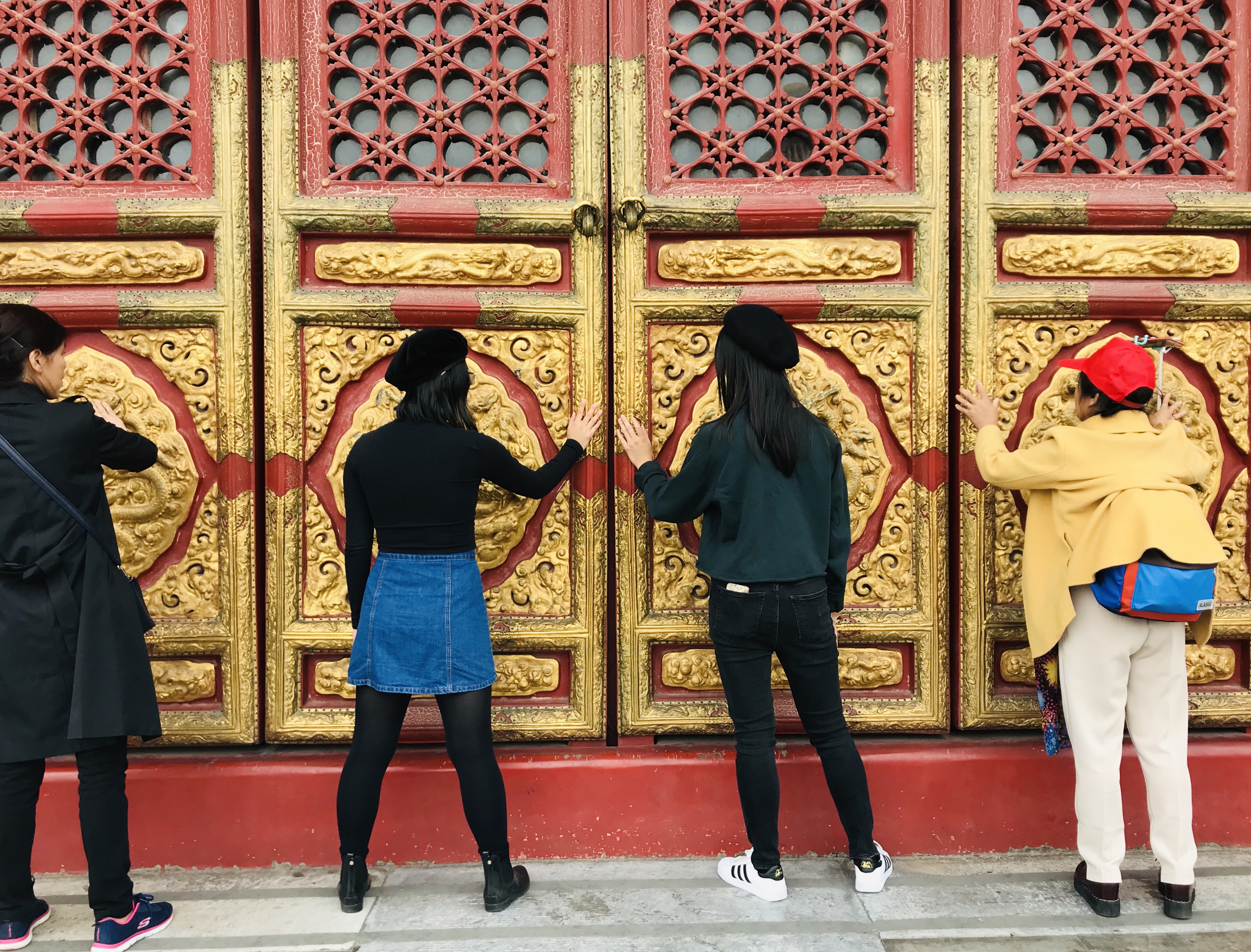
Sarah and I touching the doors for blessingsFriends in the Forbidden City touching the knobs for good fortuneHawthorn berry snack (tanghulu)
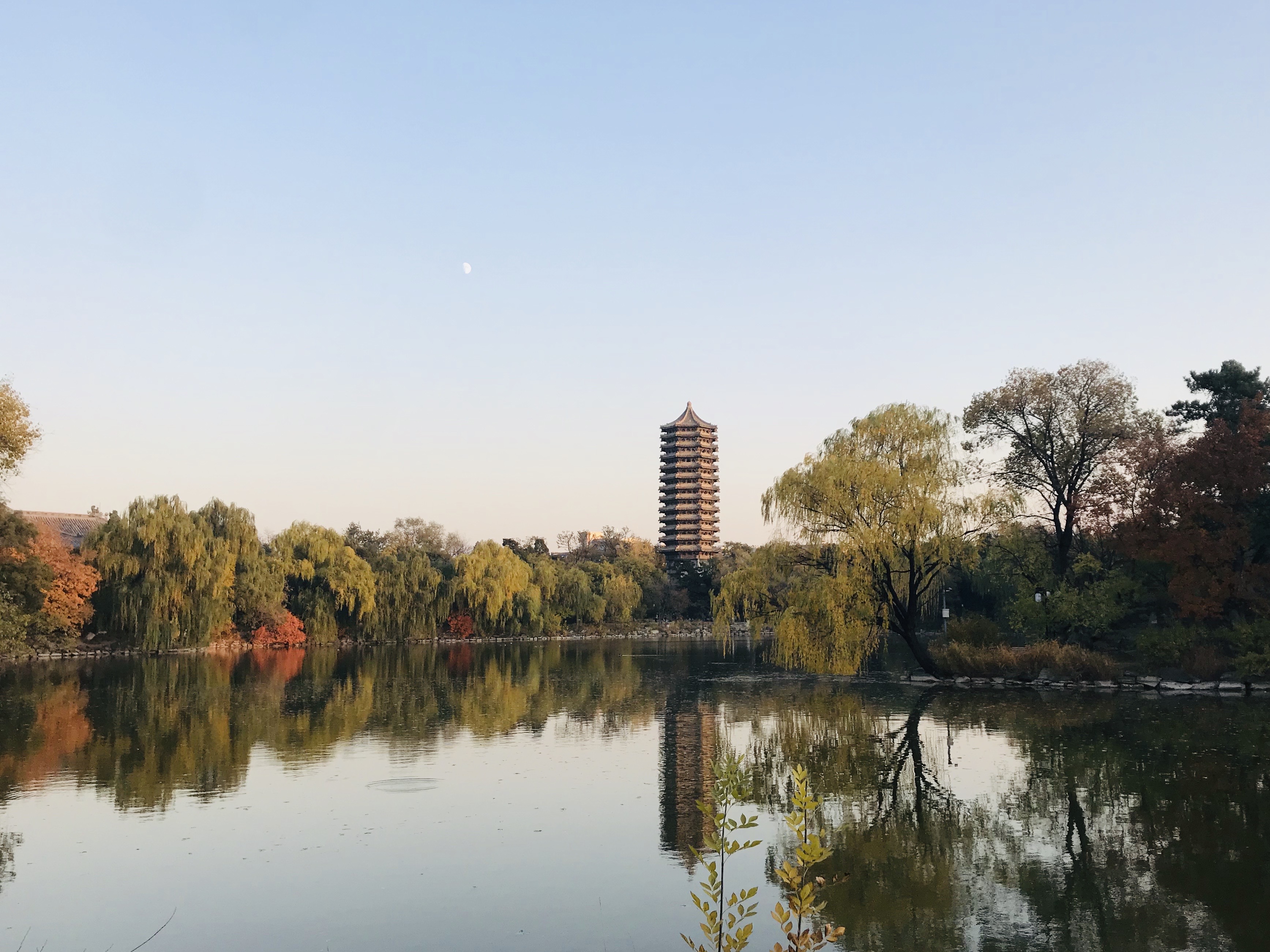
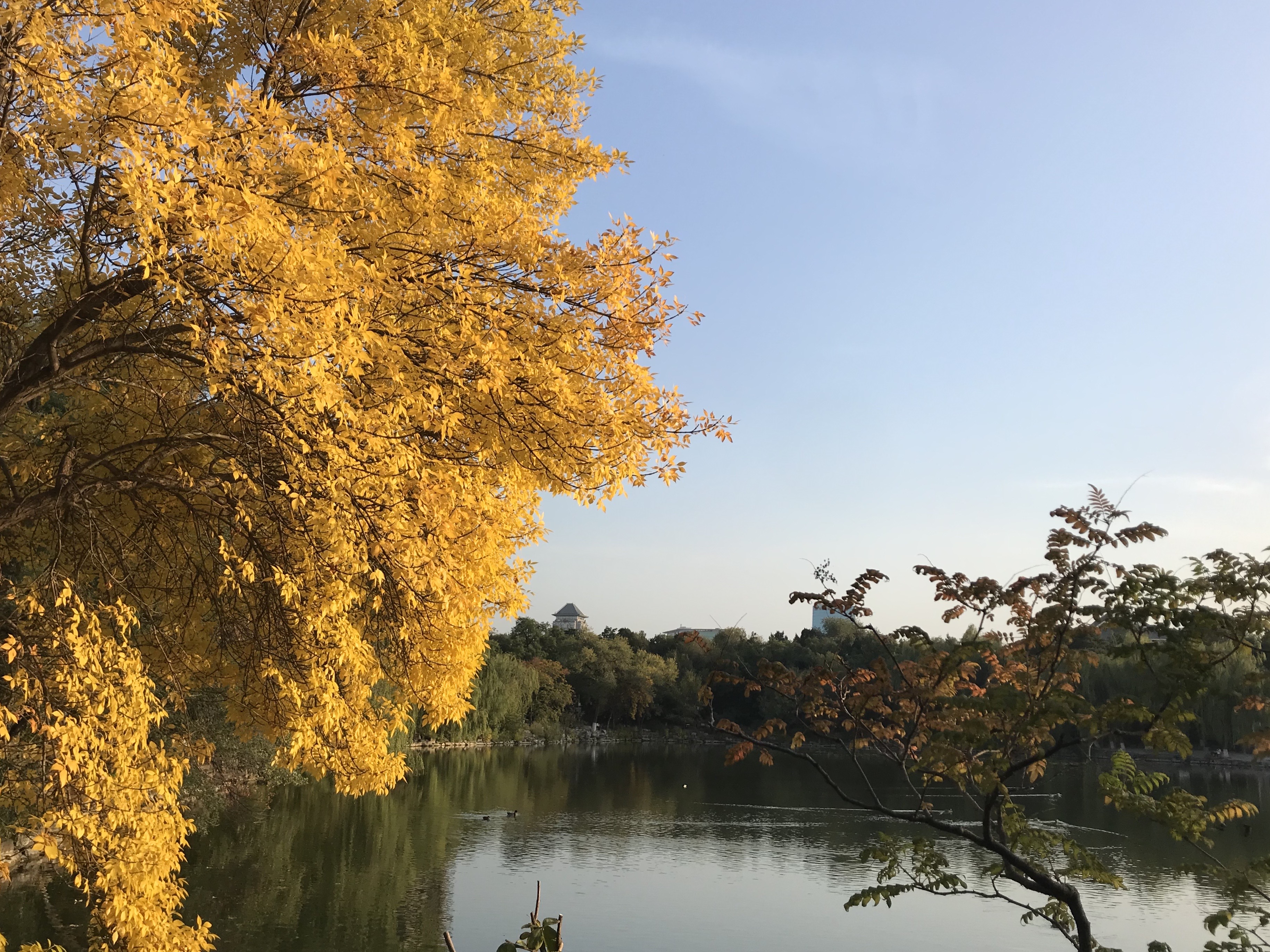
The leaves are changing, the days are getting shorter, and the pollution is getting worse. It’s finally fall! It’s really, really, fall now, and as the temperature drops, so does my motivation to walk 20 minutes to class everyday. Thankfully, China has the perfect thing for me. One of my favorite things about China is the convenience! Specifically in Beijing, it is so convenient to order food, get around, and pay for anything with the click of your phone. However, one of the best things in this city is how bike sharing apps have taken over! There are tons of bike rental apps in Beijing, seriously tons. In an intersection you’ll just see a sea of bicycles, all lined up waiting to be used. These bike apps are so convenient, extremely cheap (less than a dollar per ride, or you can buy a subscription plan) and very good for your body and the environment (no pollution)! I’m a fan.
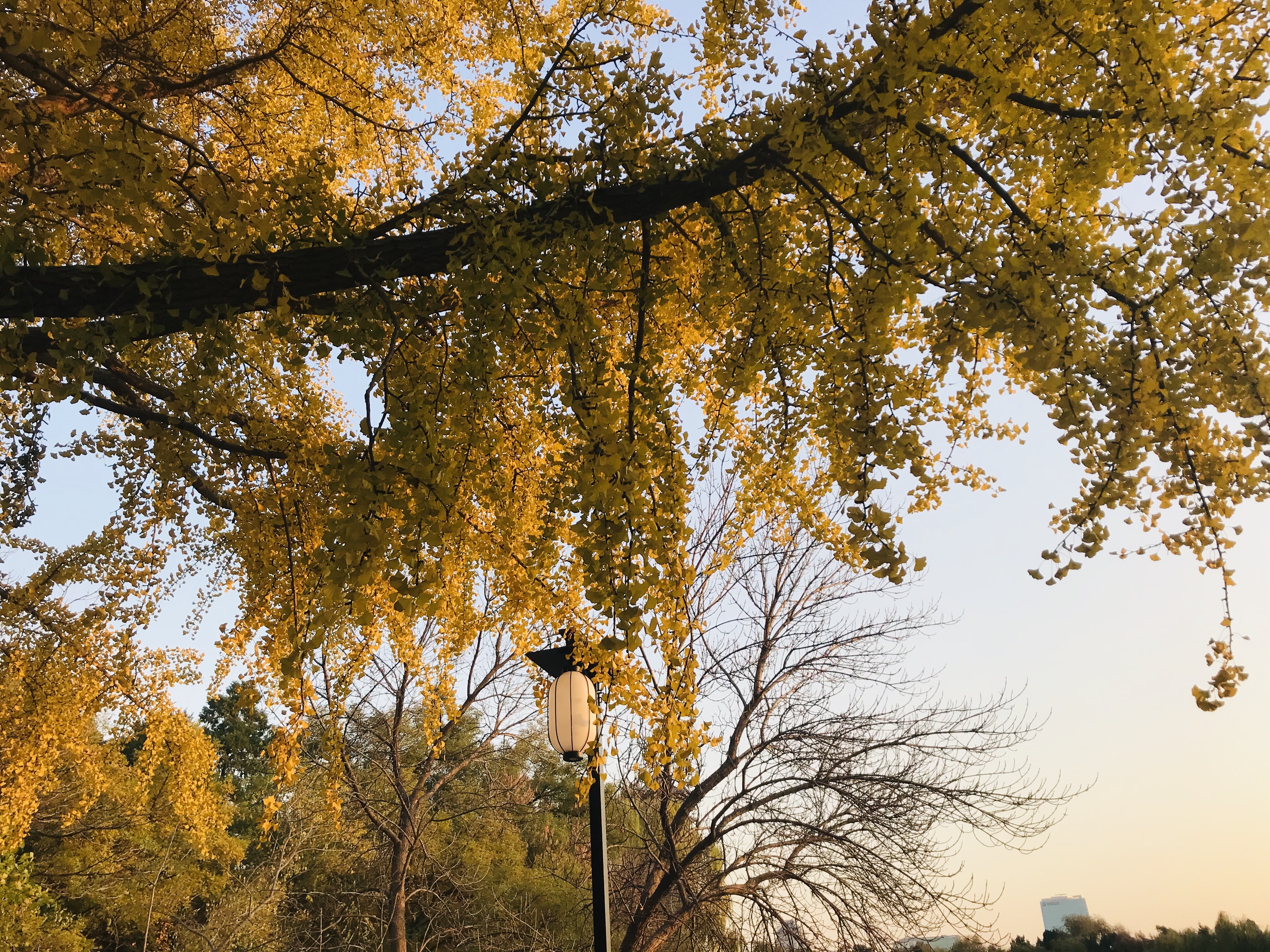
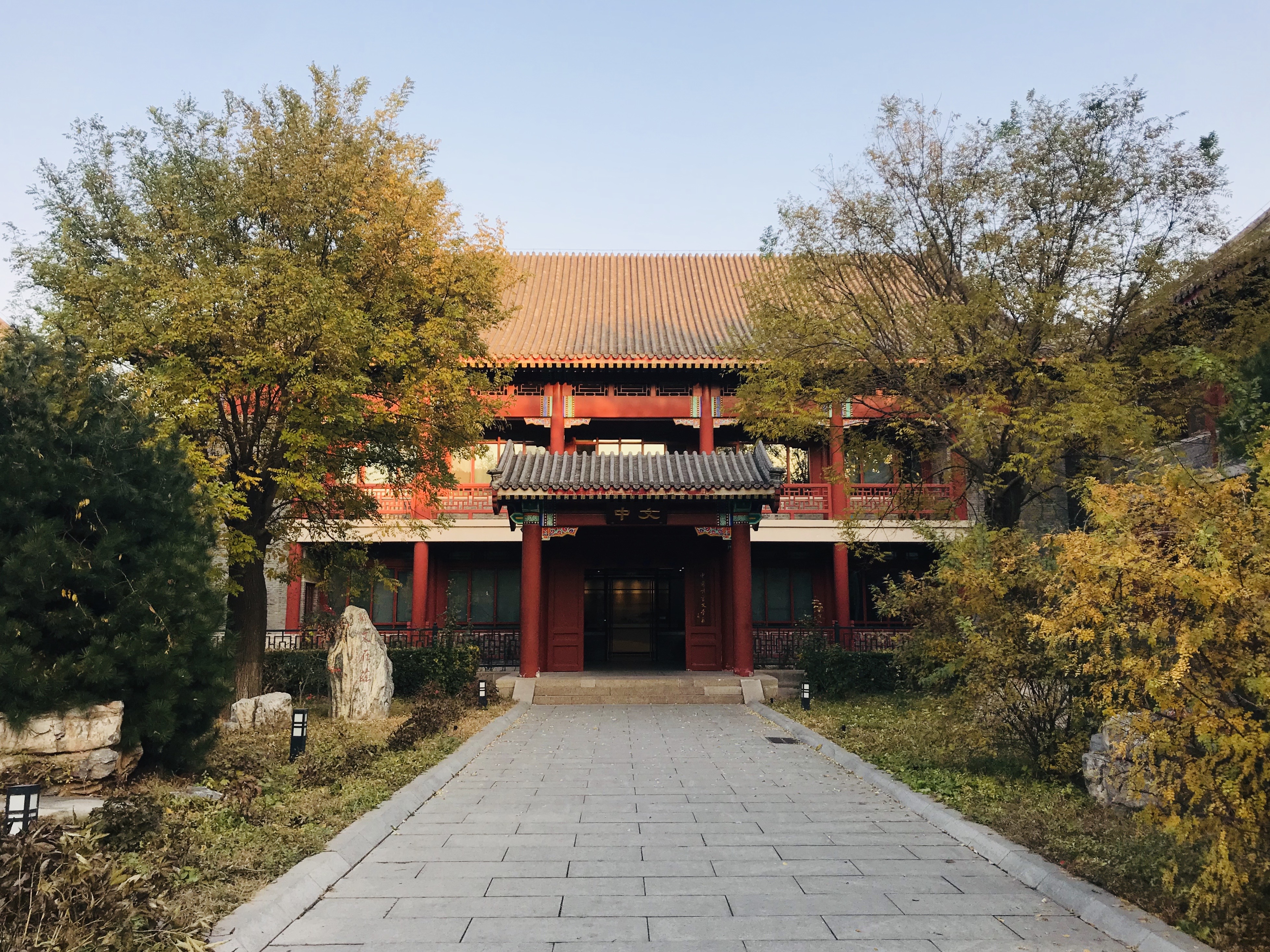
Fall leaves on Beida’s campusYellow leaves on Beida’s campusWalkway lined with trees, leading into a building across from our classroom
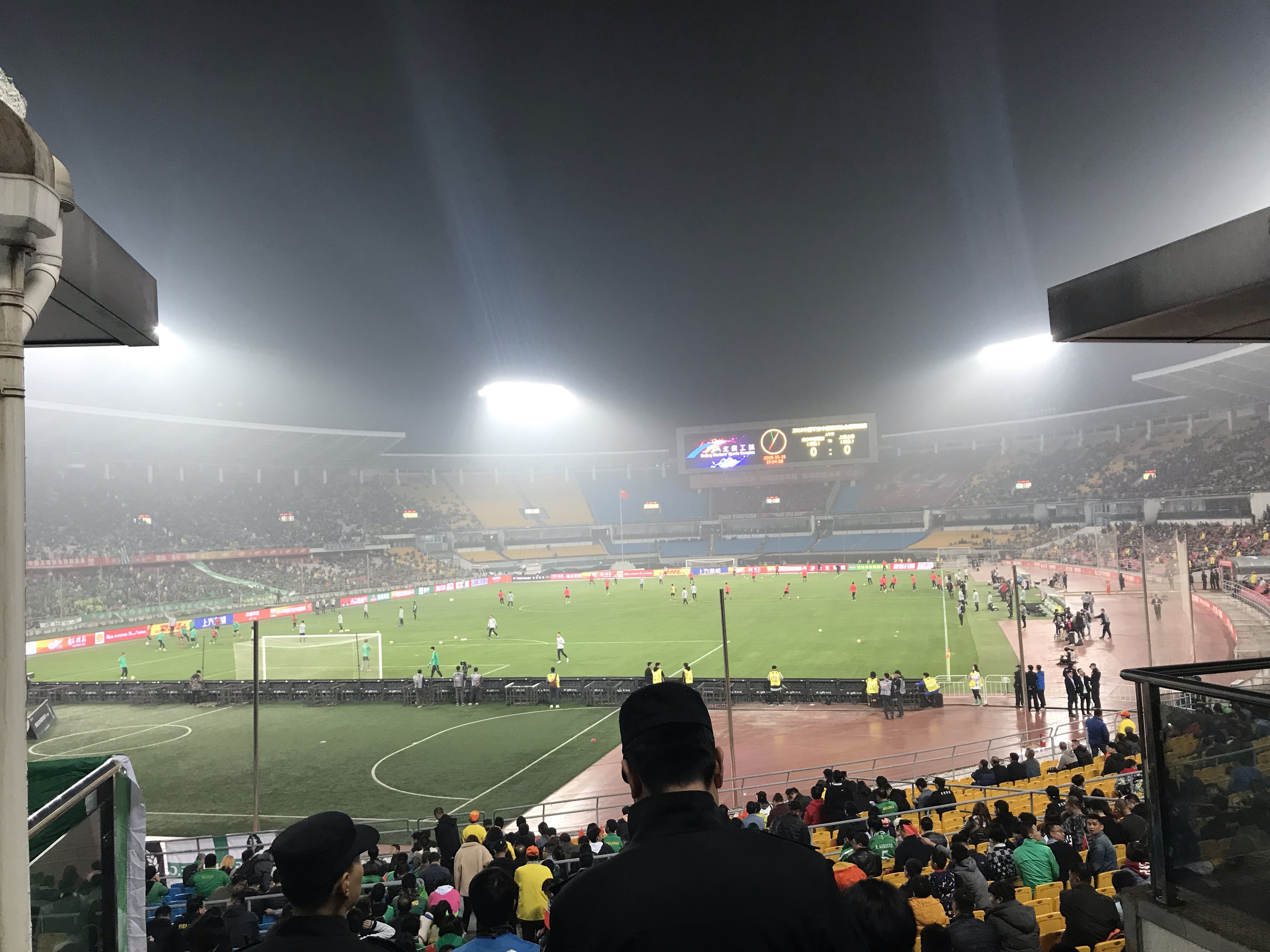
This weekend the fall festivities included a fun night out with my friends Sarah and Will as we all went to a Beijing Guoan soccer game at the Beijing Workers Stadium. It was Beijing versus Shanghai and a lot of people came out to support. It reminded me of a Portland Timbers game because Beijing’s main color is also green, and there were a bunch of flags, cheering fans, and lovely green smoke! Although the Chinese League of Soccer is not very popular or as prominent of a league, it was still a great experience and our tickets were only $14.00! We actually bought them from a scalper on the street in front of the stadium, which many people end up doing because buying them online can be tricky and requires a Chinese ID.
Sarah and I at the Beijing Guoan gameBeijing Workers Stadium with players on the soccer field
Another thing that went down this week, was Halloween! And I know you’re all wondering, can you celebrate Halloween in China? The answer is yes and people do! However, I noticed some differences in Halloween traditions here versus the United States. Halloween in the U.S. is a huge party time for young people and the best part about Halloween is wearing that super cute costume that you look amazing in to your friend’s party, however in China, Halloween is more about looking scary than cute. My Chinese friend Jaye asked me what she should wear for Halloween, saying her Harley Quinn costume was not going to arrive in time, and I told her she could easily DIY a cat costume or something to that effect. She was very confused and asked “isn’t Halloween supposed to be scary?
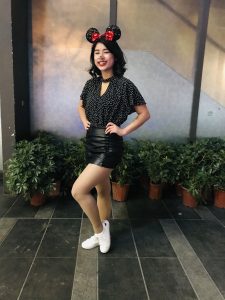
My Halloween costume. Your favorite lil mouse!
Don’t you dress up as fictional creatures or monsters and ghosts?” I told her, that I had never really thought about just how much Halloween has changed in the past 20 years. I told her anything goes for Halloween now, many people dress up as celebrities, internet memes and cute animals. She thought that was very interesting and then I noticed that all the costumes I saw Chinese people wear on Halloween were all very scary, fantastical or ghoulish.
Sarah and I on Halloween
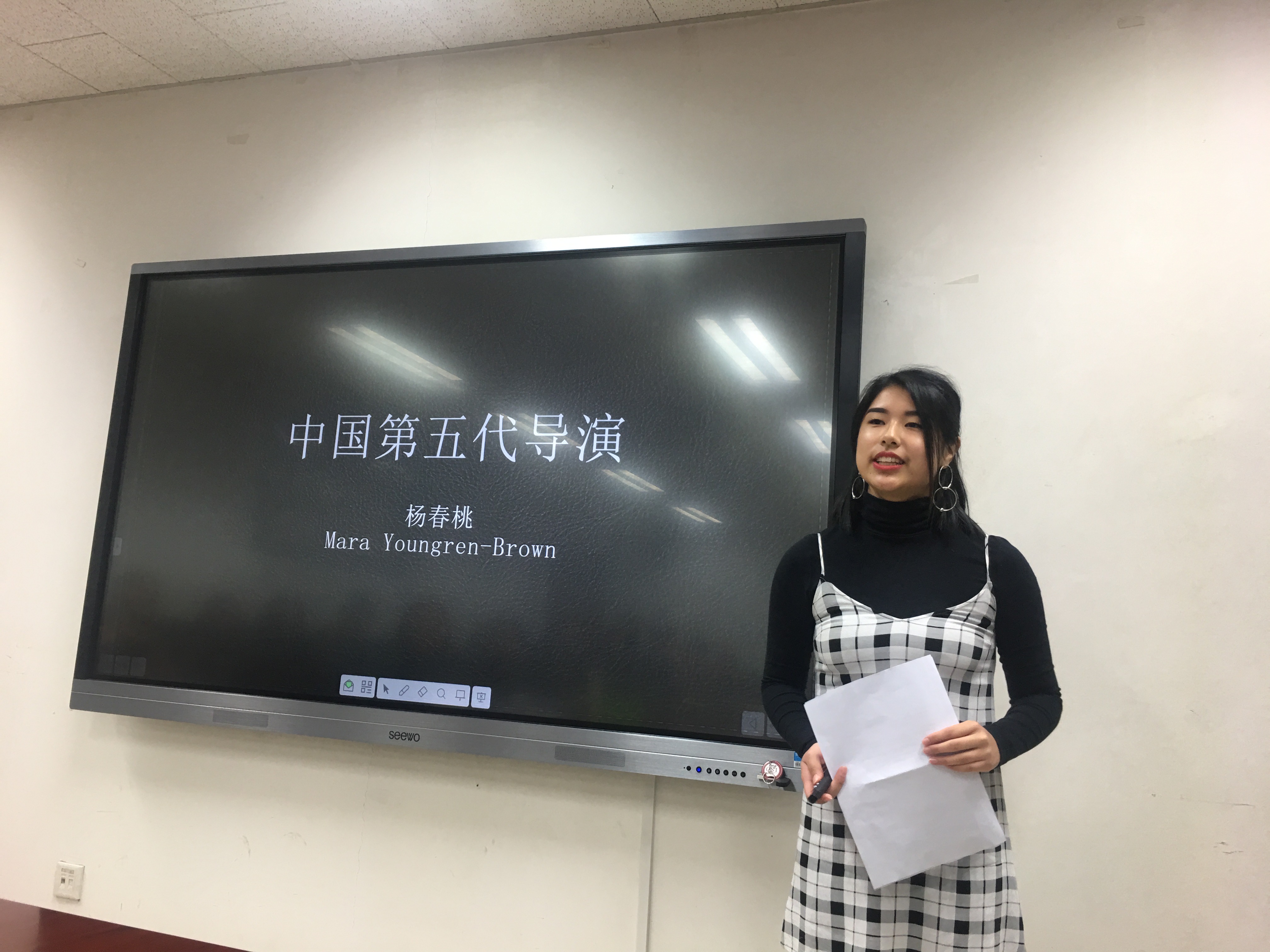
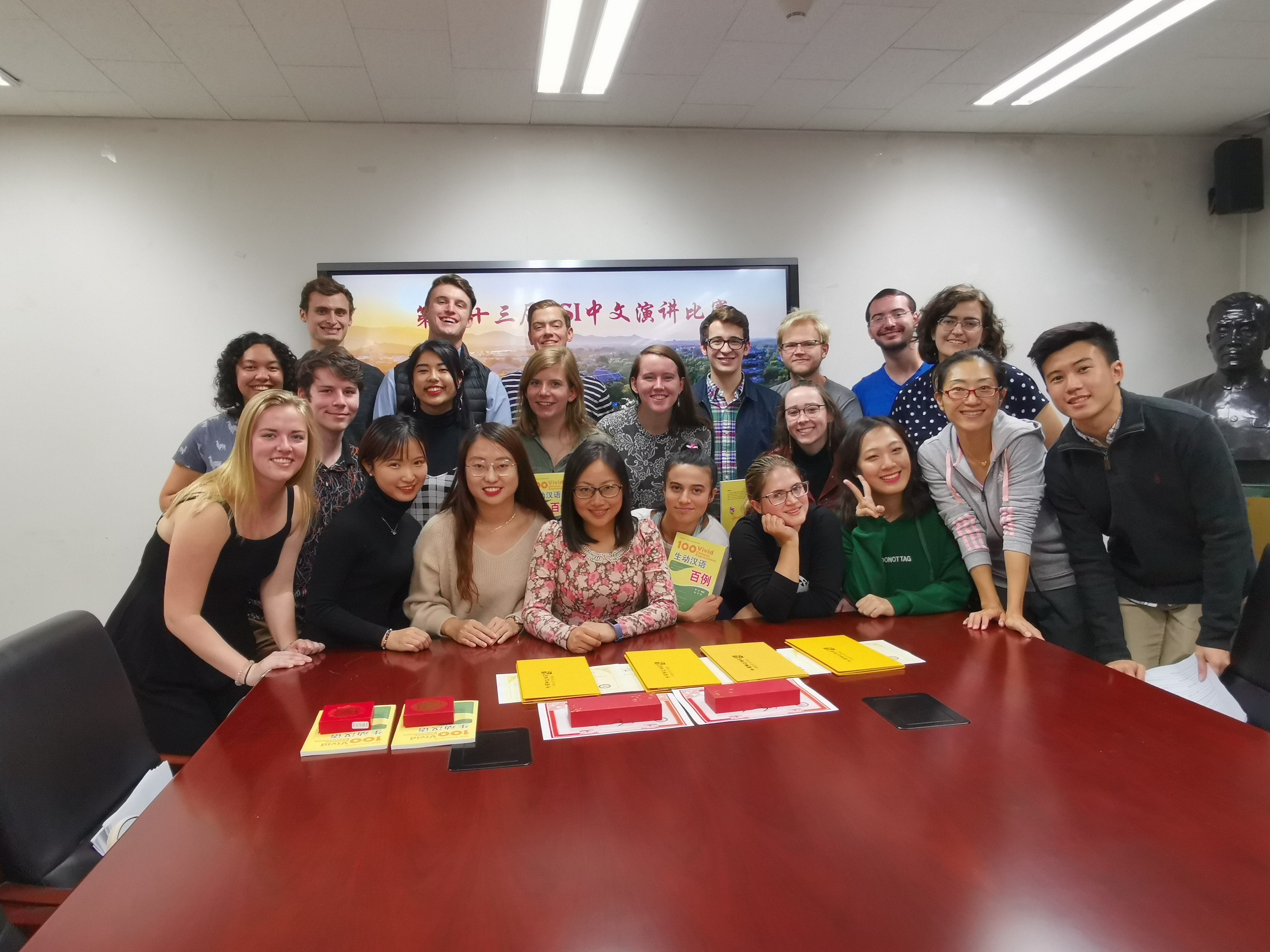
There was not much of a party on Halloween because the next day was CSI’s big Speaking Contest. Students from both the language immersion and non-immersion track could sign up for this competition and had to prepare a 5 minute presentation in Chinese. The topic was totally up for the contestant to decide. Most topics were about Chinese culture, but a few others opened up about their experiences in China. My presentation as about China’s Fifth Generation film directors. China’s fifth generation directors were a group of directors whose films the 80s and 90s gained internationally acclaimed for their controversial and raw depictions of life in China, especially during the tumultuous periods of the 1930s to the 1980s. This time period includes the Japanese invasion, the Chinese civil war, the Great Leap Forward, and the Cultural Revolution. I first learned about these directors from Prof. Christopher Keaveney’s Intro to East Asian Film class at Linfield my freshman year. We watched films and learned how to analyze techniques and styles, and also learned about the historical and cultural significance of films in general.
I really loved that class, and it stands out as one of my favorite classes I’ve ever taken. I decided to do a presentation on these directors because I love their films, but more than that, I love what they stand for. This group of directors created art because it was important to share the stories of the Chinese people. They could’ve been jailed or killed for making these movies but they did it anyway. It is an extremely brave thing and upon watching these films you will find the themes of their work are universal. They are about the resilience of the human spirit.
Giving my presentation for the Chinese speaking competition
I worked with my one-on-one teacher to create my script for the presentation and then it was memorize, memorize, memorize. I used a sheet a paper when presenting but could only use it for reference, and was not allowed to read off it. In the end, I didn’t win any awards but I was very excited to compete. I would’ve never expected to do something like this before coming to China and being a part of the CSI program. I had absolutely no confidence in my Chinese speaking ability and the thought of giving a presentation in Chinese absolutely terrified me. I’m so thankful for the support, encouragement, and help in the development of my Chinese skills by everyone in this program, and can’t wait to do even more one day!
This weekend was packed! I spent it in Beijing, but went all over the city. I headed on over the Temple of Heaven for my third time, and this time I actually snapped some photos in front of the temple! Then I went to the Happy Valley theme park with Aili and Will and spent the day riding rollercoasters and eating way too many sweets. I also celebrated my friend Jaye’s birthday this weekend.
Jaye’s birthday
She is a student at Beijing Language and Culture University (BLCU) and we met in Wudaokou one night. Since then she has become one of our good friends. She’s a Chinese native who’s majoring in English!
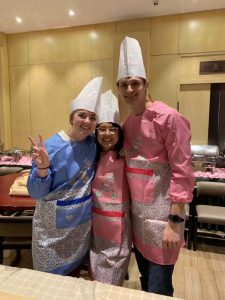
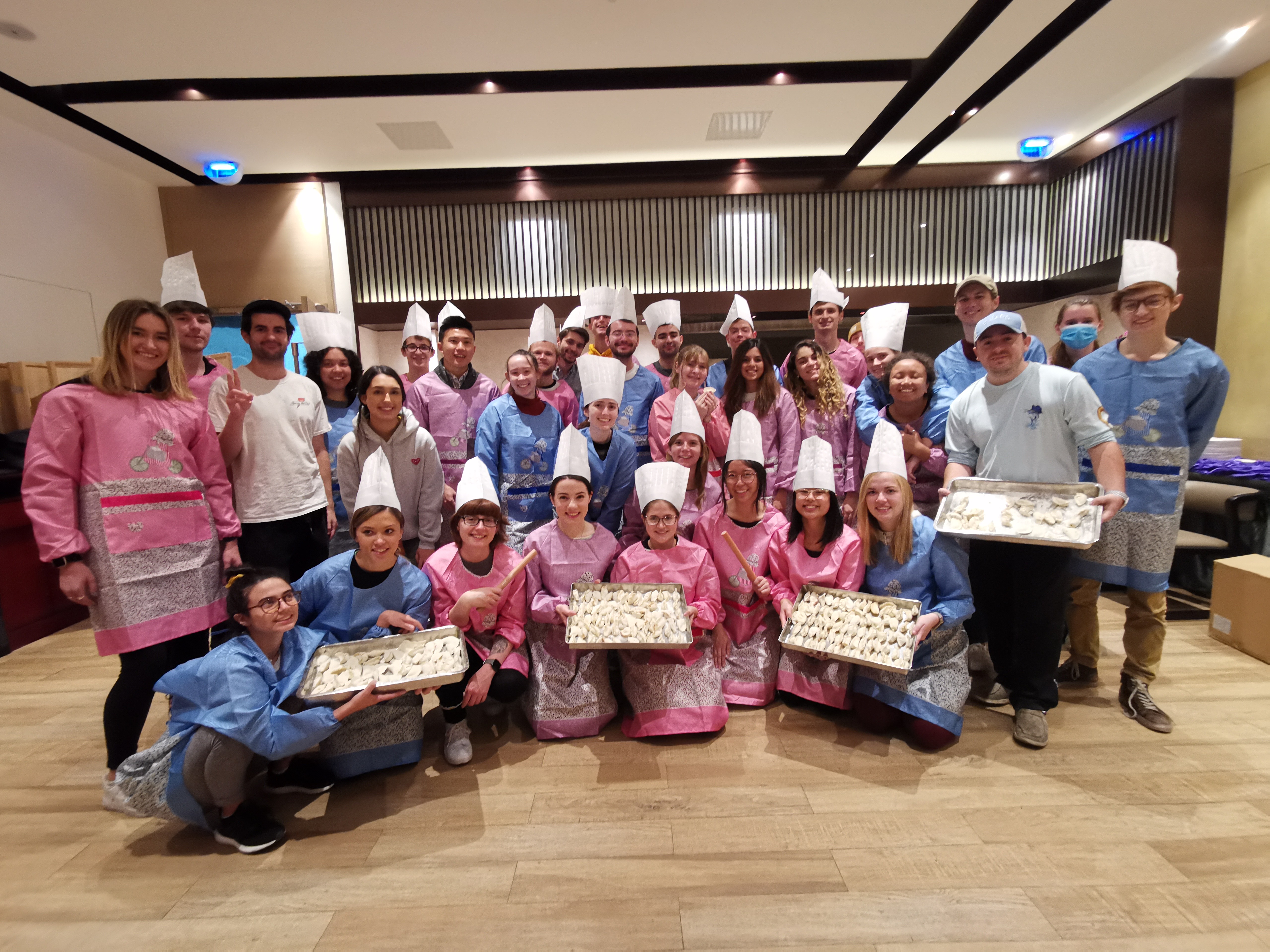
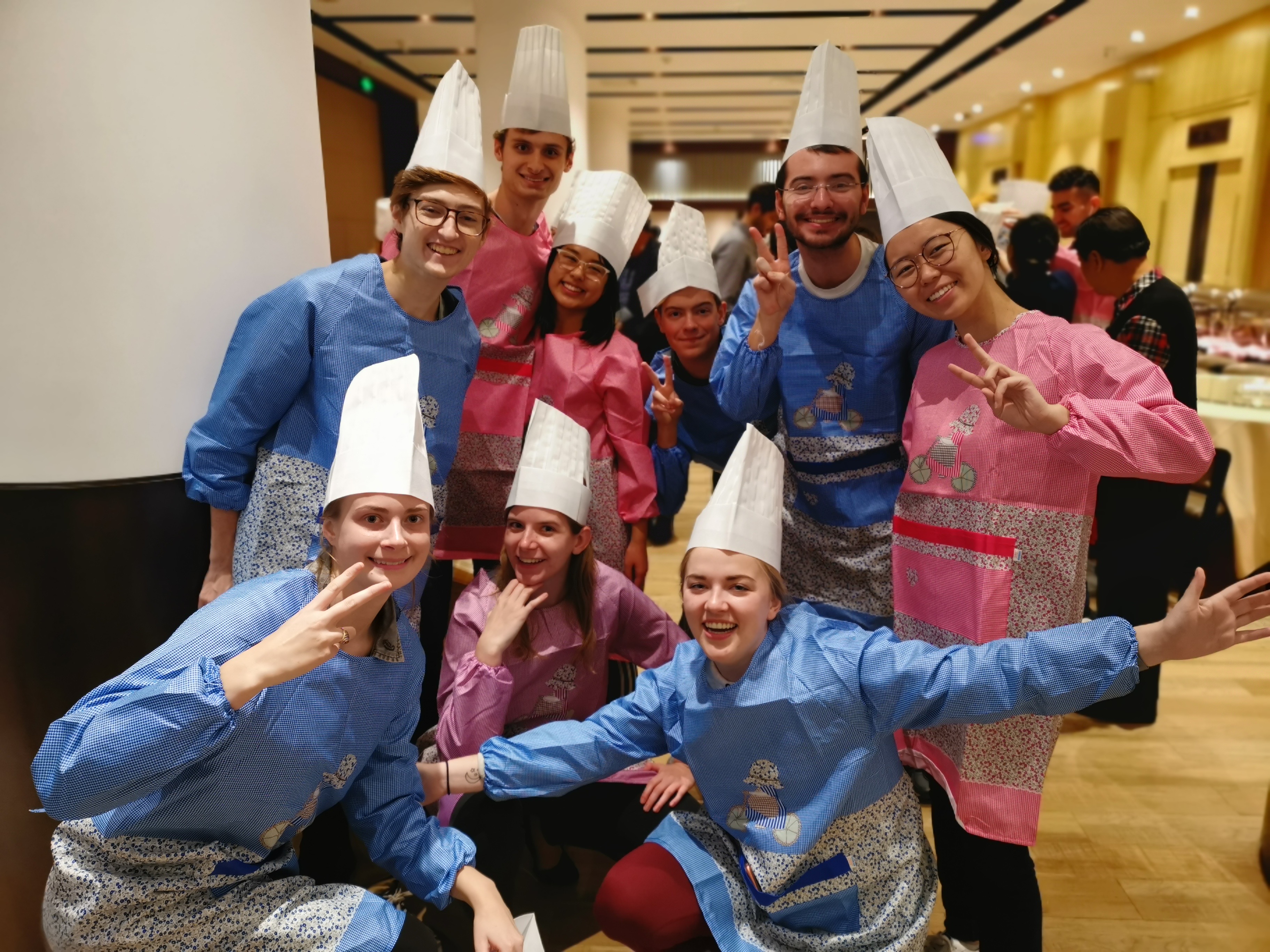
We also had an opportunity to make our own dumplings (饺子)this weekend! They were delicious and filled with meat and veggies. The staff at our accommodation taught us how to roll out the dough and fold them up, and then they steamed them for us. You can have steamed or pan-fried dumplings but all of ours were steamed. Pan-fried are my personal favorite, but I recommend you try both ways!
Group photo with our dumplings!Group photo in our chef outfits
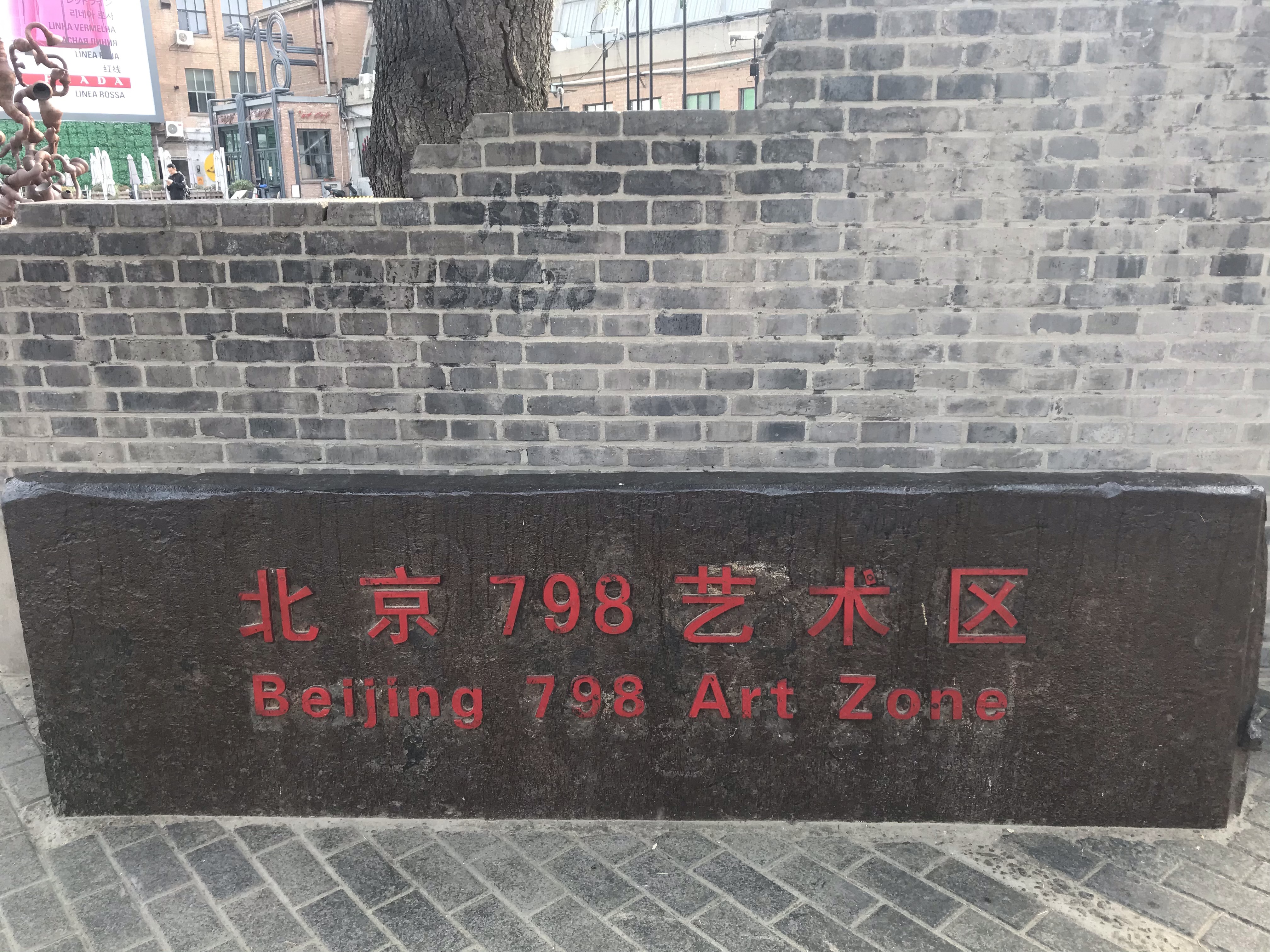
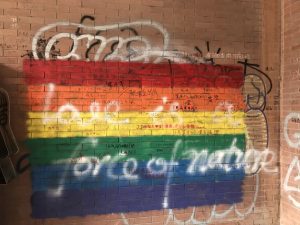
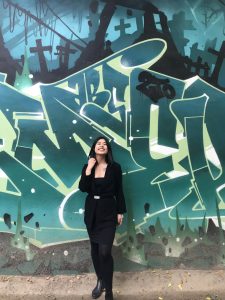
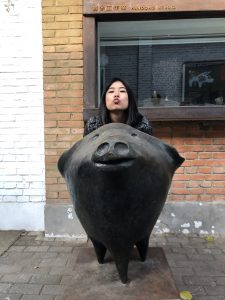
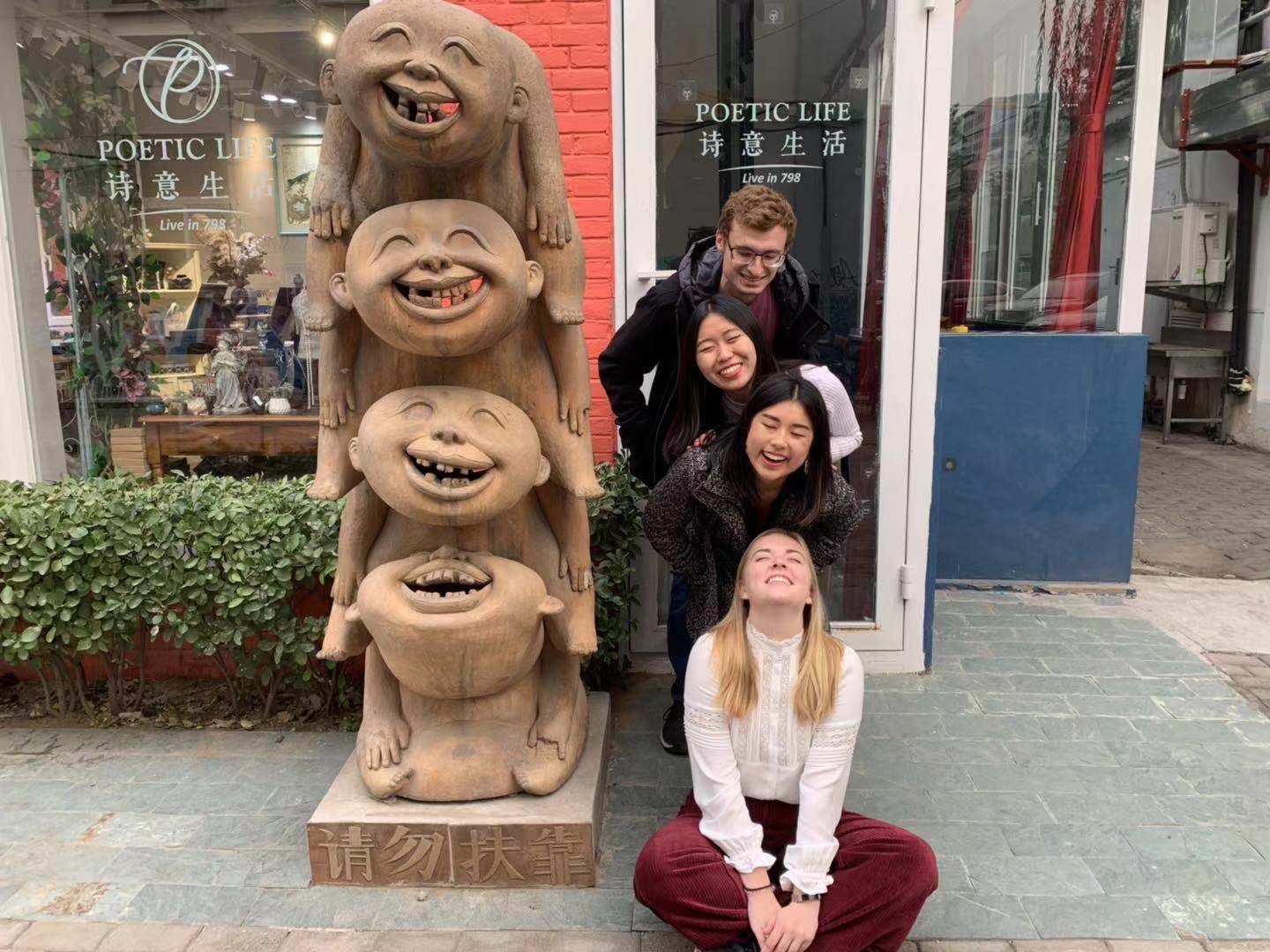
The really fun experience this past week was going on a program excursion to 798 Art District in Beijing. It is a neighborhood full of street art, as well as galleries and museums.
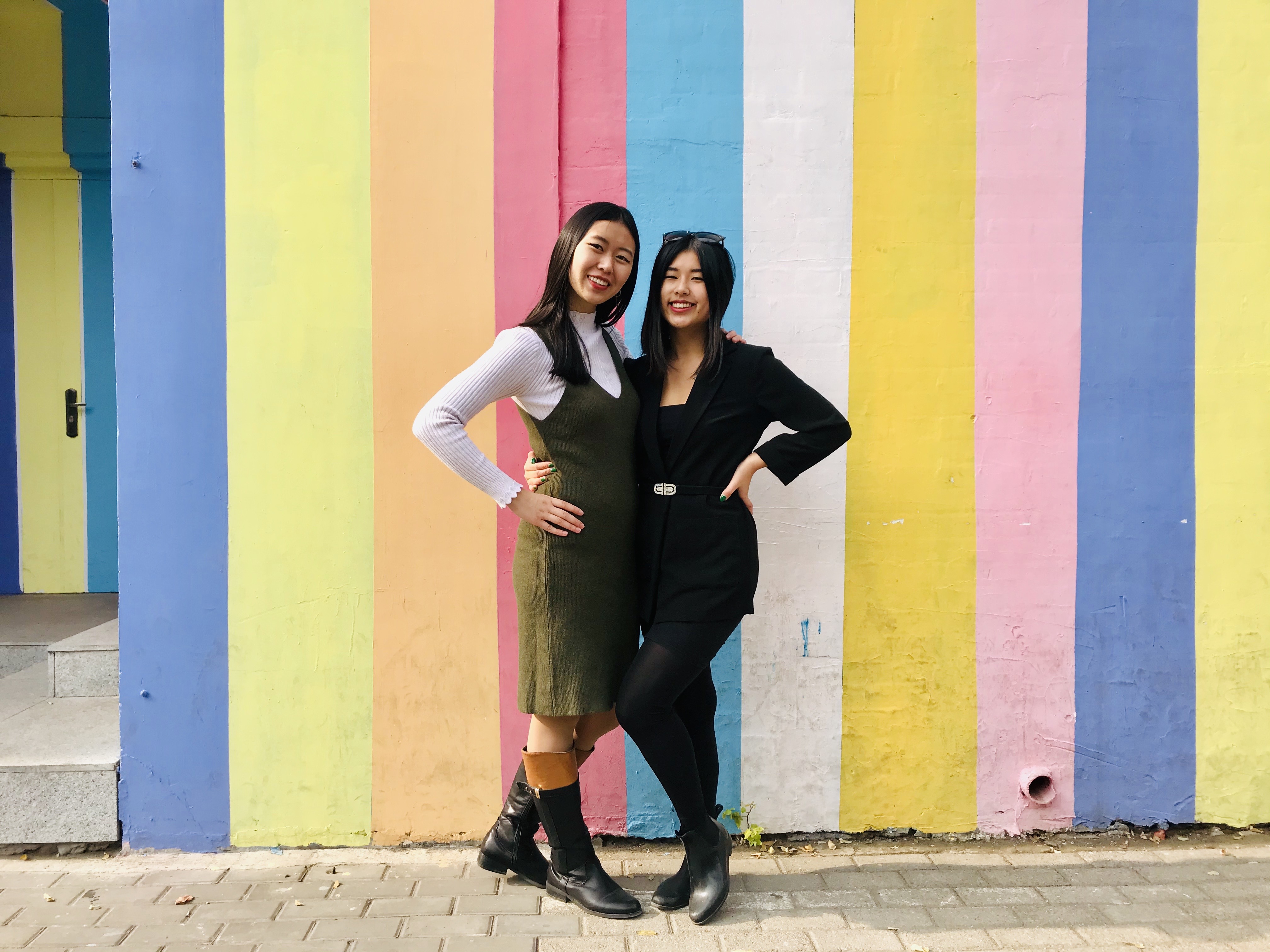
798 Art ZoneArt in 798In front of graffiti at 798Statue Art at 798Recreating a sculpture with friends in 798Posing with a friend in front of a colorful wall
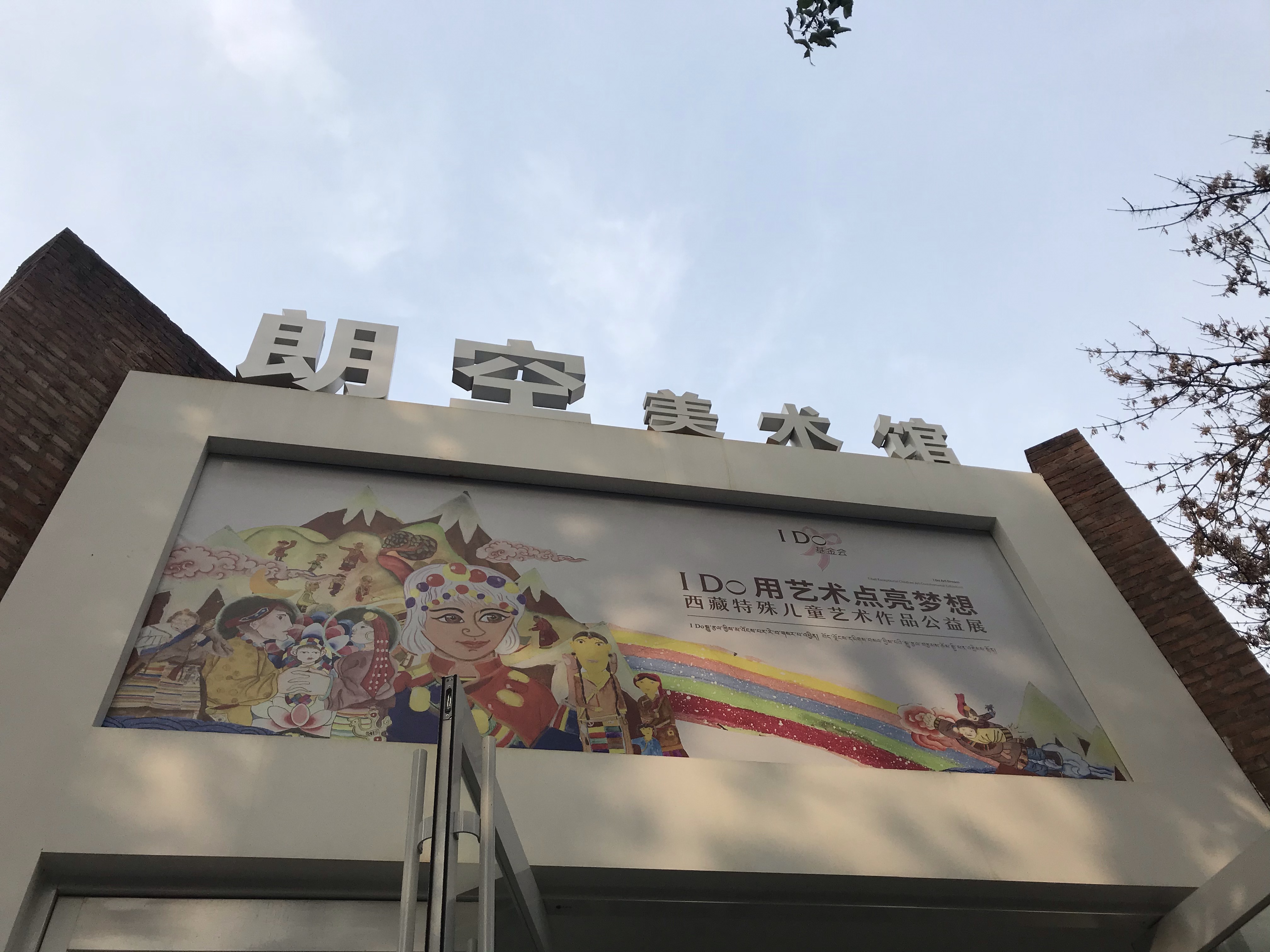
We visited a North Korean museum which had artwork depicting North Korea and it’s people, and North Korean propaganda as well. As we were taking photos with the art around the neighborhood, we stumbled upon an exhibit which was just opening. The exhibit is by a foundation called the I Do Foundation (I Do 基金会).
I Do Foundation exhibit poster
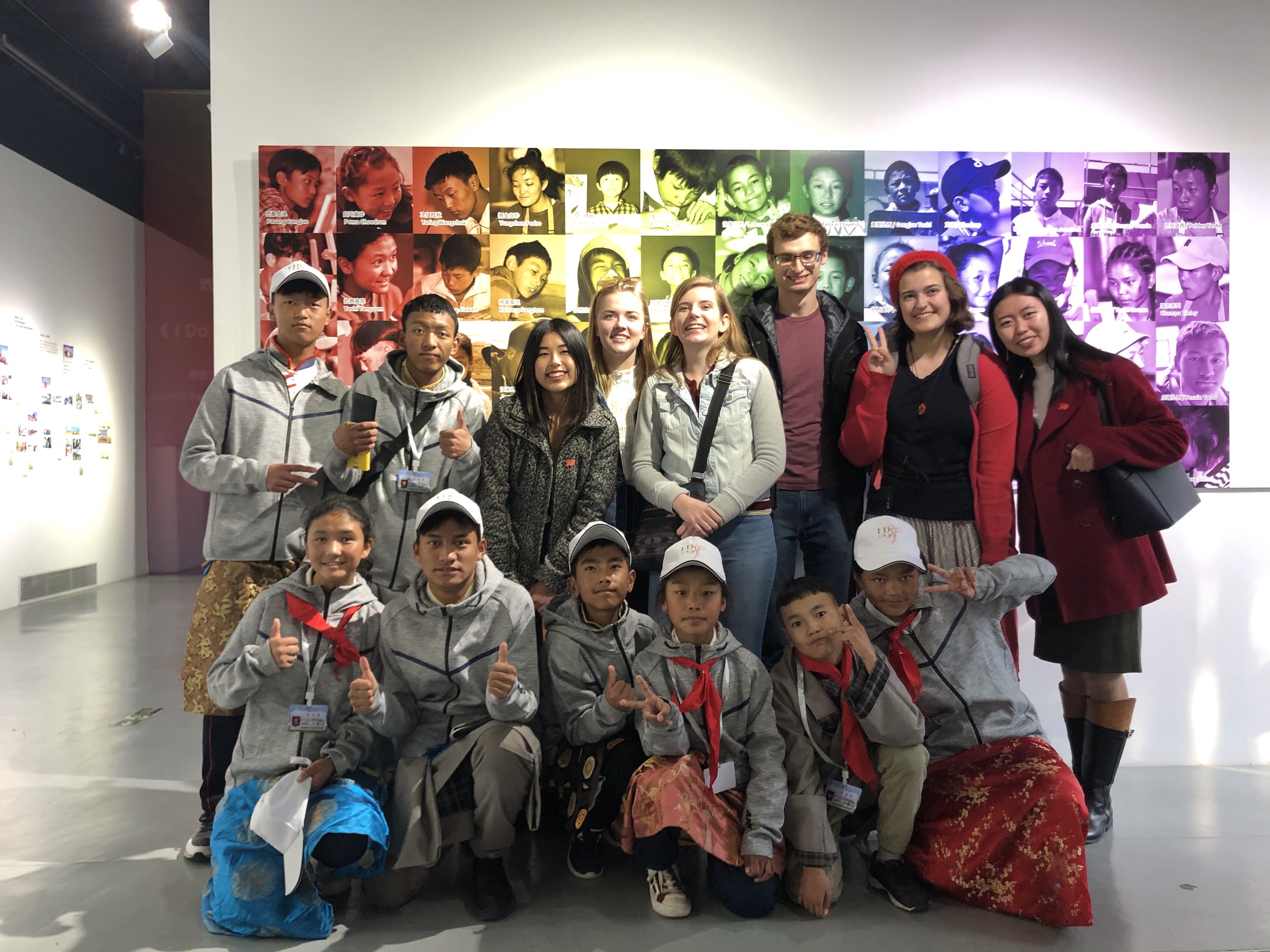
Their foundation supports a school for young people with disabilities in Tibet. The foundation helps support the arts at the school and their mission is about helping students with disabilities find their voice and showing them that they do not have to be limited by their disability. The foundation supplies the school with well-known artists who come to teach the students. The exhibit was a display of the art the students have created, as well as stories about the success of the school.
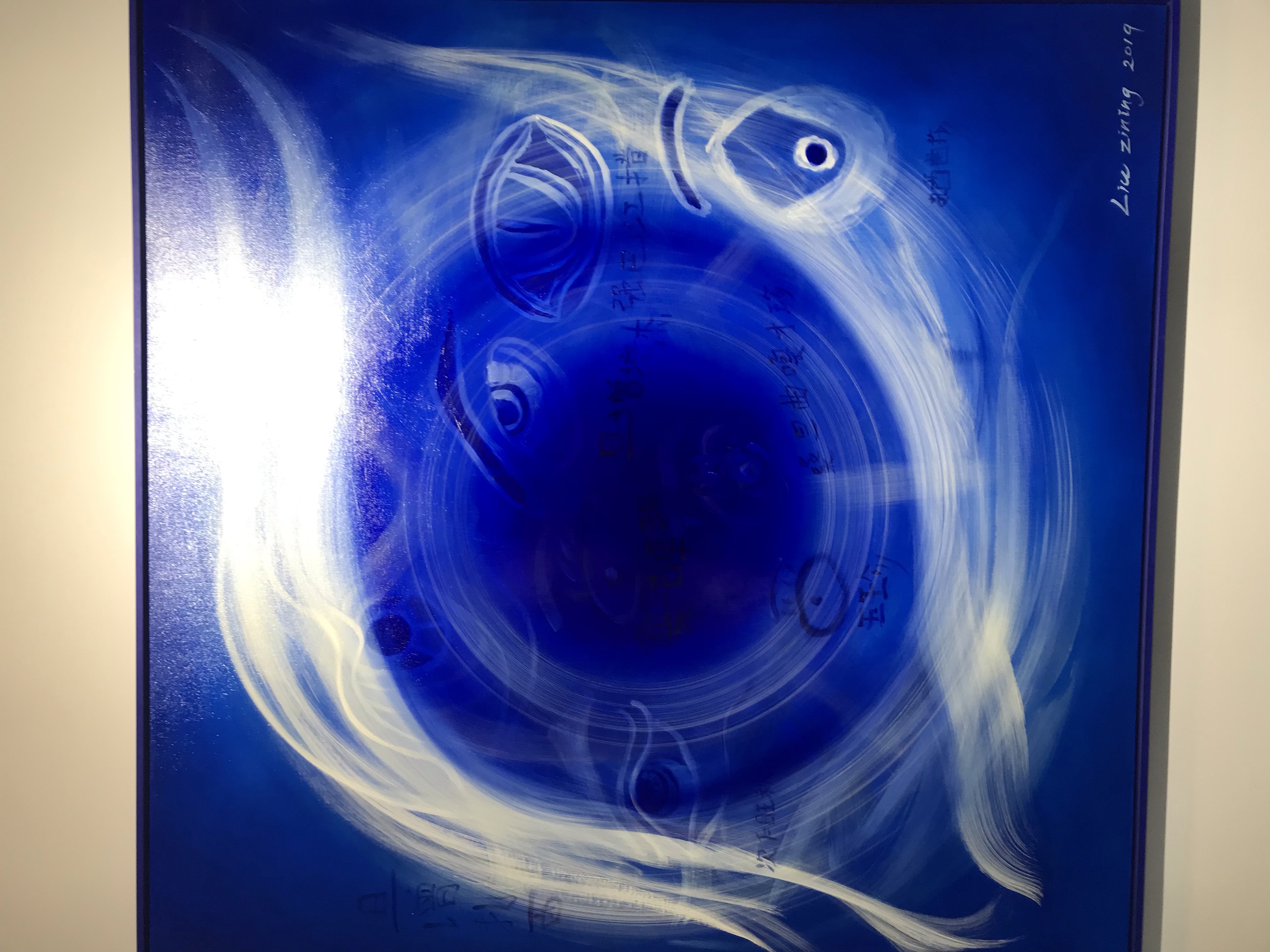
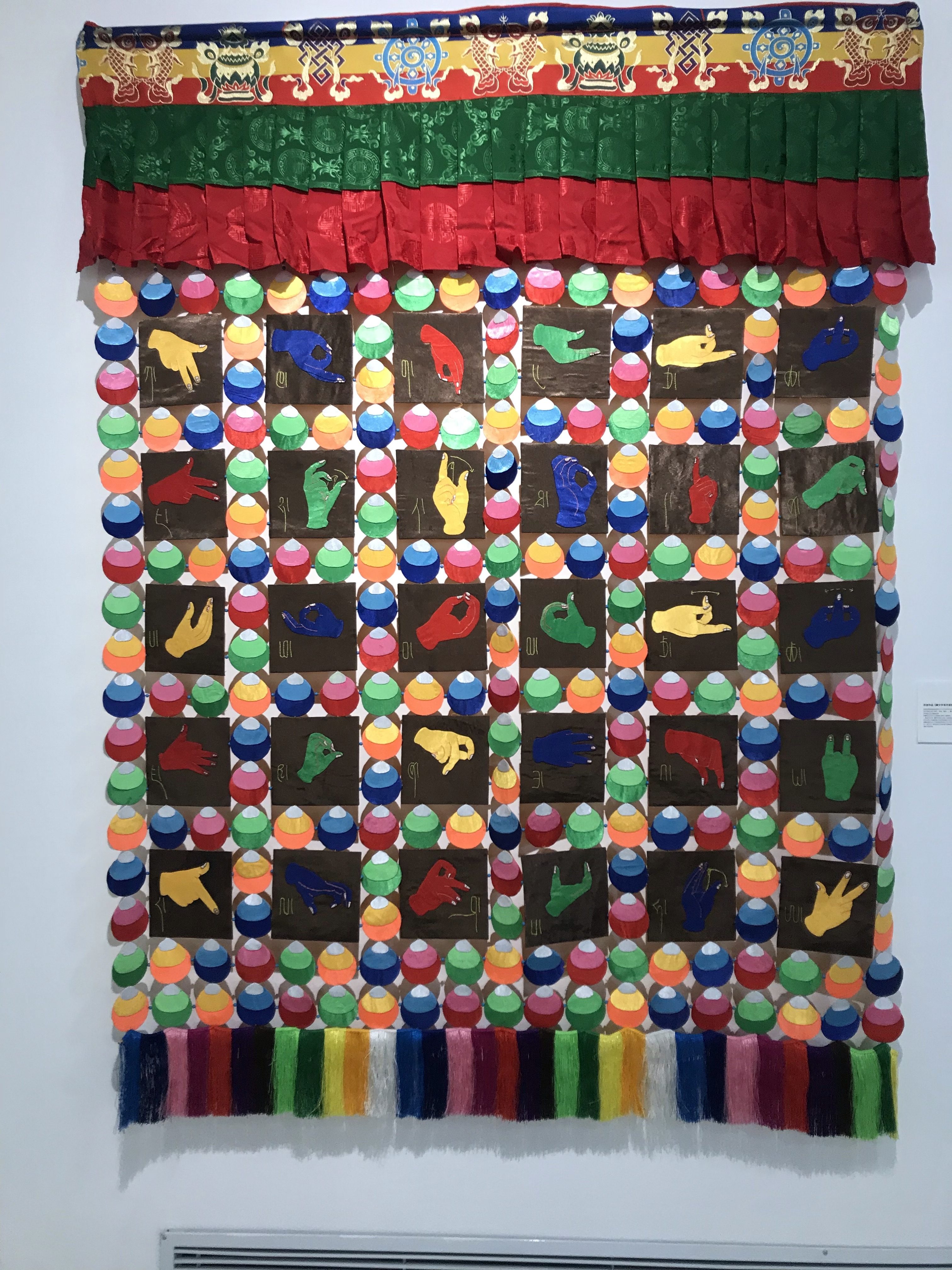
Painting of an eye at the I Do Foundation exhibit. There are multiple eyes in this photo, and it was created as a collaboration between the instructor and the students.A quilt at the exhibit showing different hands doing sign language
We even had the chance to meet the students from Tibet, as they were coming for the grand opening of the exhibit later that day. Most of them were deaf, and we didn’t know sign language, but they could understand Mandarin so we wrote that we were visiting students from the United States. They had never met anyone form the United States and were super excited to show us their art. It was really special to meet these children, after looking at their art and seeing how creative they were. I love that the power of art is that of bringing people from all walks of life together.
Friends and I with the Tibetan students of the I Do Foundation in front of an exhibit
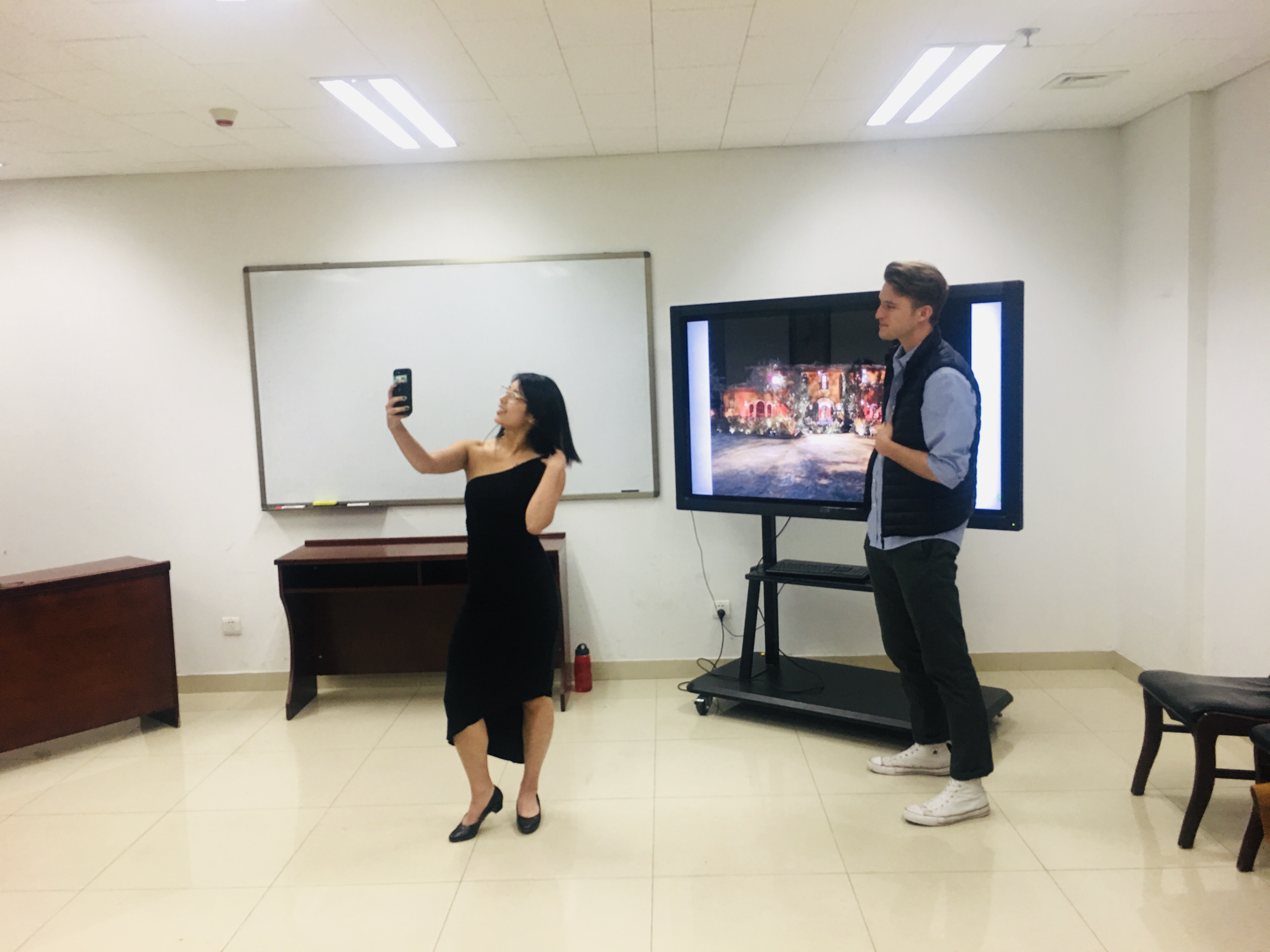
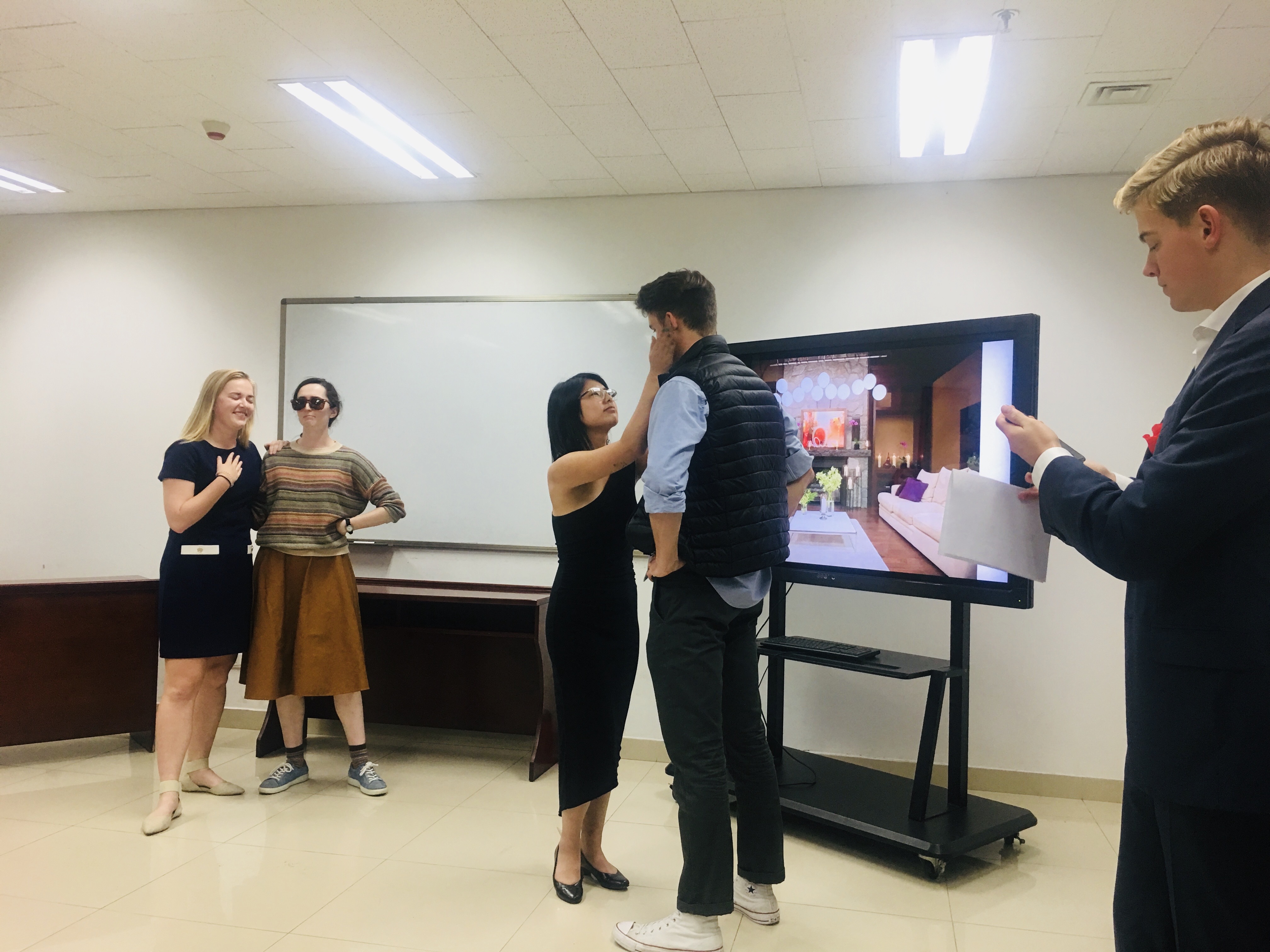
We were busy in the classroom this week. Since it’s starting towards the end of the semester, we have all of our big projects to complete. We’ve been working on a skit for our Chinese class for a while now. We had complete creative freedom in creating our skit so because our class only has one male in it, I suggested doing a Chinese version of the very popular American TV show “The Bachelor”. Everyone loved it so we wrote our own “Bachelor” TV show, complete with crazy characters, drama, and a surprise comeback contestant at the final rose ceremony.
Performing the Bachelor (in Chinese)The final rose ceremony
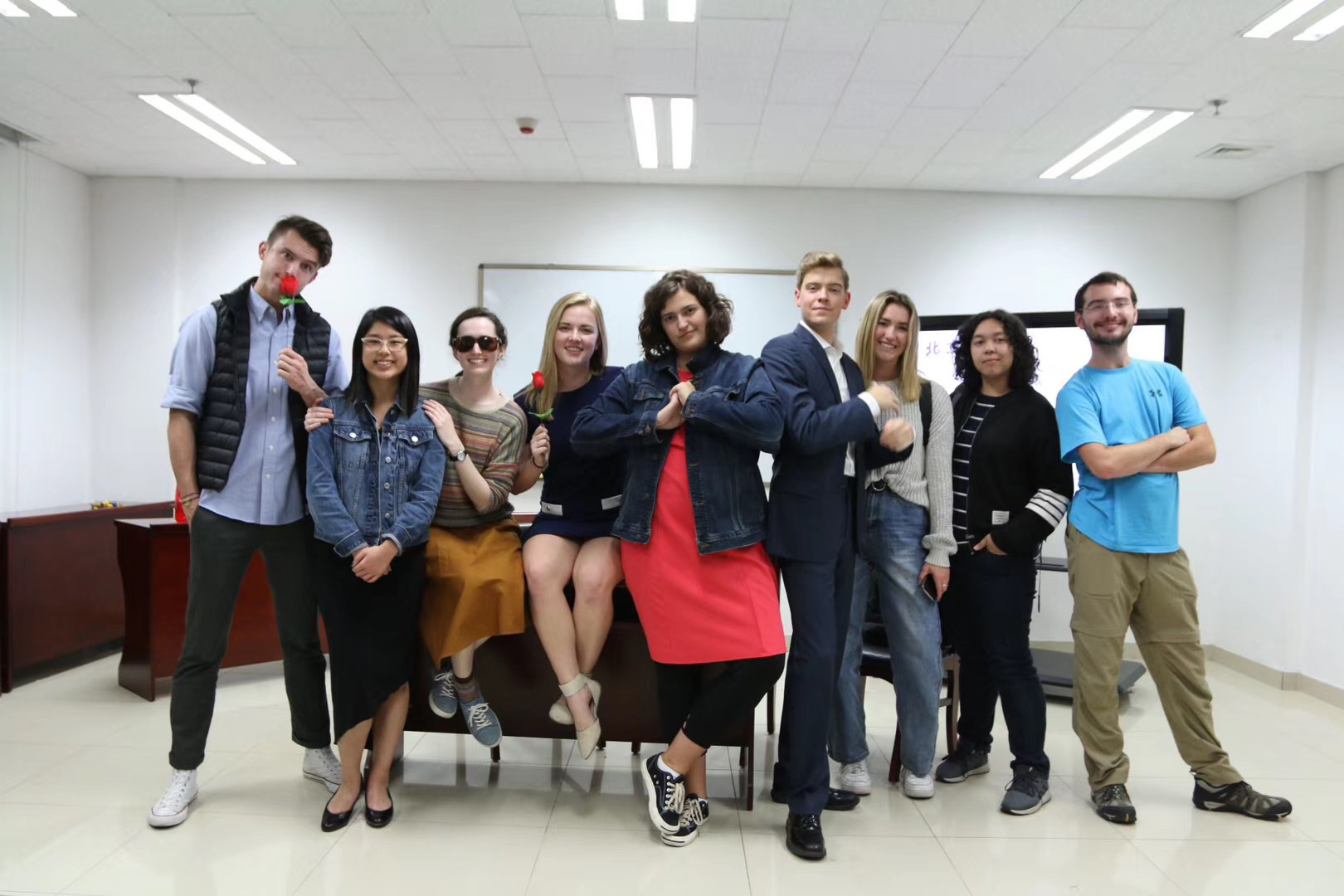
It was a lot of fun for everyone. My characters name was “Tao Tao” 桃桃 (peach peach) which is a nickname derived from my Chinese name Chun Tao 春桃 meaning spring peach. My character was that of an Instagram influencer/gold-digger and needless to say, I did not win.
Group photo on skit day
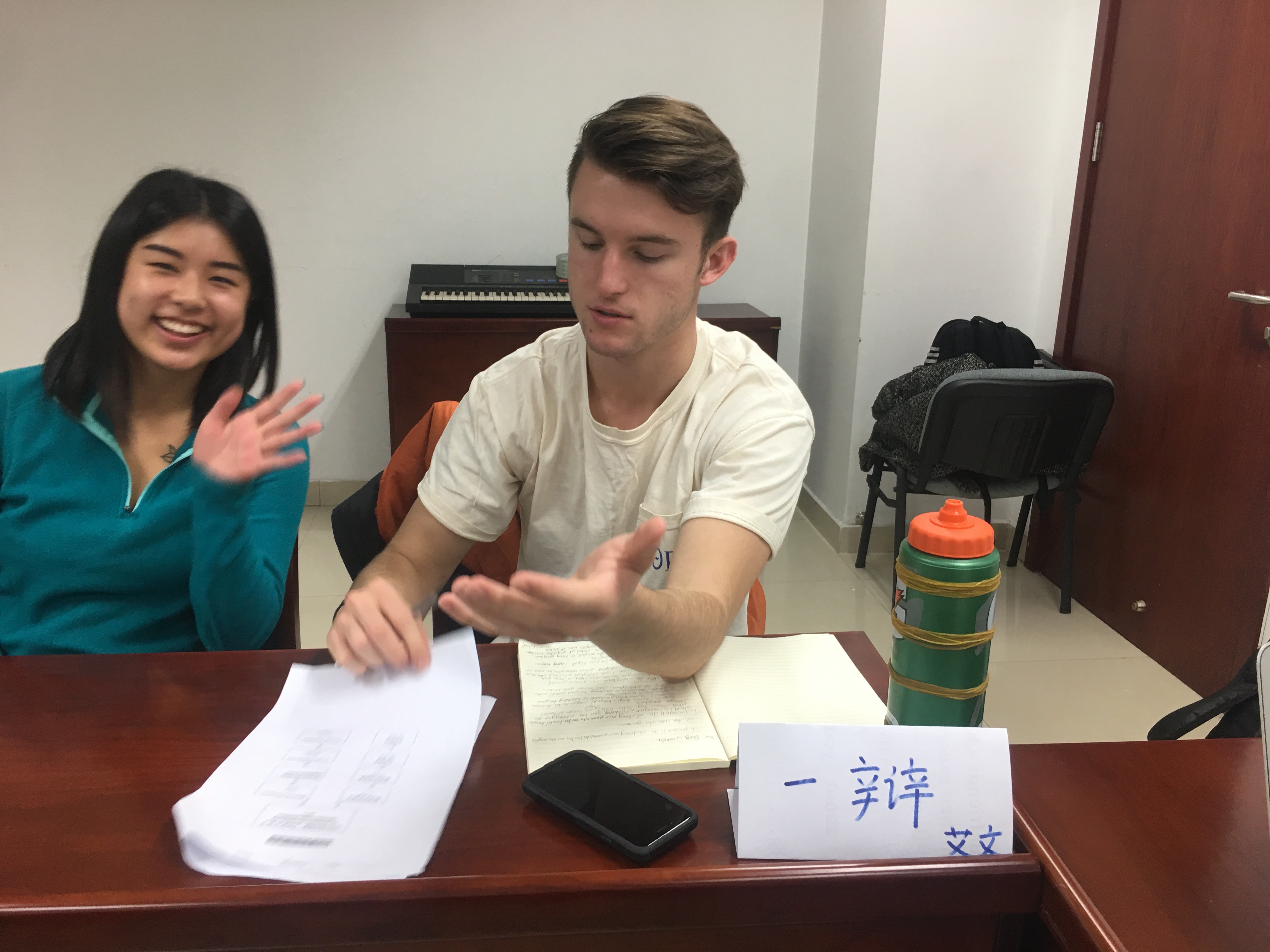
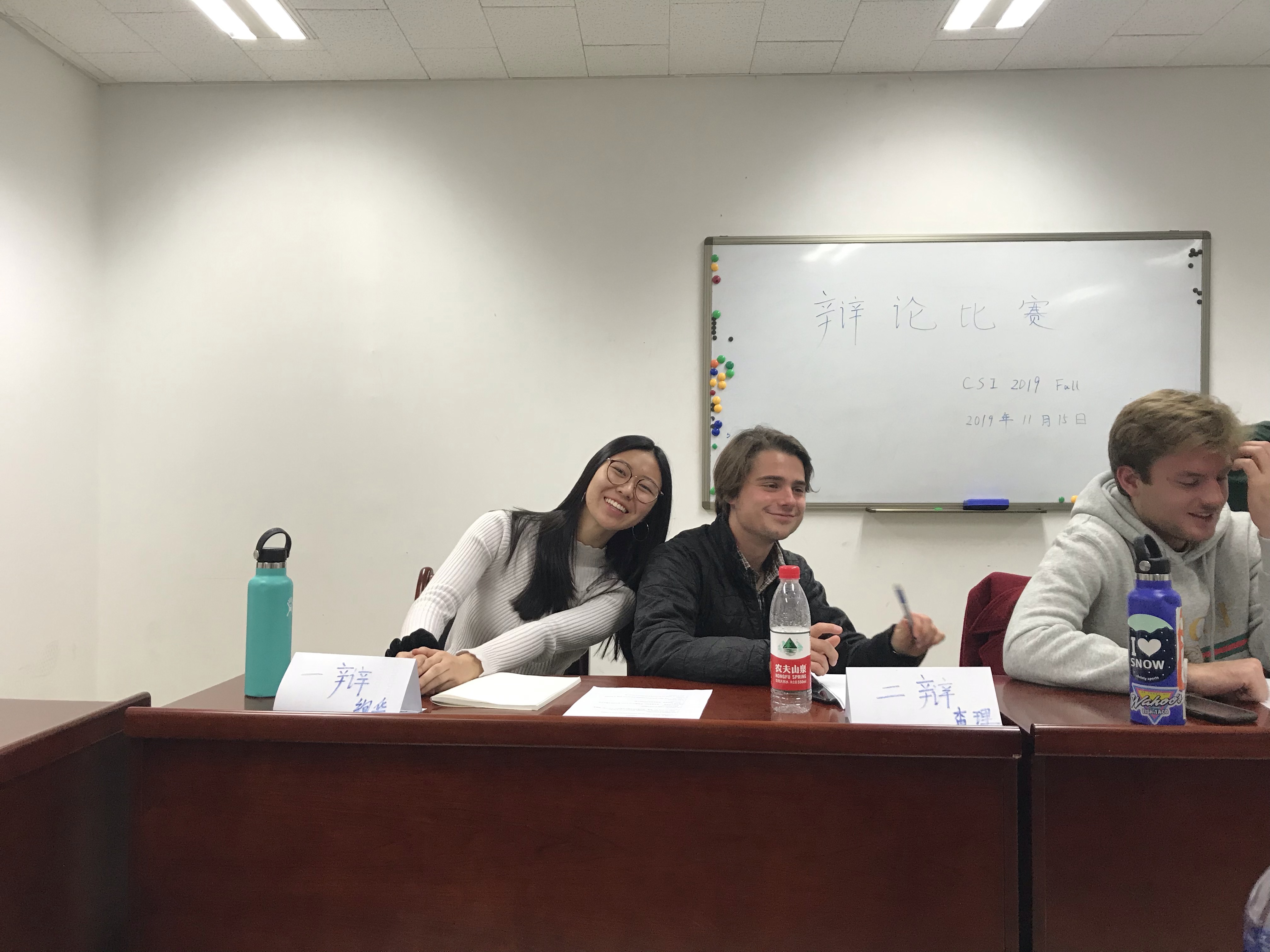
Next on our class schedule was a debate. There are two 311 classes, (311 is our Chinese level), and we went head-to-head on topics including “If a well-educated woman (someone who has a professional degree) chooses to be a full-time stay-at-home mother, is it a waste?” and “Is a single person ‘a dog’?”, meaning is it noble to be single or not. My classmates and I thought the topics were interesting and all remarked that these would never be academic debate topics in the United States.
My classmate Evan debating while I photobomb this picture our teacher tookSarah and Charlie who were two of our opponents for the debate
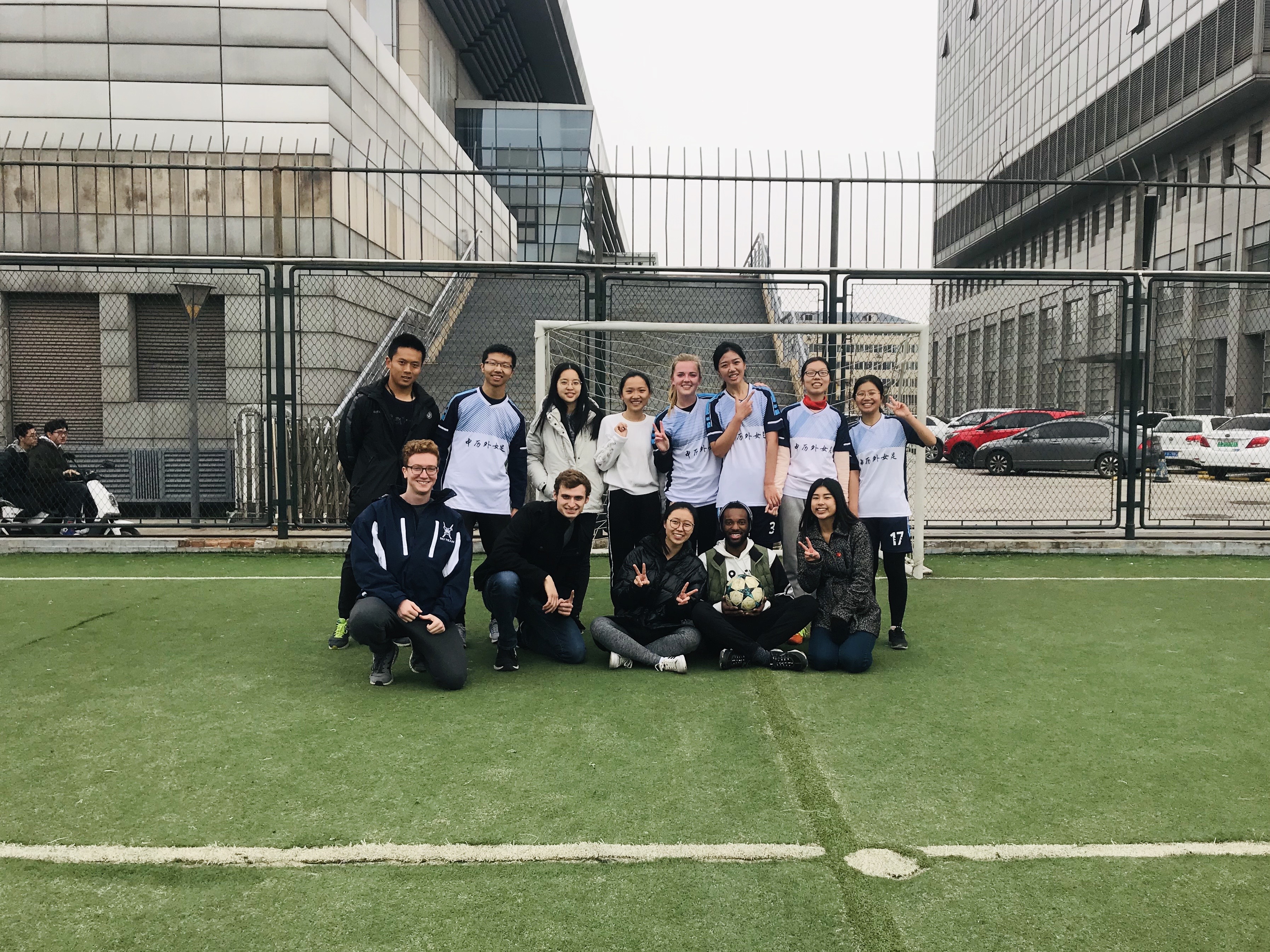
Outside the classroom we had the Peking U cup, which was a game I was fortunate enough to see my friend Aili play in. She joined Peking University’s women’s soccer team and we all went to cheer her on for her final game of the season.
Peking University’s girls team with their number one fans (us)
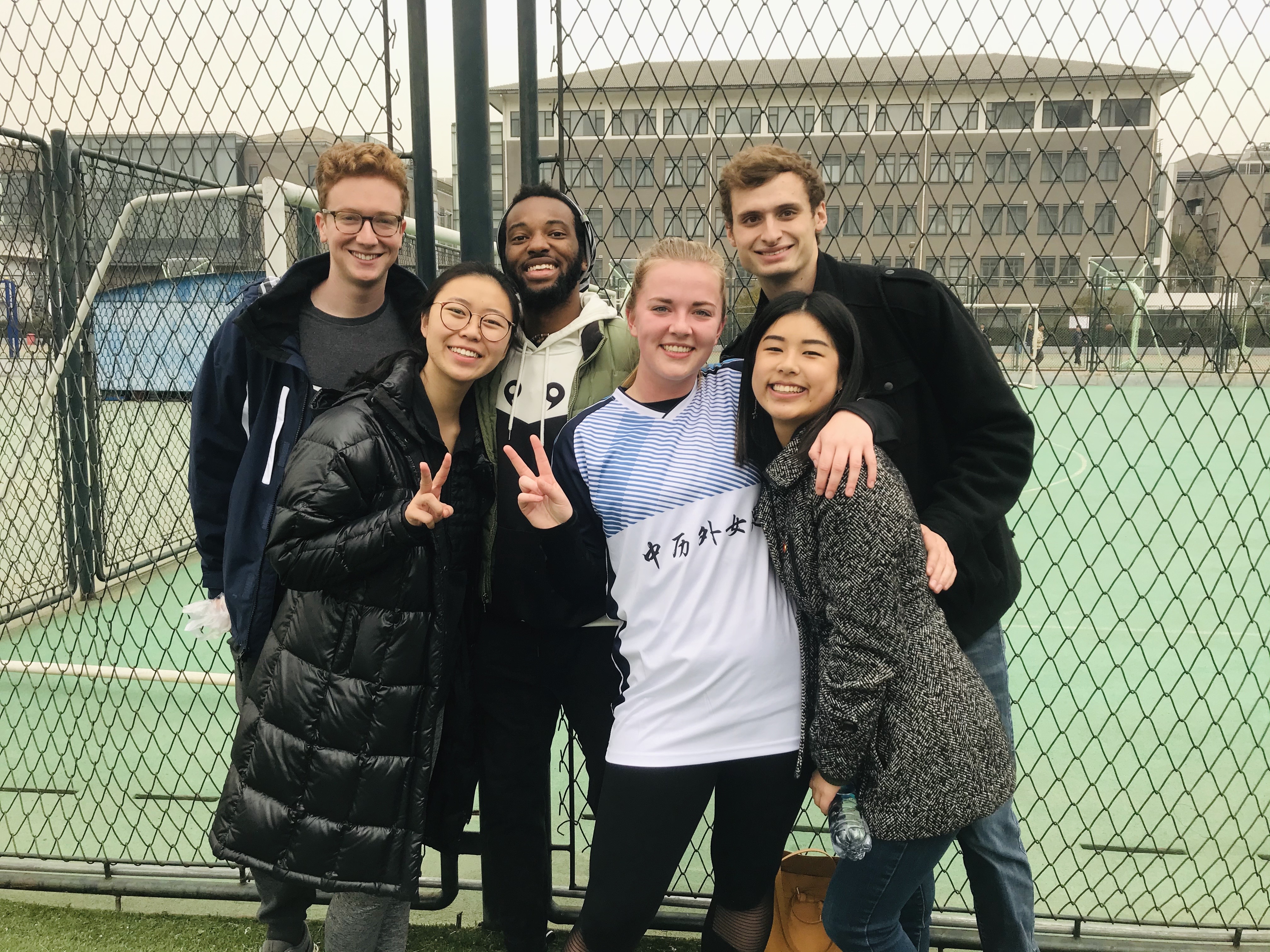
Although her team didn’t win, everyone still had a great time, and she’s the real winner in our hearts. It’s a little difficult to become involved in activities at Peking U because our program is segregated from the main school’s classes. We only have classes with people within CSI, and we only live with people within CSI, so it can be hard and scary to venture out to join other groups or student organizations. I’m really proud of Aili for doing this, since she loves playing soccer. Definitely was worth it for her!
Group photo with Aili after her game
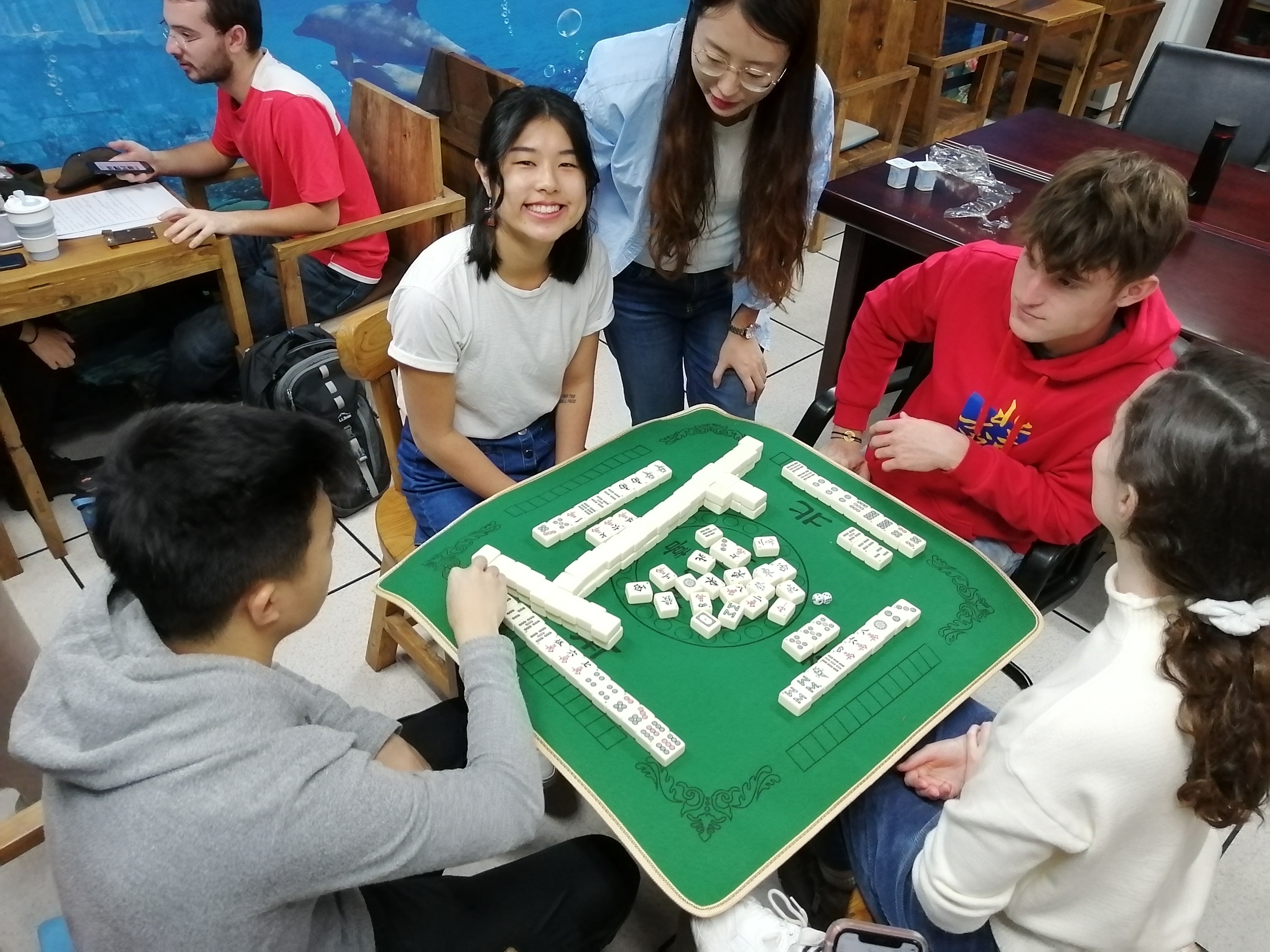
Another program update: we’re all obsessed with mahjong. Yes, the game that old Chinese people play. This has quickly became the favorite game of us students within the program. Our fantastic teacher Tan Laoshi taught us how to play and we haven’t stopped since.
Four students around a table playing majhong
To show how serious we are, now all of us have our own mahjong sets. Yes, our own personal mahjong sets. We often joke that we are like a couple of Chinese aunties 阿姨 (ayis) because this game is often played by older people as gambling. This is a very popular game among Chinese women throughout history, and women played to win money and respect among their social circles.
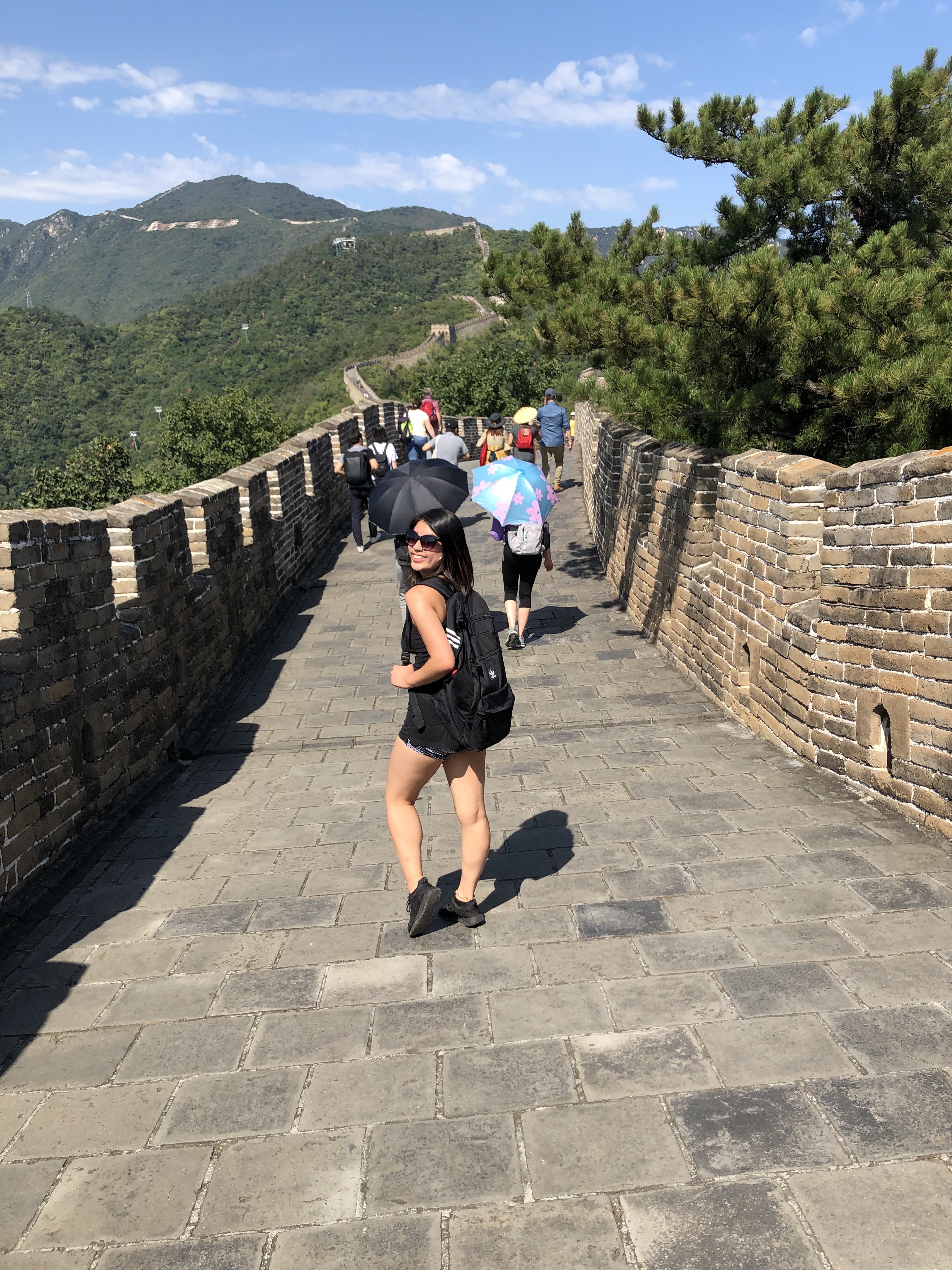
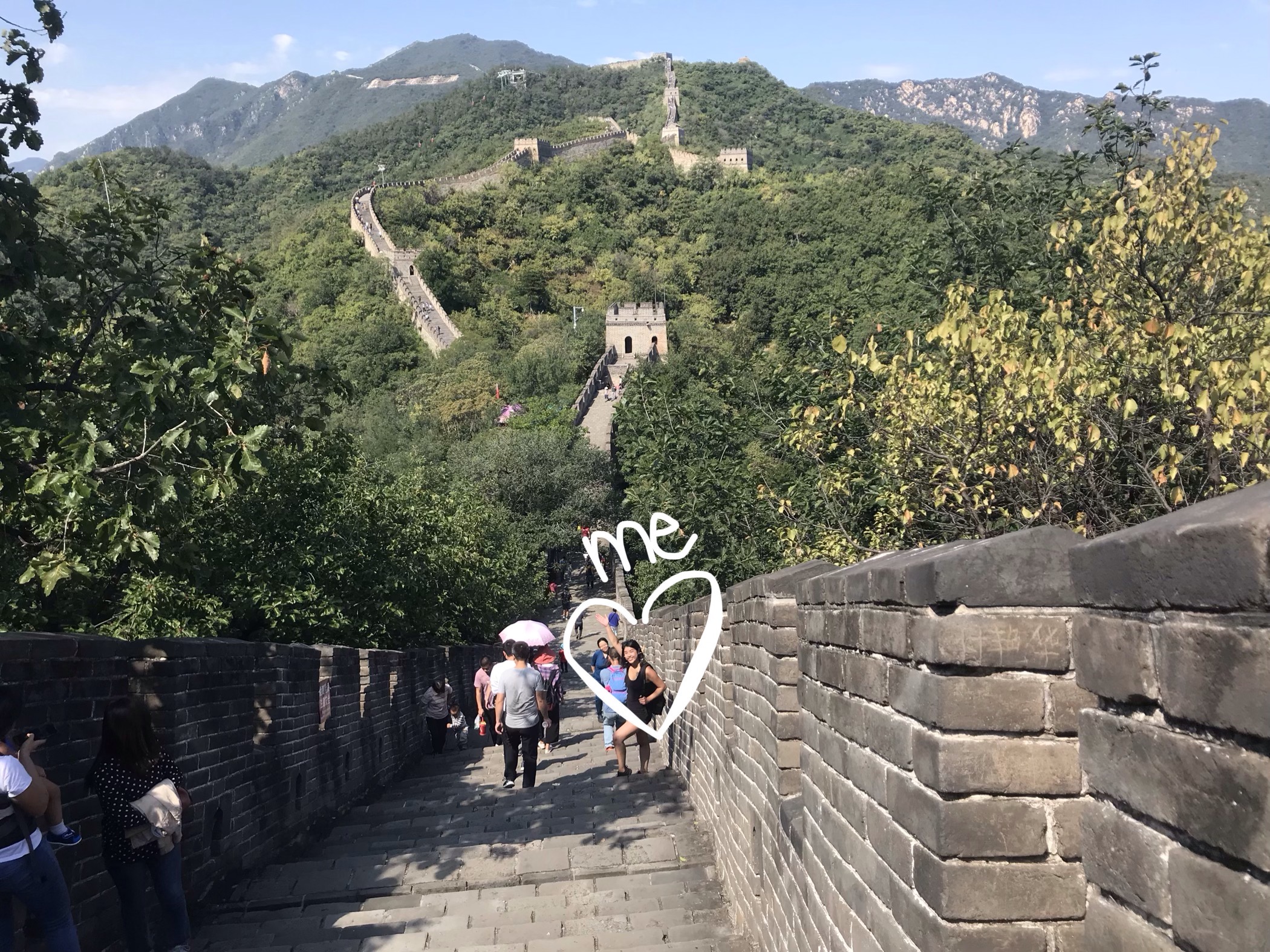
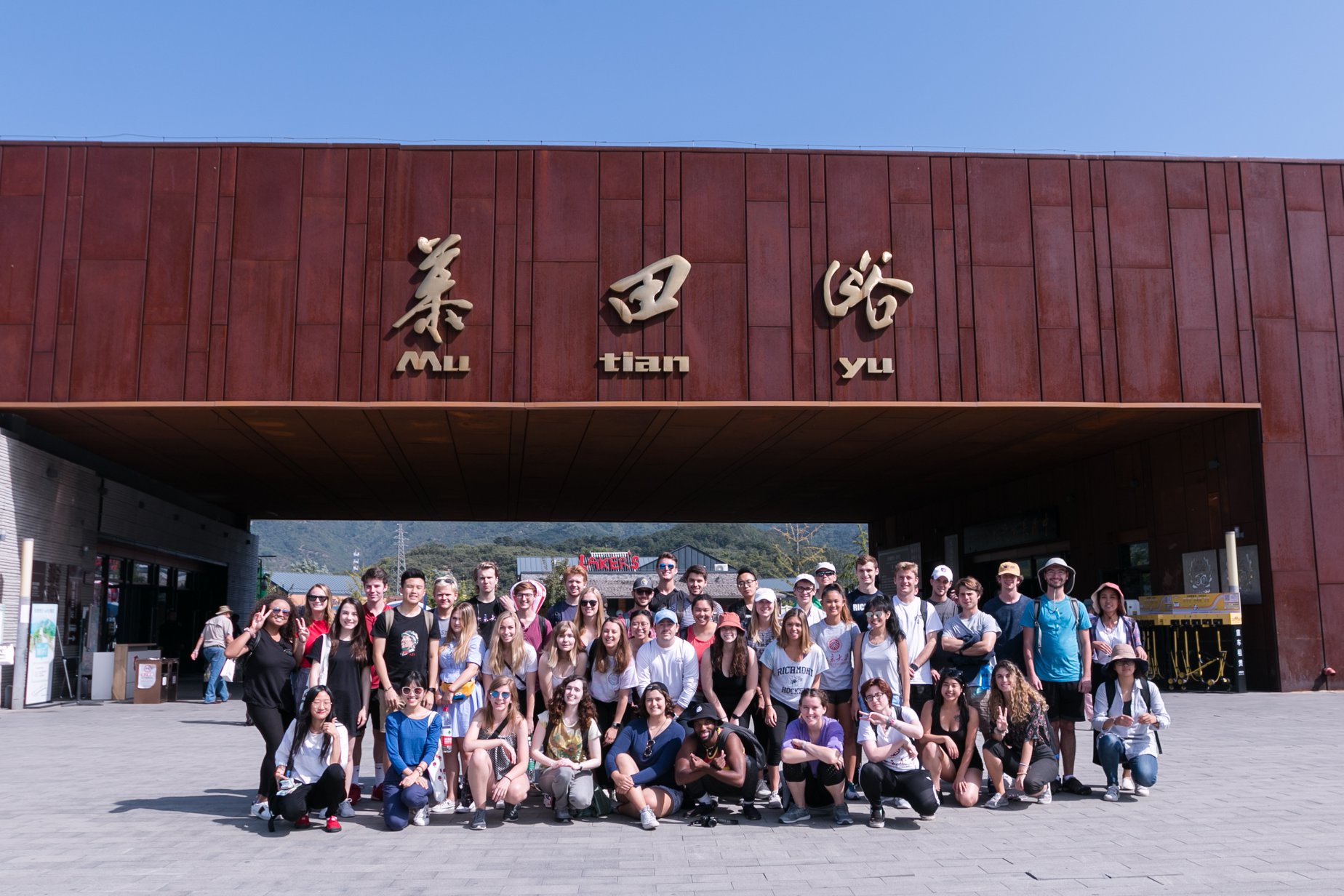
It’s been 10 years, but I finally returned to the Great Wall. One of my program’s excursions this month was a trip to the Great Wall of China. We piled into two buses and rode up to Mutinayu, one of the most popular Great Wall sites. When I visited the Great Wall in 2009 with my family, we rode the gondolas up to the wall. However, this time, being the real world travelers we are, all of us -around 60 students, all trudged up the wall, toughing it out in the blistering heat. Did we play “The Climb” by Miley Cyrus? Maybe. Okay, definitely, but I really do believe it helped us to keep going! It was extremely worth it too.
Sweaty, dehydrated, but feeling accomplished, we made it to the top of the wall! After some group photos, we were set loose. I trekked all the way to Tower 14. It was exhilarating being up there. The views were spectacular, but what I found to be even more amazing is the fact that I was standing on something so historic, so much bigger than myself. The Wall has a place in history, not only Chinese history, but world history. It is a feat of architecture and prowess and standing on it is indescribable. Things like the Wall, which were built to stand the test of time, inspire and encourage me and I hope that one day I can make a difference in the world and leave my own legacy.
After walking the wall, checking out the views, and taking majestic photos for our social media, we had two options of descent. One was plain ol’ walking (boring, right?). The other? A HUGE slide, all the way from the top to, you guessed it, the very bottom. It was only $14.00! How could we possibly resist.
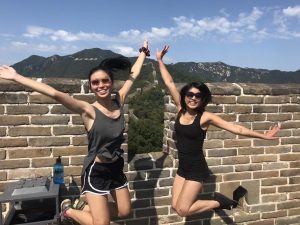
View of the Great Wall from hill topSarah and I on the Great Wall of ChinaThe Great Wall snaking along the top of a mountain ridgeCSI group photo at the Great Wall of China
We have excursions almost every weekend, but the dreaded Monday always has to come again around. Soon enough it was back to the grind: classes, homework, and tests. However, this month, lucky for us, our regular scheduled programming was interrupted, and we were on Fall Break! “Fall” break, but let’s be real, it was still 80 degree weather with no wind. Where I’m from, that’s summer, and a really hot summer at that. Now we were faced with the decision of where to travel?
China is a vast land, offering diverse experiences. All 60 of us students considered very carefully where to plan our travels. Where did we decide on? Shanghai, baby. And not just a few of us. Literally, all of us. We all went…to Shanghai. So we all split off into smaller groups, and planned to meet up together in the big city once we arrived. My group included myself, my friends Sarah, Marilyn and Aili from University of Denver, and my friend Juliana from California. Together, bags packed, sunglasses on, we headed to the (other) big city for a well-deserved break.
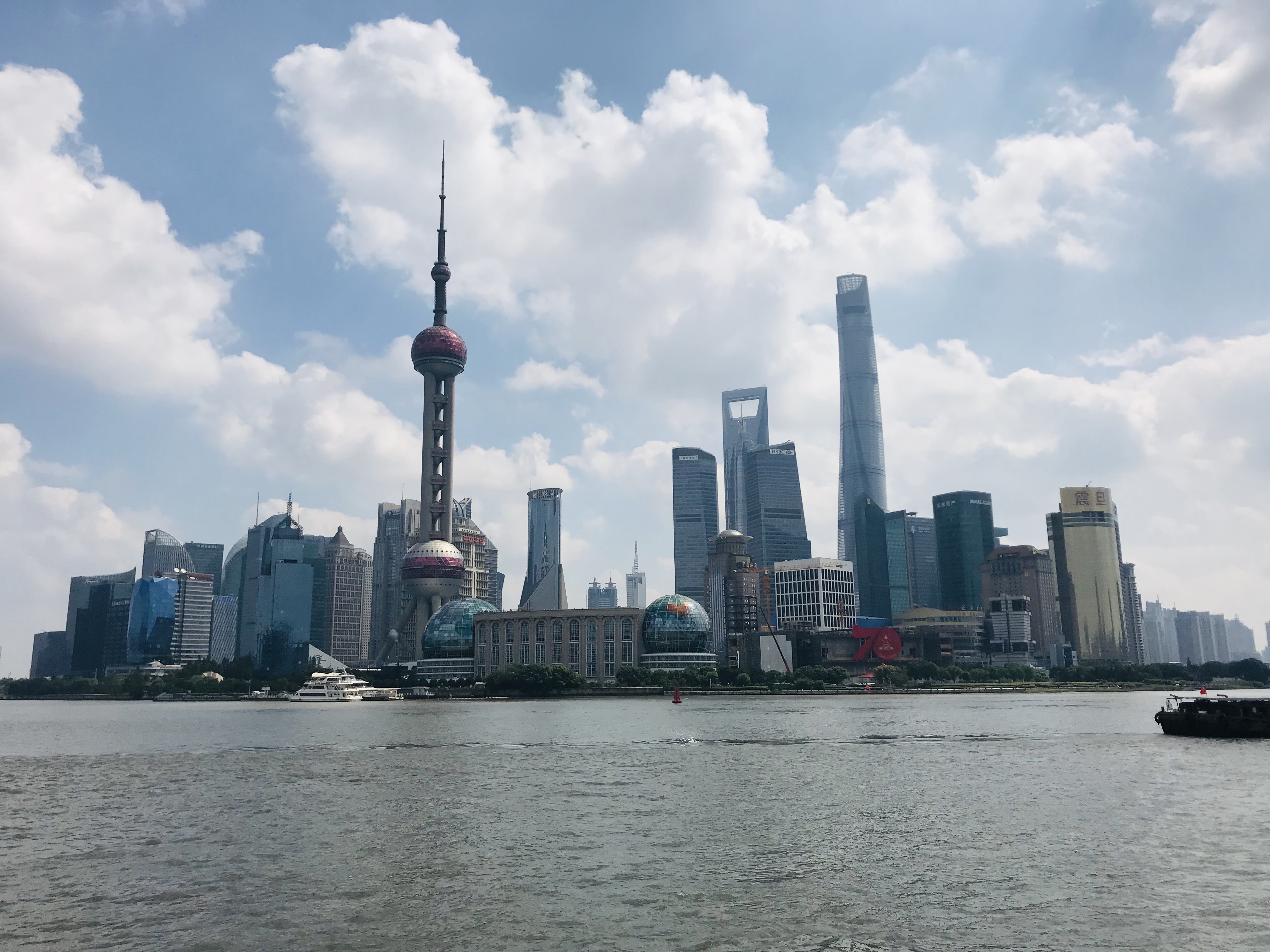
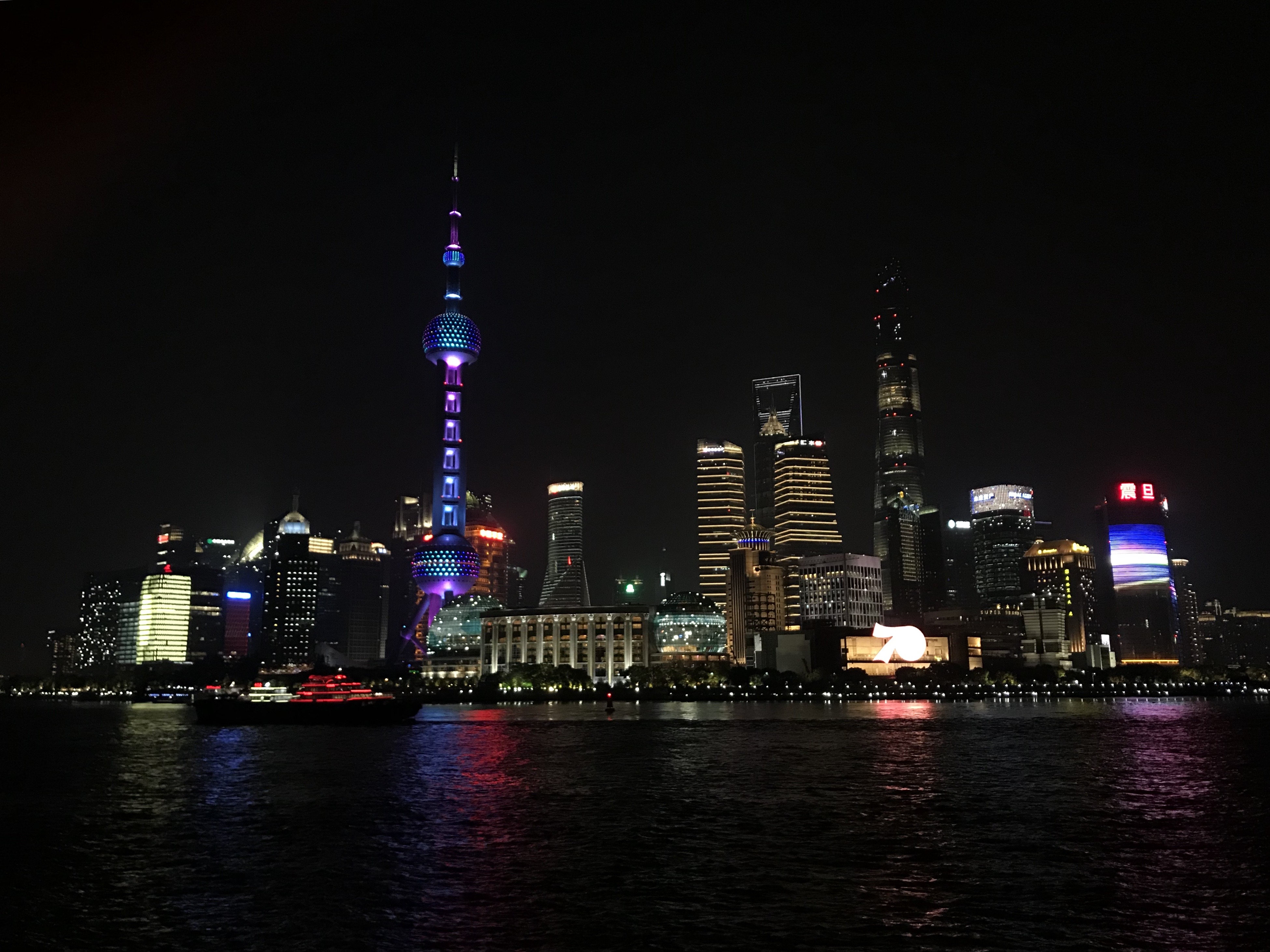
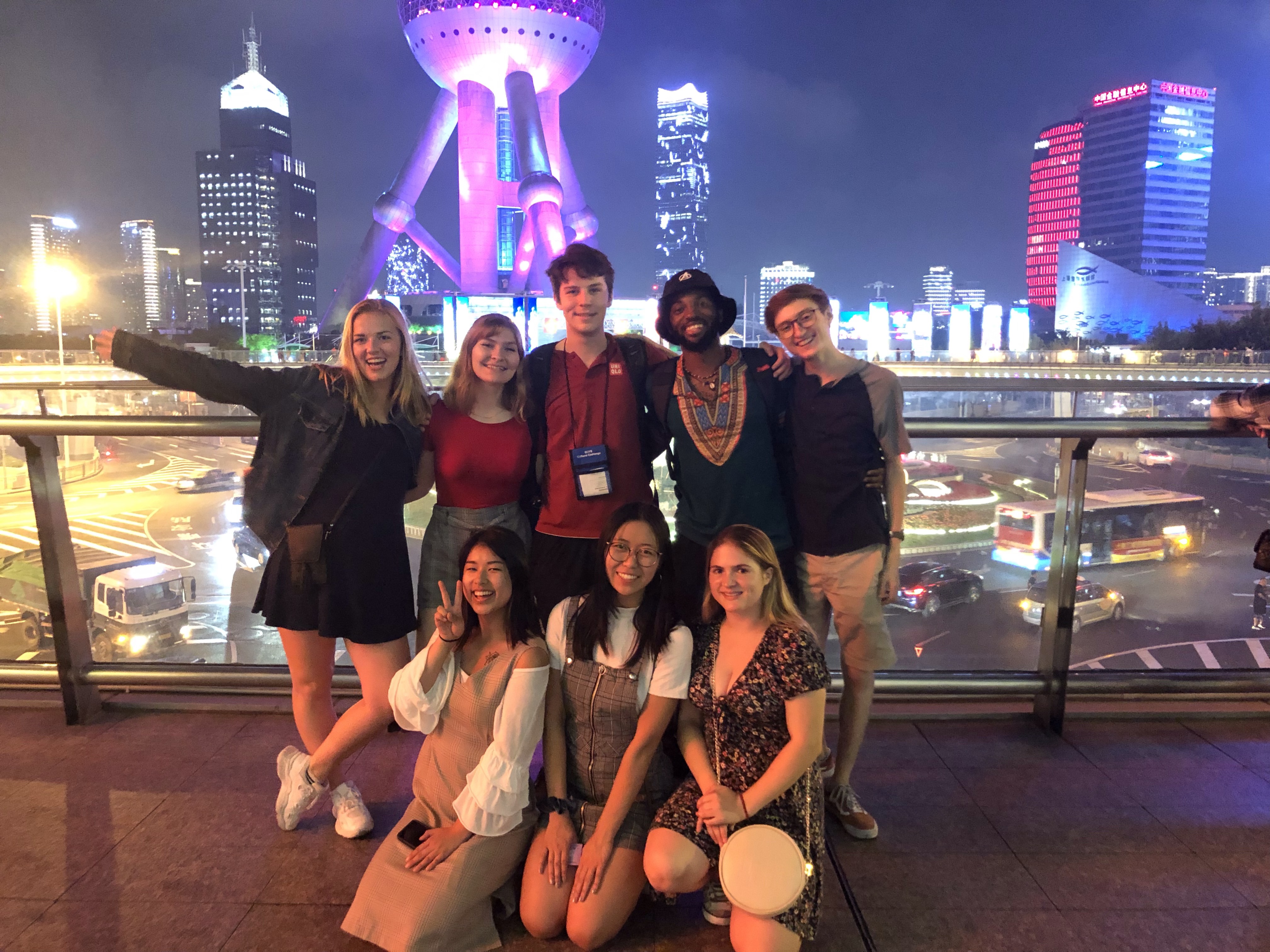
We rode the high-speed train called the 高铁 (gaotie) to Shanghai, which only took around 6 hours. China’s high-speed train is so convenient, comfy, and quick that it could give the Eurorail a run for its money. From the train we rode taxis to our hostel. Because we arrived in Shanghai pretty late, we hit the hay and started our Fall Break the next morning with a trip to the famous Bund! Shanghai’s Bund is a beautiful walk by the water, where you can see Shanghai’s famous skyline.
The city really looks as if its from the future. All of the buildings are brilliantly designed with artsy shapes and sizes, and at night they put on the most spectacular night lights. We hit the museum and walked around some more, later taking a nighttime river cruise where we were able to take in all the beautiful scenery.
Shanghai city skyline from “The Bund”Shanghai city skyline at night
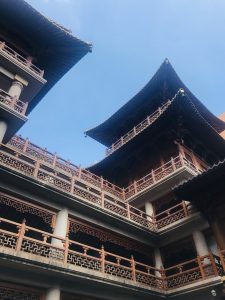
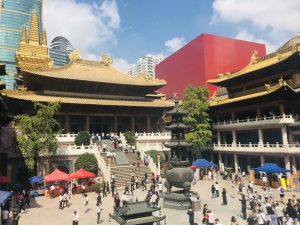
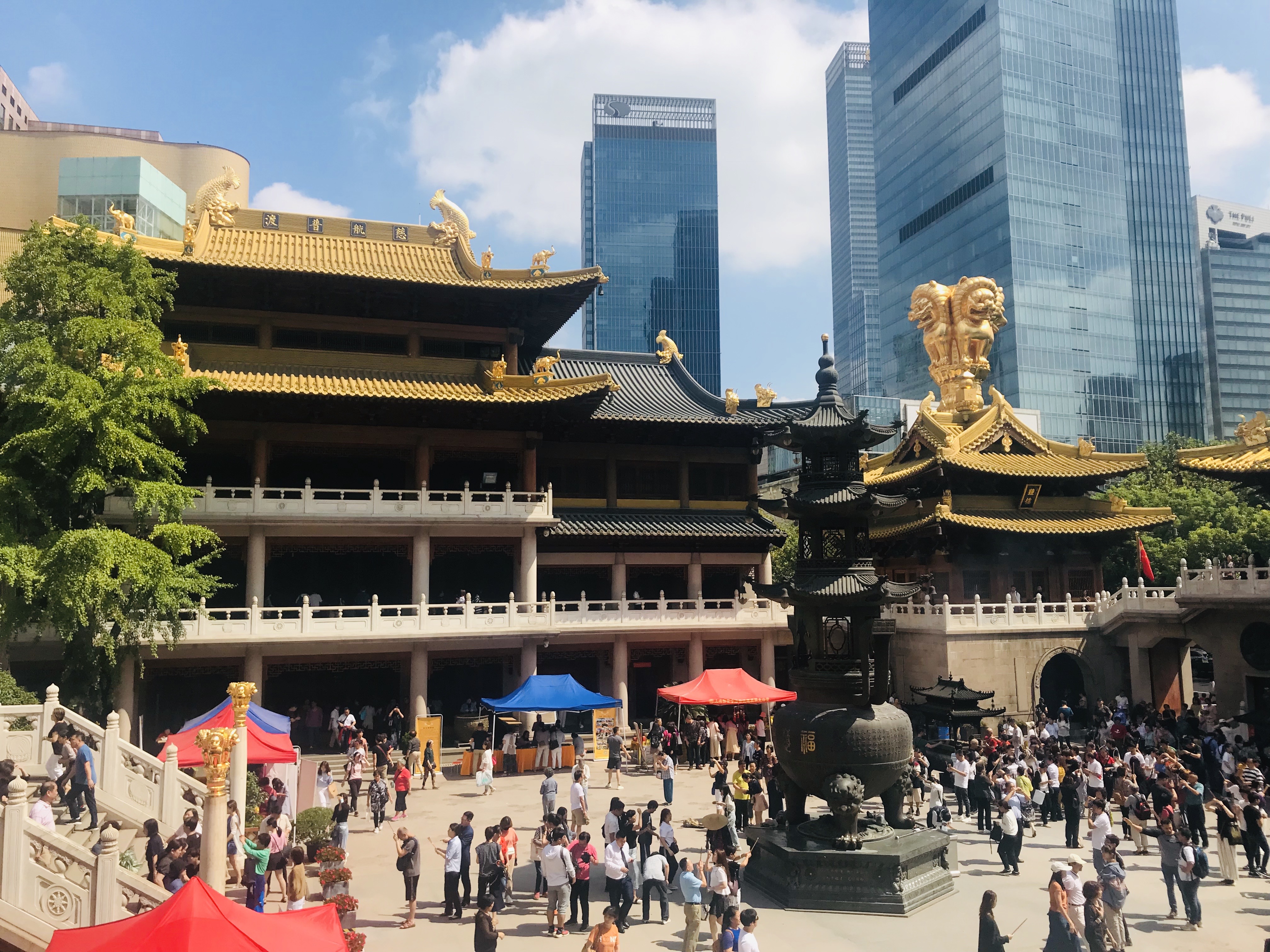
The next day we went on a trip to Jing’an Temple. An active temple right in the heart of Shanghai. It’s very interesting to me the juxtaposition of the very preserved and beautiful traditional temple surrounded by a modern, loud, and bustling city. It’s especially striking because the temple is an active temple, and many people were praying and practicing at the temple, right there in the heart of the city.
Jing’an TempleThe public walking into Jing’an TempleJing’an Temple (notice the skyscrapers in the background)
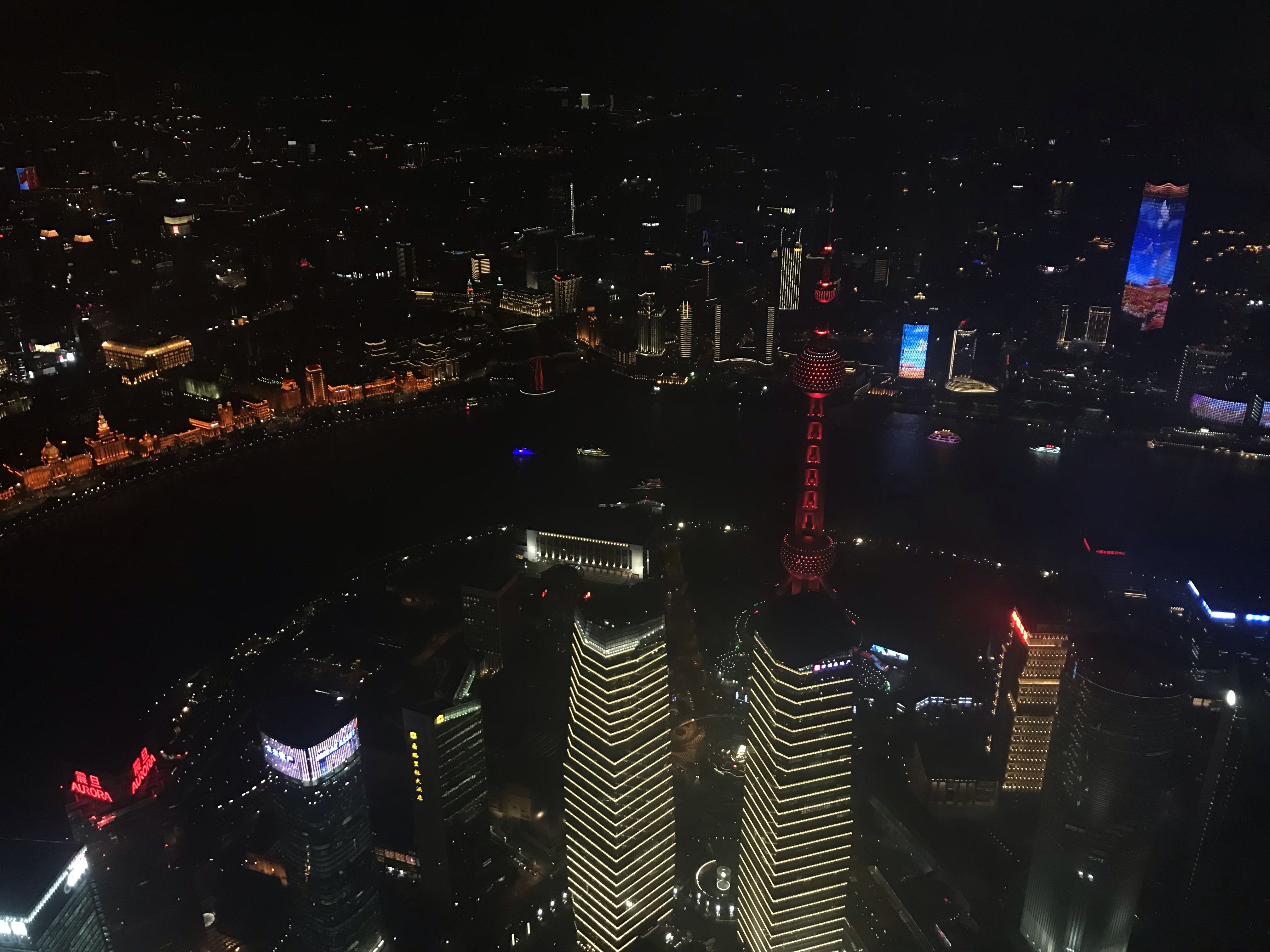
After the temple we headed to the Shanghai Tower with some other friends from the CSI program who were also in Shanghai. A view of the city from the water wasn’t enough; we had to get one from the sky as well. The city looked so vast and alive from the tower, and I recommend the experience to you all!
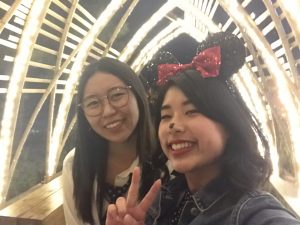
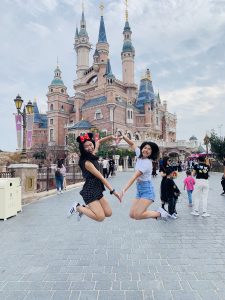
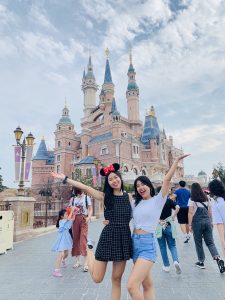
The final destination of our Shanghai trip was one of the reasons we even chose the city. All five of us knew we wanted to go, even before we booked anything. We were going to… Disneyland! We spent the entire day at the park, arriving when it was opening and leaving well after the fireworks show. It was not very crowded, even though we thought it might be because it was a national holiday. (Golden Week, read more about it in my next blog). But we were lucky and the lines were short, the weather was nice, and we all bought Mickey ears.
Sarah and I in front of Disneyland ShanghaiSarah and I in front of Disneyland Shanghai
Fall Break had a sort-of US “Spring Break” feel. It was really nice to have a break from class, since it is non-stop, tests every weak and hours of classes every day. I’m not complaining at all though, as my Chinese has improved so much! I have to say, after Shanghai, I am happy to be back in Beijing. Our Shanghai trip was a whirlwind and I had the best time, but I prefer Beijing. Shanghai is a beautiful place full of amazing sights, but it felt a little too much like the United States to me. There are a couple reasons for this. The city (especially compared to Beijing in my opinion), was very international, and even more modern than Beijing. Beijing is the cultural and political capital of China, whereas Shanghai is the economic hub. This means there are tons of businesses and business people from all over the world. It’s much more diverse than even I expected. Fashion, architecture, and infrastructure were all different than our neighborhood in Beijing (Haidian), and it was really compare and contrast the two large cities in China, and how their development as cities differs due to their history.
CSI group photo on a bridge, overlooking cityShanghai Tower, top floor view.
These past couple months have flown by. Seriously, time is catching up with us so fast. It’s strange. It feels as if it was just yesterday that I was stepping off the plane, nervous, excited and totally lost. Now I feel that China is my home. I feel like I’ve been here for years. Now we’re all rushing to finish final papers, prepare for our final exams, and pack our souvenirs into our little suitcases.
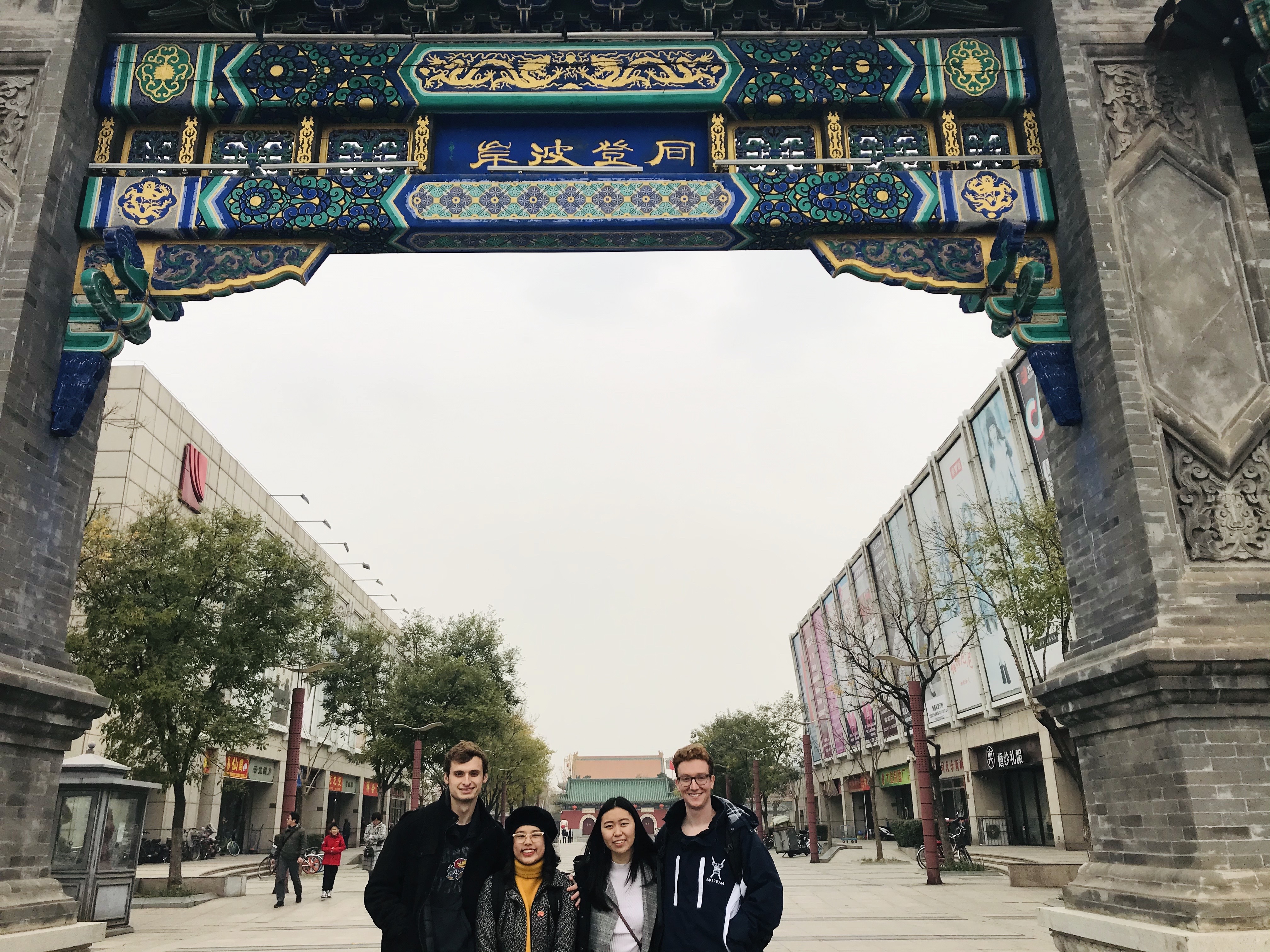
And with all this end of the year craziness, my friends Sarah, Will, Sam, and I all decided to forget about our responsibilities and go for a day trip to Tianjin. It’s just about a half hour from Beijing by high-speed train.
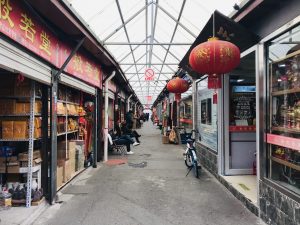
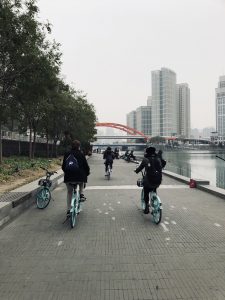
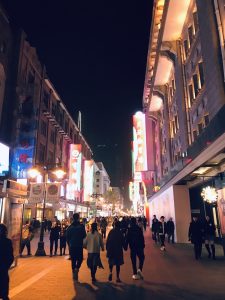
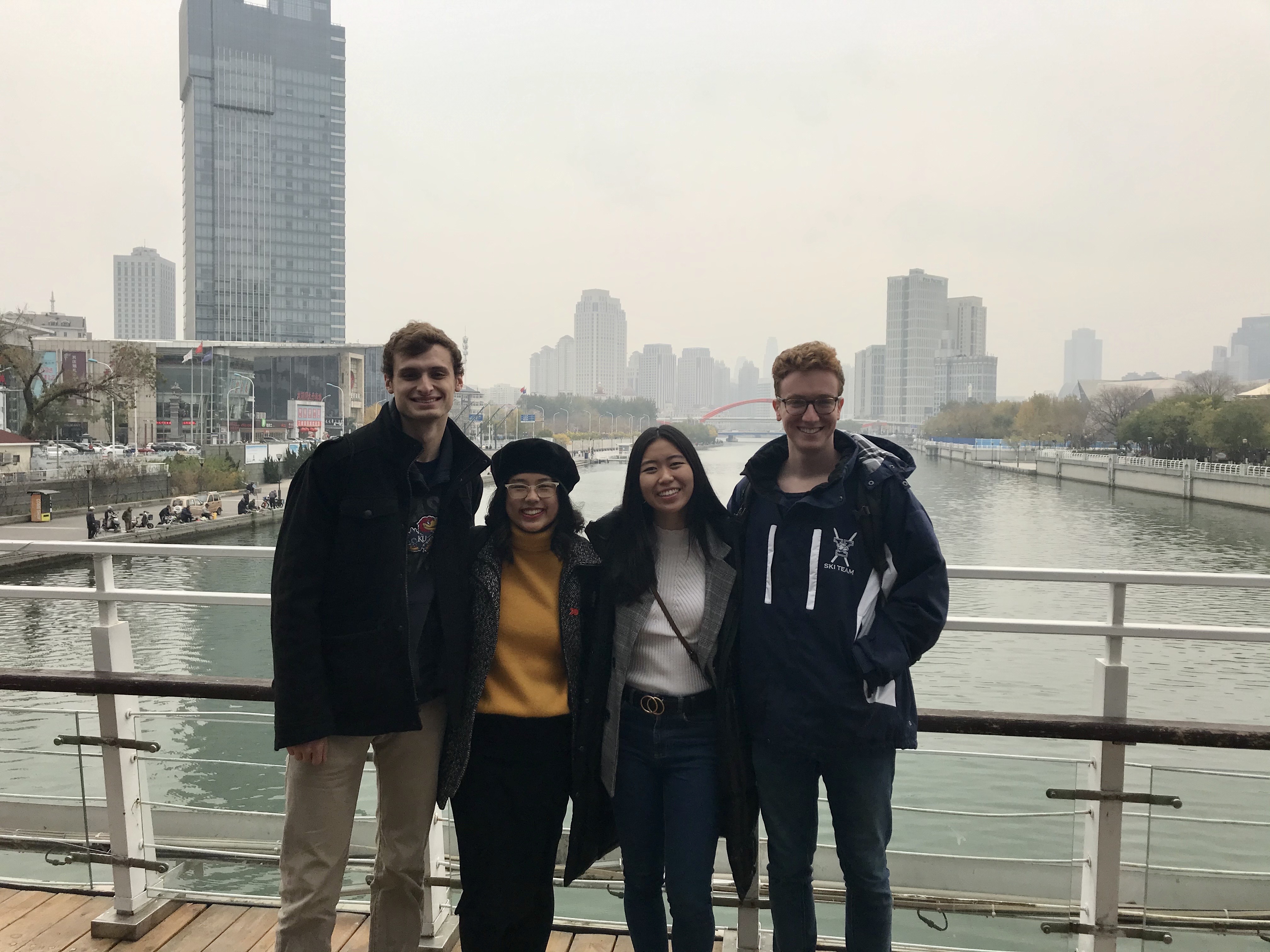
Underneath an arch in TianjinTianjin marketsBiking on a riverside path in TianjinTianjin at nightGroup photo on bridge overlooking river and skyline in Tianjin
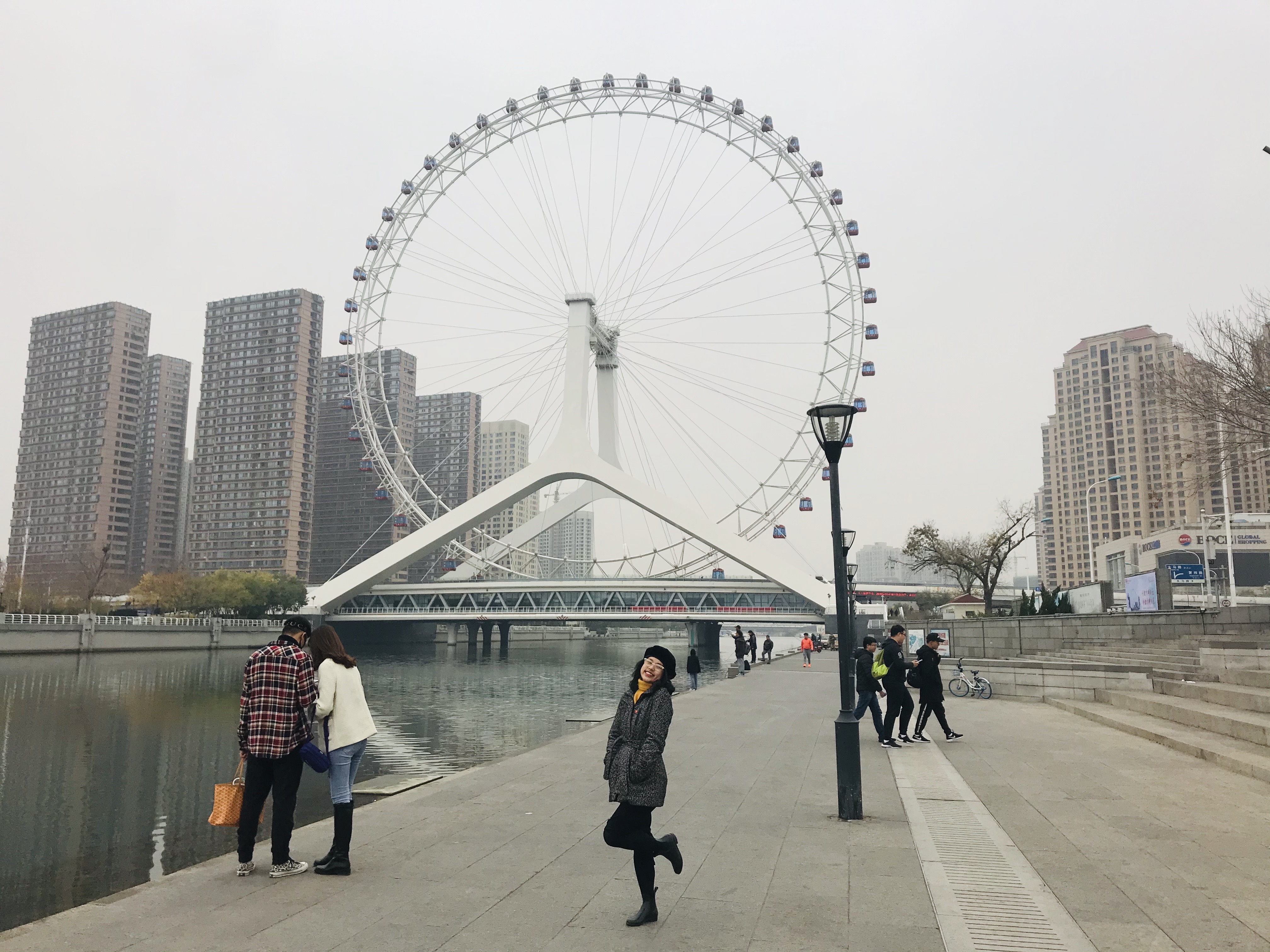
Tianjin is a curious little place. First of all, it’s not really little at all, but compared to Beijing, it does feel quite small. There’s a lot of really interesting architecture in Tianjin, much of it being modeled after European architecture, which makes it feel like some weird fusion city of East and West. In some places it almost feels as though you could be in Europe (if it wasn’t for all the Chinese people). They even have a “Little Italy Town” and a huge sightseeing ferris wheel known as the Tianjin Eye. My friends and I sent a photo to our parents in front of the Eye and captioned it “Hi from London”. For a second, we did actually fool them.
Photo in front of the Tianjin Eye
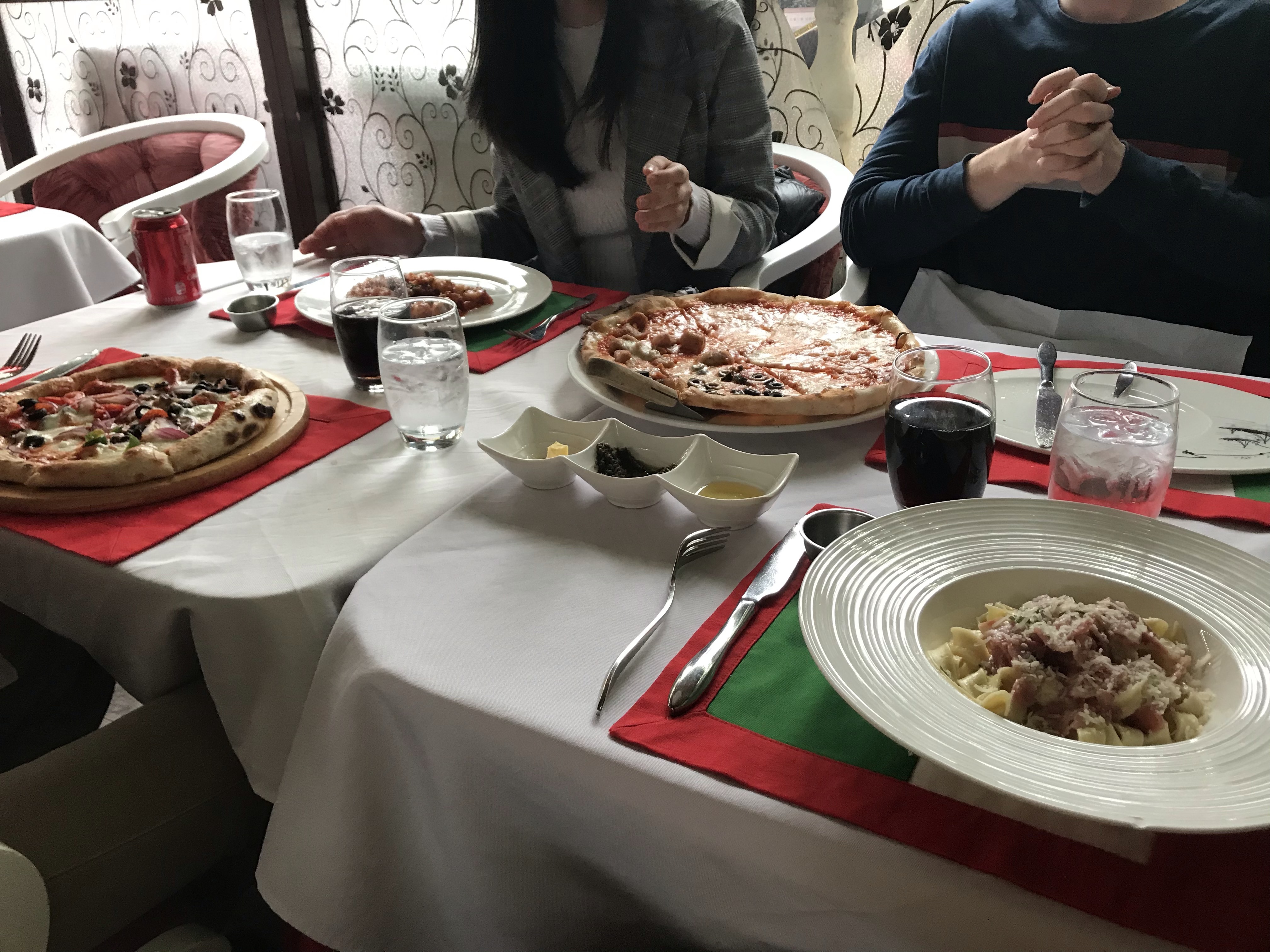
Little Italy Town had amazing authentic Italian food, and later we ventured downtown.
Authentic Italian food in Tianjin!
We visited a sort of “heartbreak museum” on the top floor of a mall. It was filled with love letters detailing lost loves, and random artifacts tied to stories of unrequited love or broken hearts.
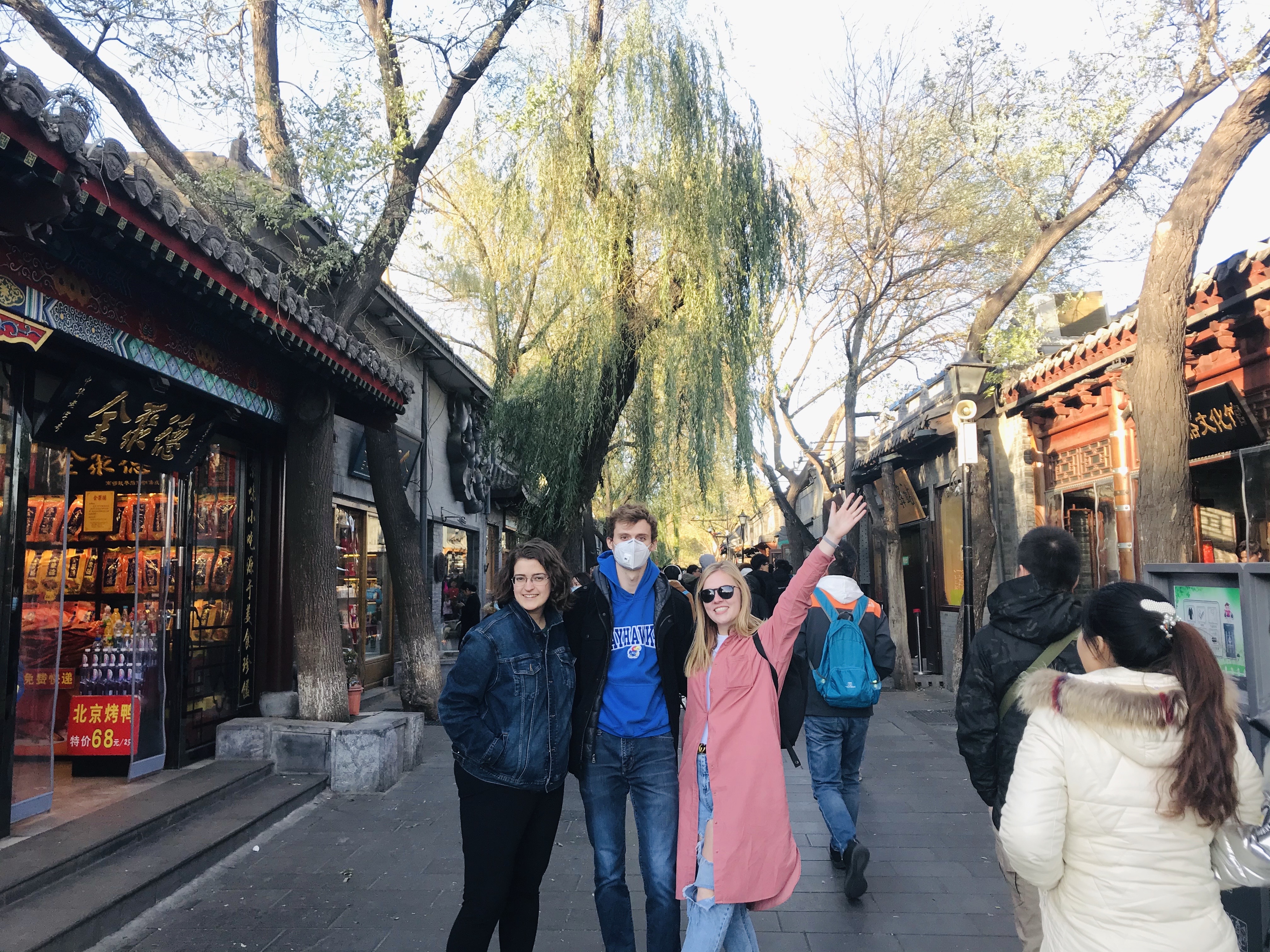
I didn’t want to return to studying for my finals so we went on another adventure the next day. My friends Aili, Kathleen, Will, and I also explored a Hutong for the first time this semester. A Hutong is a Chinese alley that is basically its own little neighborhood, with shops, homes, and restaurants.
People walking up and down Hutong alleyFriends posing in front of Hutong Alley
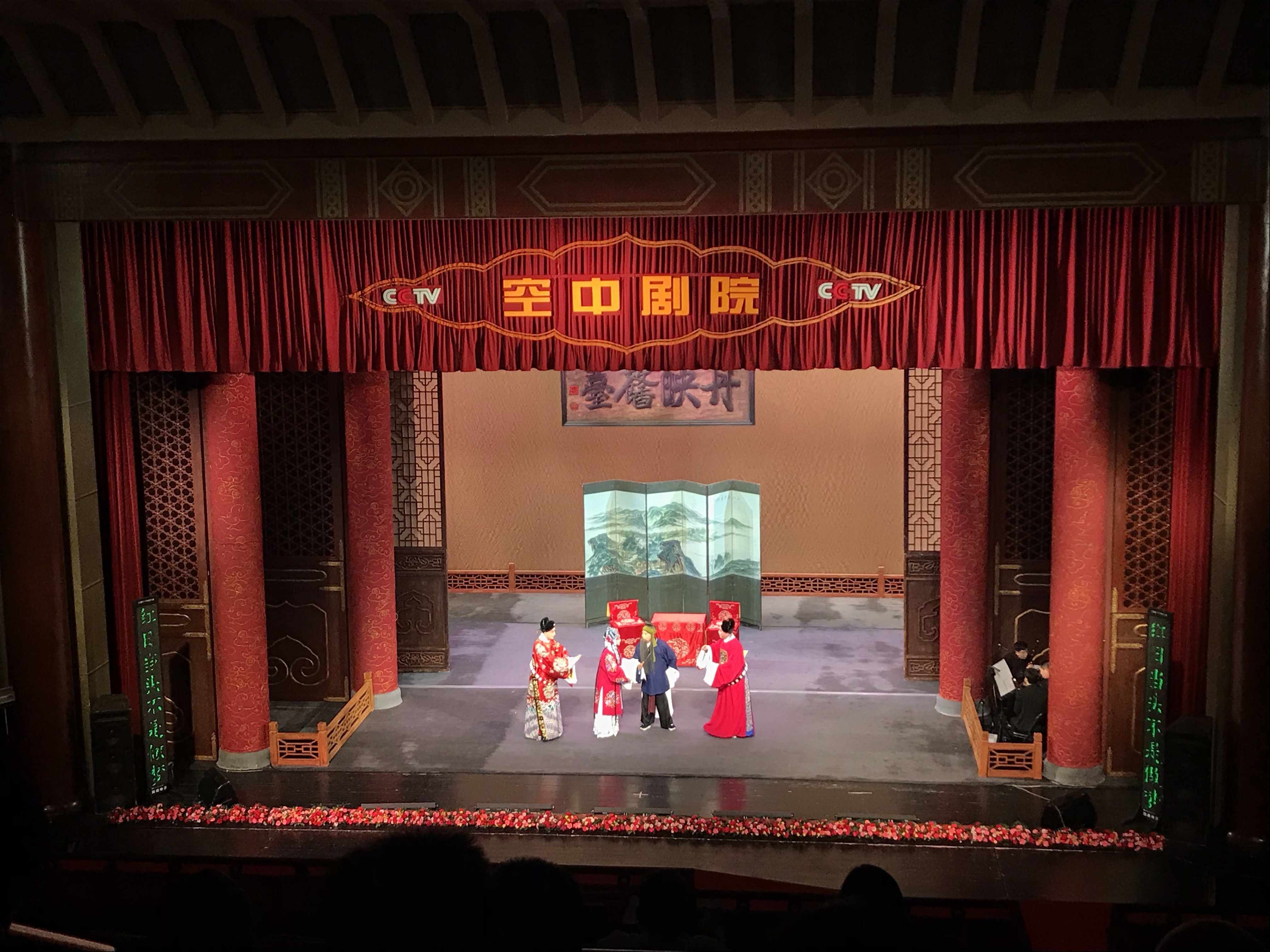
They’re very popular with tourists. You can buy any kind of souvenir there and taste a bunch local speciality dishes and snacks. Later that night we went to see a traditional Beijing Opera performance, something we’d been dying to do since we arrived in Beijing.
Beijing Opera stage and performers
Beijing Opera is a long-standing cultural tradition in China. Actors paint their faces, sing, dance, and depending on the show, perform martial arts. If you’re interested, I recommend watching Chen Kaige’s critically-acclaimed and award-winning film “Farewell, My Concubine”. It’s quite graphic, so I do advise caution.
I ended this packed period with another top Beijing experience. I had the huge pleasure of participating in an American Classroom panel at the US Embassy as part of my Gilman Scholarship. The Gilman Scholarship is a US Department of State scholarship that helps support students like myself who study abroad. I am extremely thankful for this scholarship as it has helped me afford this amazing opportunity.
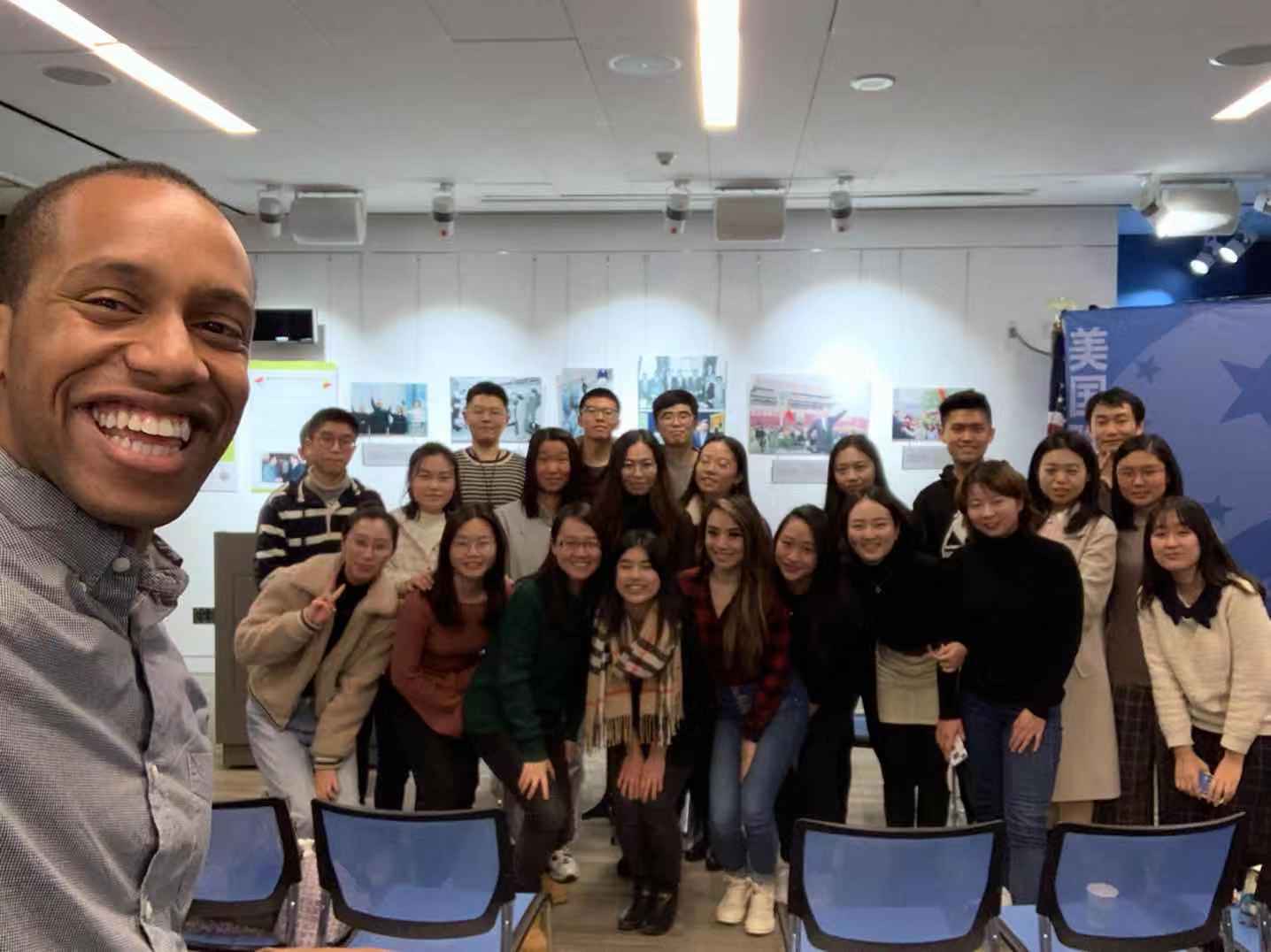
With our wonderful audience at our Gilman scholars panel about the Asian-American experience. Selfie photo credit to our wonderful organizer Nick Grandchamps!
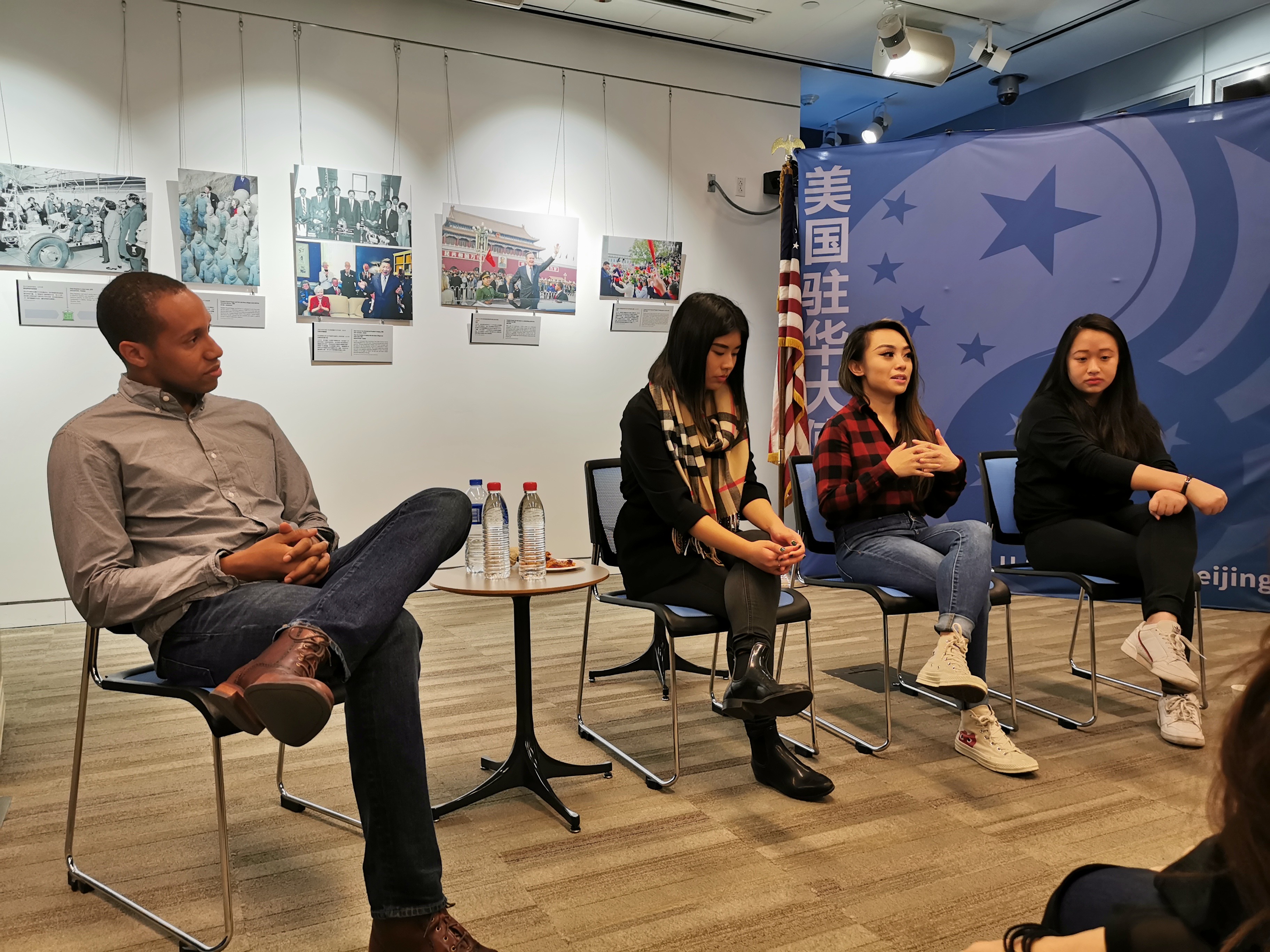
The panel was about the Asian-American experience, and myself and two other Gilman scholars talked with current Chinese university students about how we define our Asian-American identities, Asian stereotypes, and safety studying in the United States. The two other panelists, Linda and Wendy were Vietnamese-American and Cantonese-American respectively.
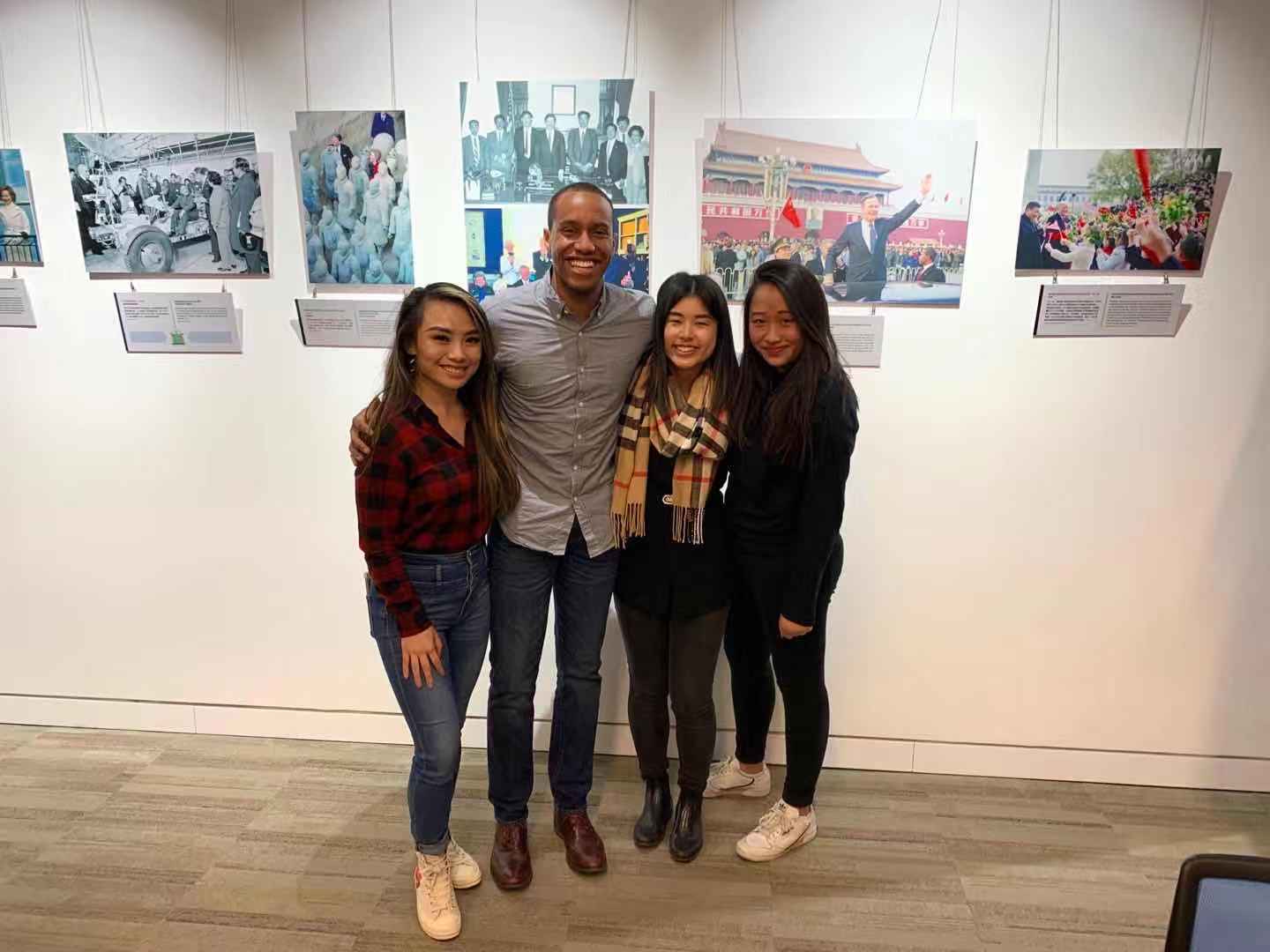
Group picture with the Nick (the organizer) and Linda and Wendy (fellow panelists)
Myself being Chinese-American and adopted meant we all had very different experiences to share with everyone. I enjoyed how listening to the other panelists share their experiences and really enjoyed how diverse the panel was because it shows that there is no single Asian-American experience. We are different people, with different cultures, communities, struggles, and triumphs. It’s something that’s very important to remember.
Mara
Talking about our experiences as Asian-Americans in the US and studying abroad
Four flights and over 30 hours of travel later, I’m home in Oregon. It feels like I was both gone for forever and for no time at all, and although I couldn’t be happier to see my family, friends and pets again, I miss Sevilla more than I could have imagined. My last week abroad raced by. I took my last final at the beginning of the week, and since I didn’t leave until Friday, I spent the following days visiting my favorite places in Sevilla and saying goodbye to my friends. It was both the best and most difficult week of the semester because emotions were running high, I was trying to soak up every last bit of Sevilla and I knew it was all about to end.
The weather was finicky that last week–thunderstorms one day, sun the next and rain the following. I took advantage of the sunny day to wander the streets of barrio de Santa Cruz. I stopped by the Alcazar castle ruins to listen to a lone guitarist seated beneath the orange trees. I wandered through a tienda de flamenca to admire the dresses the Sevillana women would soon begin to buy for the Feria de Abril and wished more than anything that I could attend. I stopped at nearly every pretty building I saw just to stare up at it and was asked by several concerned young men in fur coats (the sevillanos like their fur) if I was lost each time. I sat in my favorite spot on the bank of the Guadalquivir one last time, watching the motorcycles and cars drive across the Triana bridge and the sun warm the fronts of the pastel buildings along Calle Betis.
I said goodbye to the Club Náutico swim team the day before I left. I’d expected to feel like an outsider, but was surprised at how inclusive and genuinely interested in being friends with me they were. By December, I didn’t feel like “the exchange student” anymore, I felt like I’d found a family. It helped that my Spanish had improved, I’d learned the swimming-specific vocabulary and had gotten used to the slang and idioms they used, but I’d also developed a sense of comfort with the team, even though I didn’t always follow the conversations. We took a photo and I hugged each of the swimmers, coaches and even the lifeguards. “You have to return!” they told me, and I told them I would the first chance I got. I rode a Sevici rental bike (which had been my primary mode of transportation) home from practice, and as silly as it sounds, a few tears escaped as I thought about how this would be the last time. I remember my frustration at the heavy, difficult-to-maneuver, semi-functioning bikes when I’d arrived in September, but now I’d grown attached to them. How boring it would be to know that my bike at home would work properly every time I rode it.
It was equally as difficult to say goodbye to my sevillano friends. Like the swim team, I hadn’t expected to form such strong bonds with the local people, but Sevilla introduced me to some of the most caring, genuine and fun people I’ve met. It was pouring rain, but two of my best friends from Sevilla, Thai and Miguel, drove me to their apartment to have lunch. Miguel proudly told me I would get to try his famous potatoes, but Thai spilled them taking them out of the oven. It was one of those days where everything seemed hilarious, so we all laughed until we cried, and Miguel went to get “Burger King’s famous potatoes” (just normal fries). We stopped for coffee at the Starbucks and Jose, my favorite barista, was there. He had delivered complementary ice water and snacks to me during several long afternoons of studying, and seemed a little sad when I told him I was leaving the next day. I admit I was a little sad as well. Thai, Miguel and I all cried saying goodbye, and promised to stay in touch. “You’ll be back, you won’t be able to stay away from Sevilla for too long,” Thai said.
The most difficult part of the week was saying goodbye to my host family. I’d been living with Loli and her son Sergio, who had truly come to seem like a mom and older brother. The food Loli served for dinner my last night in Sevilla was delicious as always, but it was difficult for any of us to eat. I tried my best to hold it together, but the tears came out all at once, and we all sat on the couch crying together. I promised I would come back (again) and they told me they were sure I would. “You fit so well here, you would definitely be happy living in Sevilla,” they told me. I had started thinking about the idea about halfway through the semester, and after a week of saying goodbye to Sevilla and its wonderful people, I knew it couldn’t be goodbye forever.
My time in Sevilla was magical and surreal, but it was also one of the times in my life during which I felt most at ease, most happy and most connected to myself and to the people around me. So many things were experiences exclusive to Spain: walking along the streets filled with people chatting, eating and singing each evening, watching the sun set behind the spires of the Plaza de España and the Giralda, adventuring around Spain and Morocco with my other North American friends, squeezing into a packed bodega with a group of Spanish friends (some of whom I’d met before, many of whom I hadn’t), crawling into bed with sore feet after a night at the discotheque, learning the vocabulary related to the gastronomy of Andalusia or frantically trying to finish Martin Fierro on a warm Sunday by the bank of the river…some things more enjoyable, some less, but I’ll miss it all.
Sevilla taught me so much, and I feel so fortunate for the chance to have lived there for four months, though I wish it could have been longer. I broadened my Spanish vocabulary and I studied renaissance literature and ancient art, but I am most grateful that Sevilla taught me to appreciate every day, no matter where I am nor what I have to do. I know it sounds cliche, but time truly does fly by far too fast, and there is a whole world to explore. I know I will never be able to visit all the places I want to, but Sevilla has made me realize that I want to keep exploring and discovering as much as I can. I don’t like endings, and saying goodbye to this beautiful place was one of the hardest endings I’ve experienced. Not knowing for sure when I’ll be able to return only made it harder, but I have a strong feeling that, just like I promised and like everyone told me, I’ll be back someday.
Thank you for following along with me on my journey to Sevilla! And since I don’t like endings, I won’t say adios…
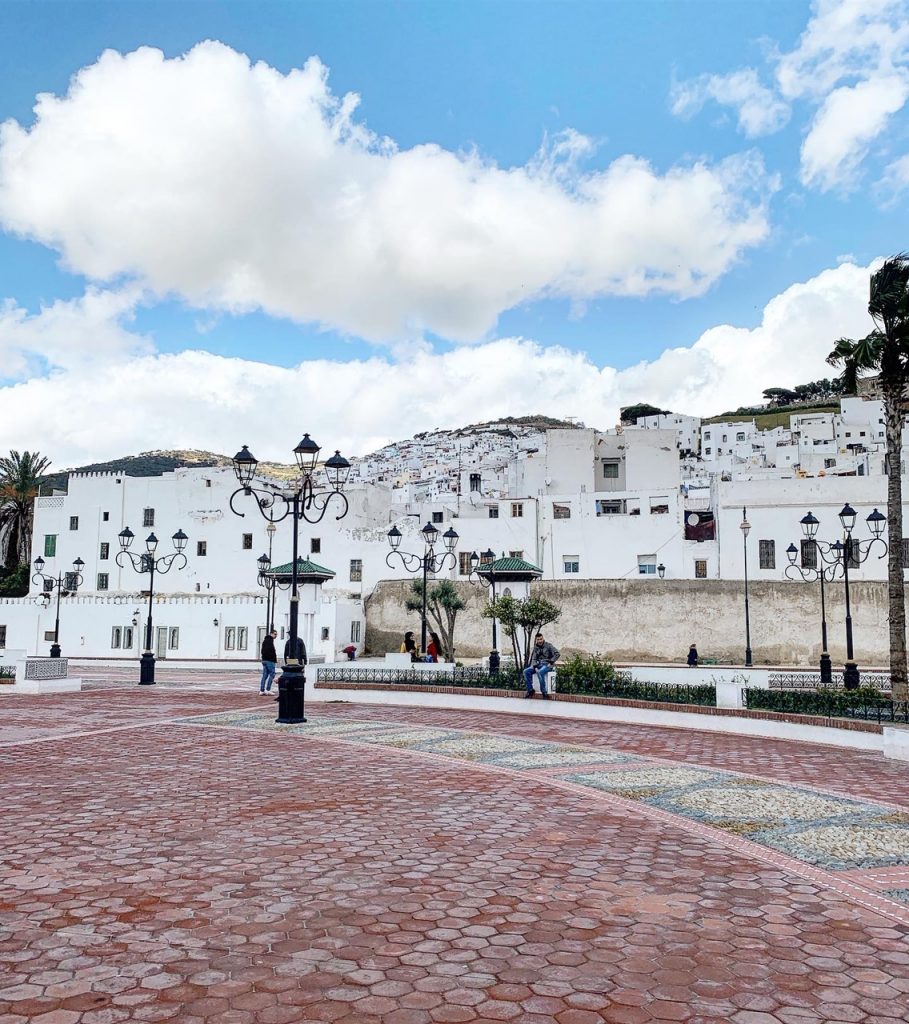
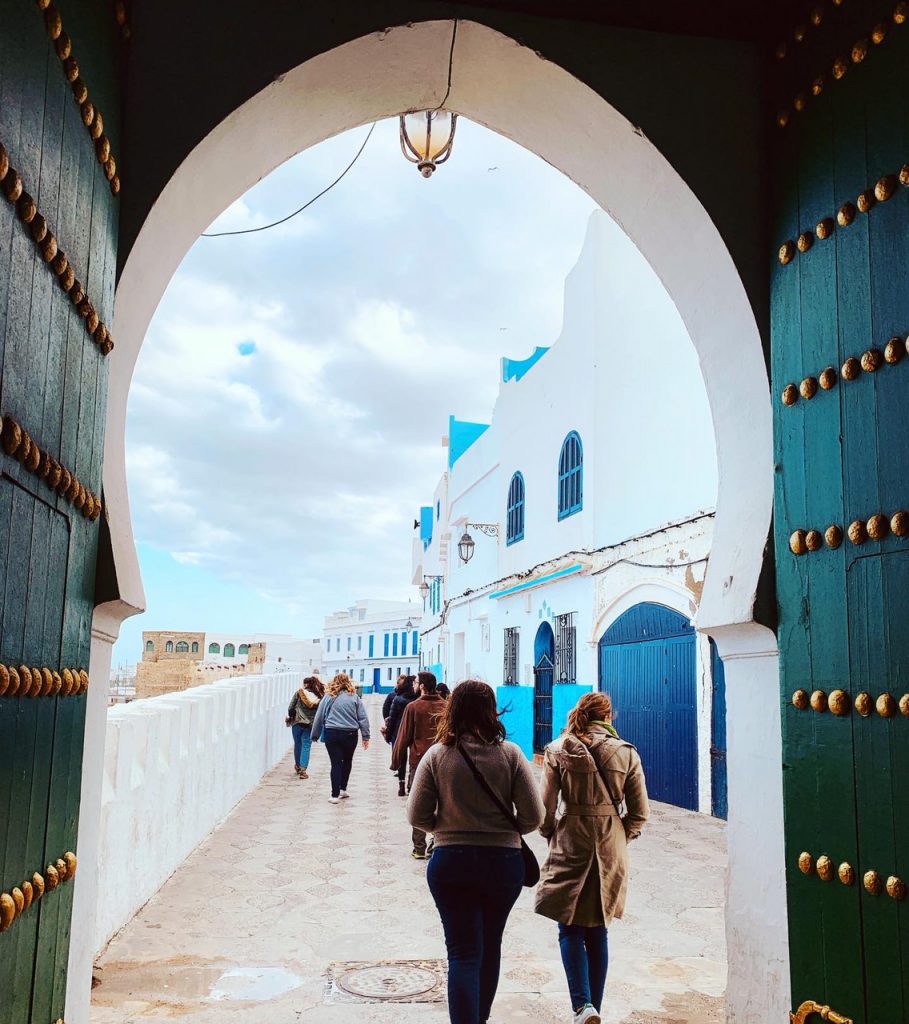
Riding a camel was never specifically on my bucket list but it’s been checked off anyway. A couple of my friends and I had been talking about Morocco since we arrived in September and booked the trip for one of our last weekends abroad. A few more friends decided to join and suddenly we had a group of ten boarding the ferry and heading across the Gibraltar Strait. I thought Spain felt like a different world, but Morocco was an entirely new level of that. Everything was so colorful and whimsical—even their alphabet. It made me want to learn Arabic just so that I could write such beautiful letters.
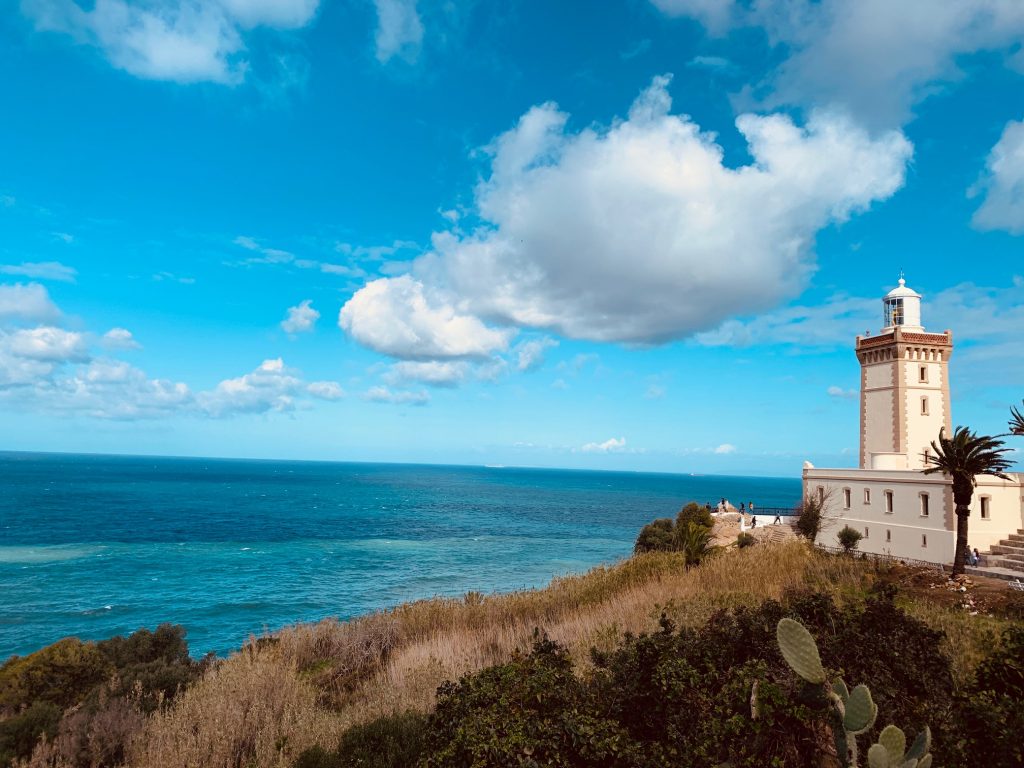
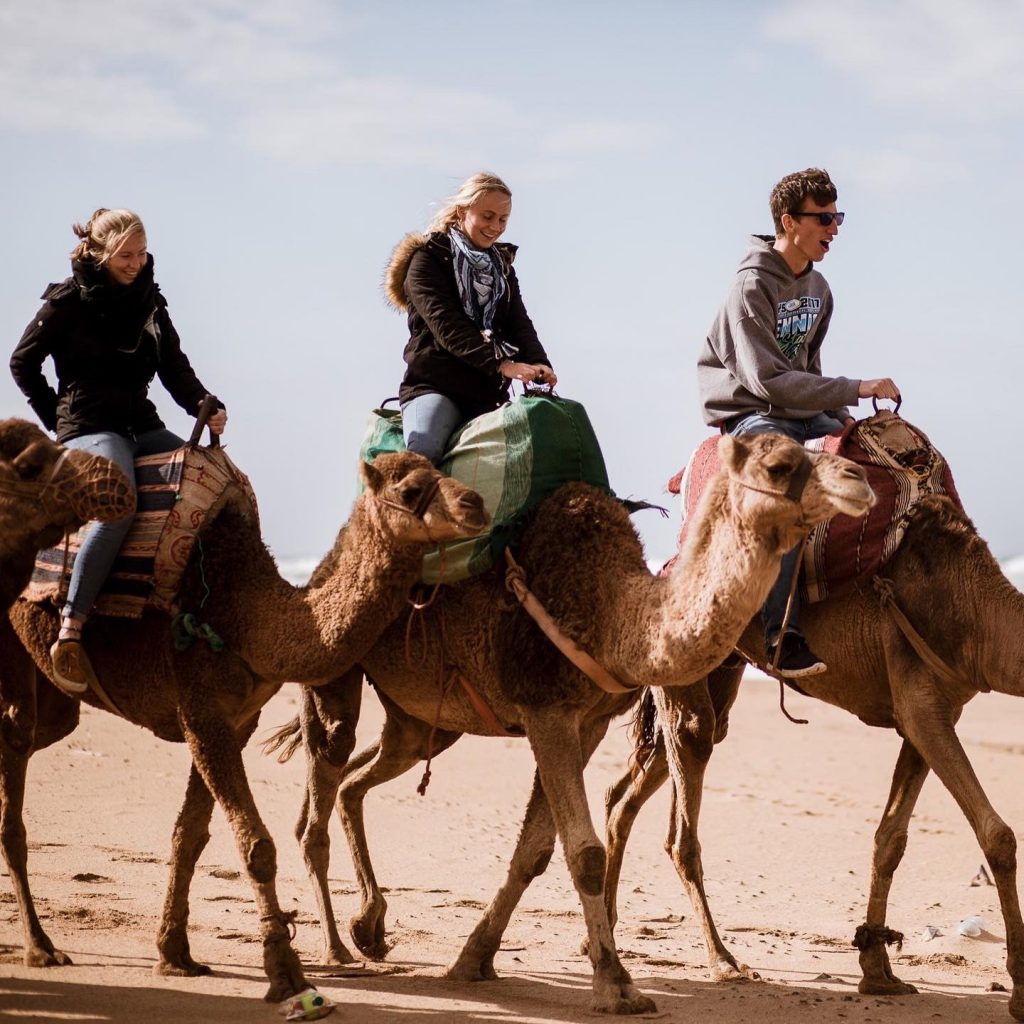
Our first stop was in Asilah where we stayed in a beautifully decorated yet soggy hotel. Everything was damp—the floor, pillows, blankets and towels, but the complementary Moroccan mint tea made up for it. Later that day we stopped along the coast of Tangier to ride camels. The camels were limited so we took turns. The camel driver directed each person to a camel, and I waited assuming I’d go in the next group. As the camels began to stand up, he realized one was still without a rider, and he pointed to me and shouted, “YOU! Run and jump, hurry!” In retrospect I probably should have just let the camel go, but I guess I was feeling up for a challenge because I sprinted and belly flopped onto the side of the rising camel. I somehow got seated as the camel pitched forward and then took off to keep up with its friends.
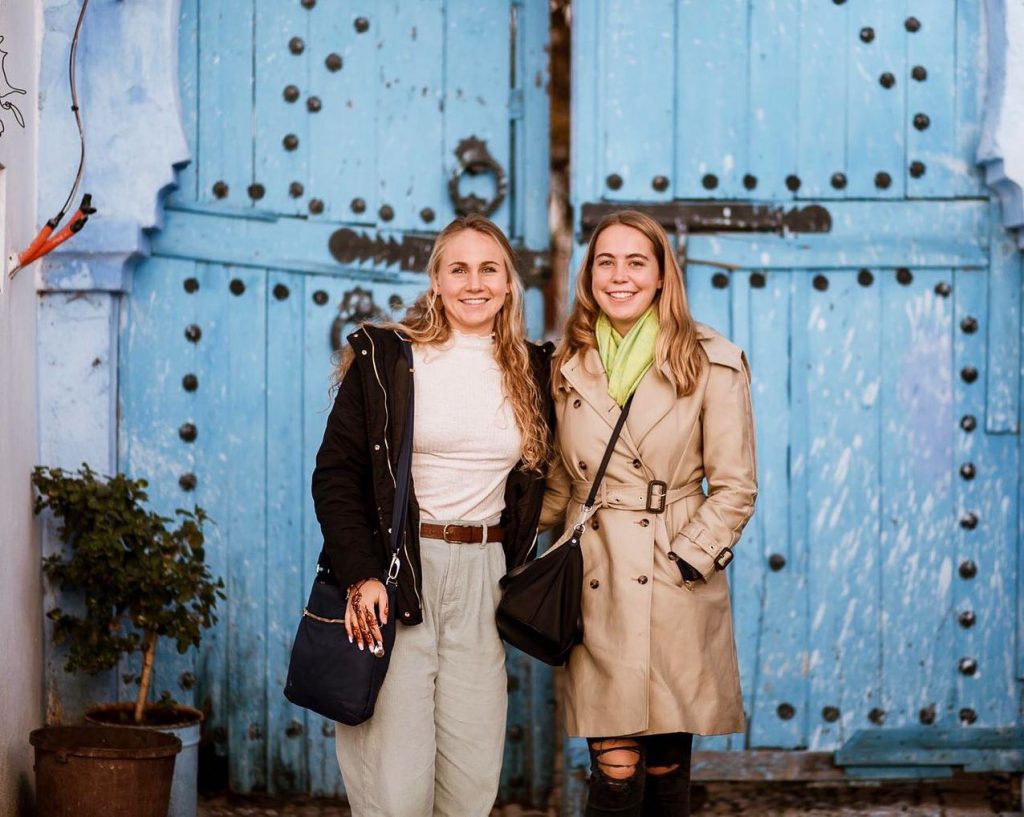
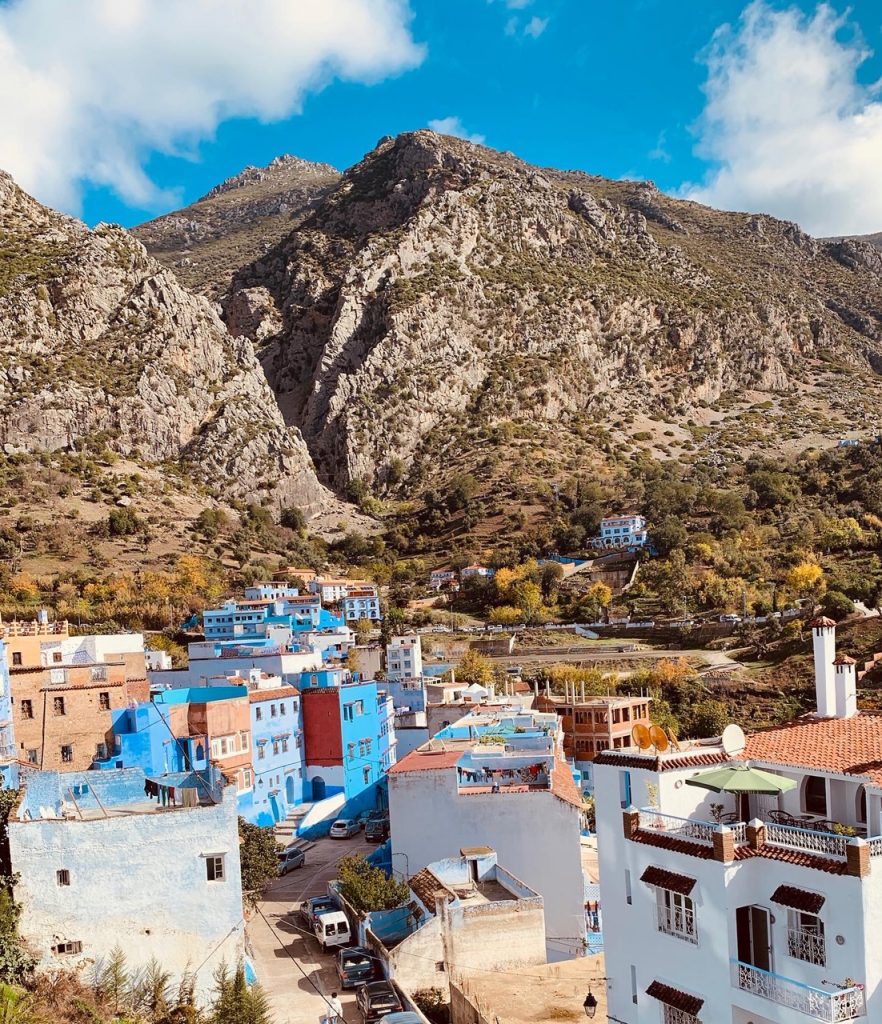
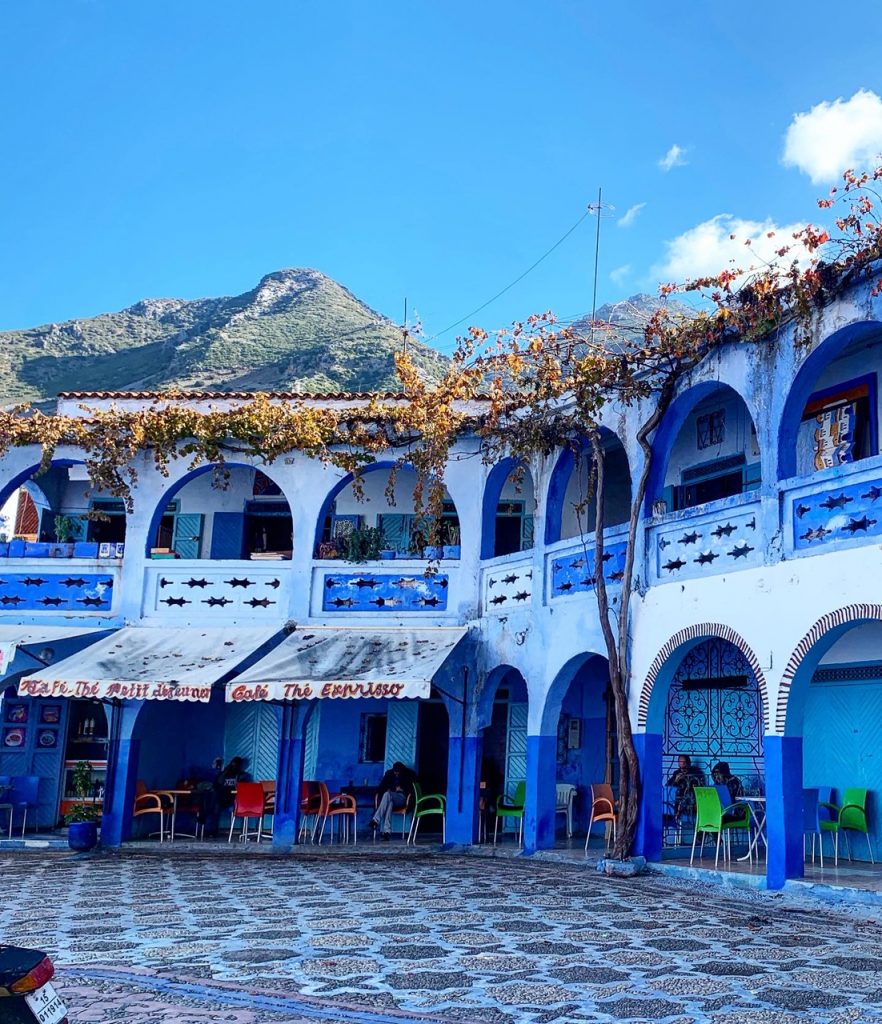
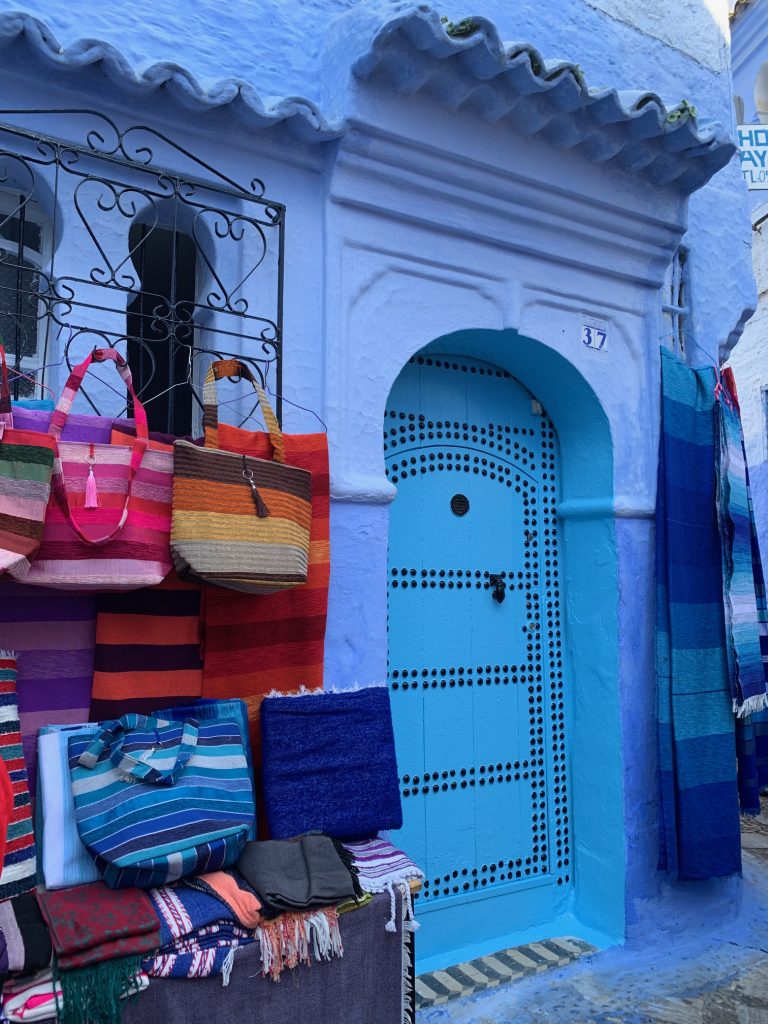
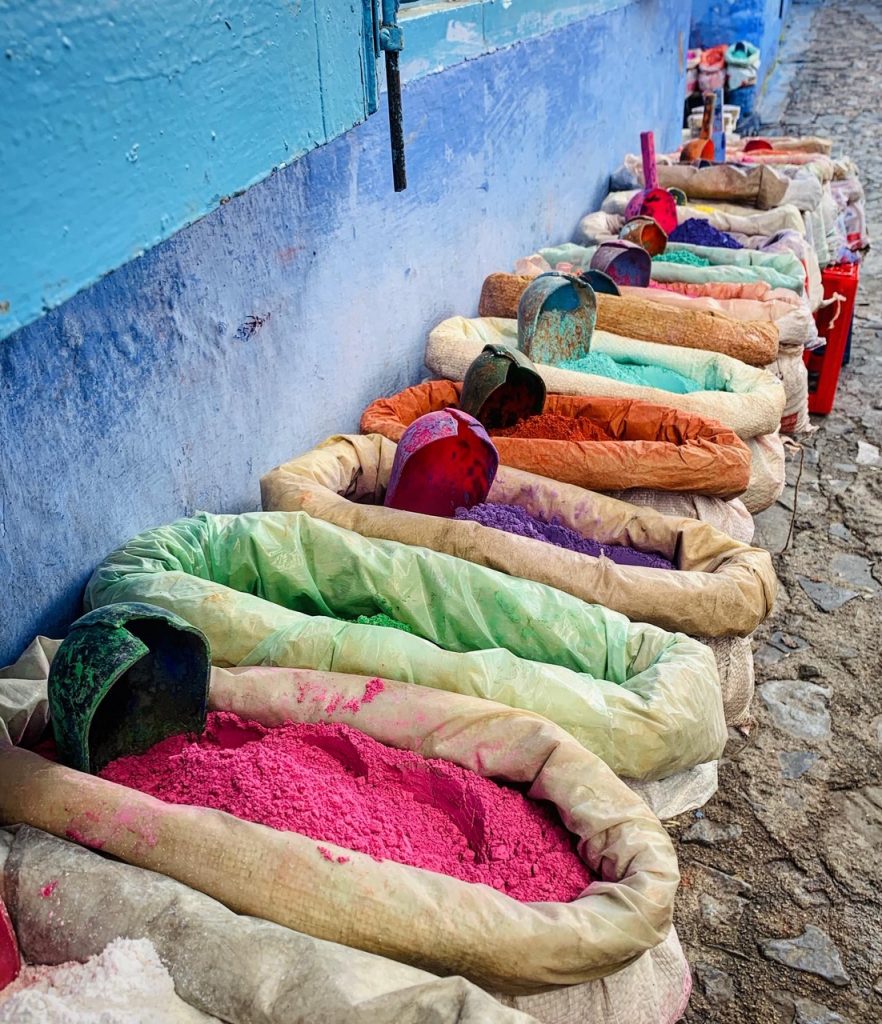
Our bus broke down somewhere in the mountains on our way to Chefchaouen. We asked the bus driver what had happened he smiled and told us, “Nothing! Everything is wonderful, we are just taking a little rest.” We were pretty sure he wouldn’t be crawling around under the bus if he were just resting, but eventually he fixed the problem and we continued on to Chefchaouen, known as “The Blue City.” I expected a few blue buildings here and there, but the entire city is truly Cookie Monster blue. It felt a bit like a movie set with its Arab-style arches, tapestries flapping in the breeze and shops built into caves, all of which clashed a little with the motorcycles racing up and down the dirt roads.
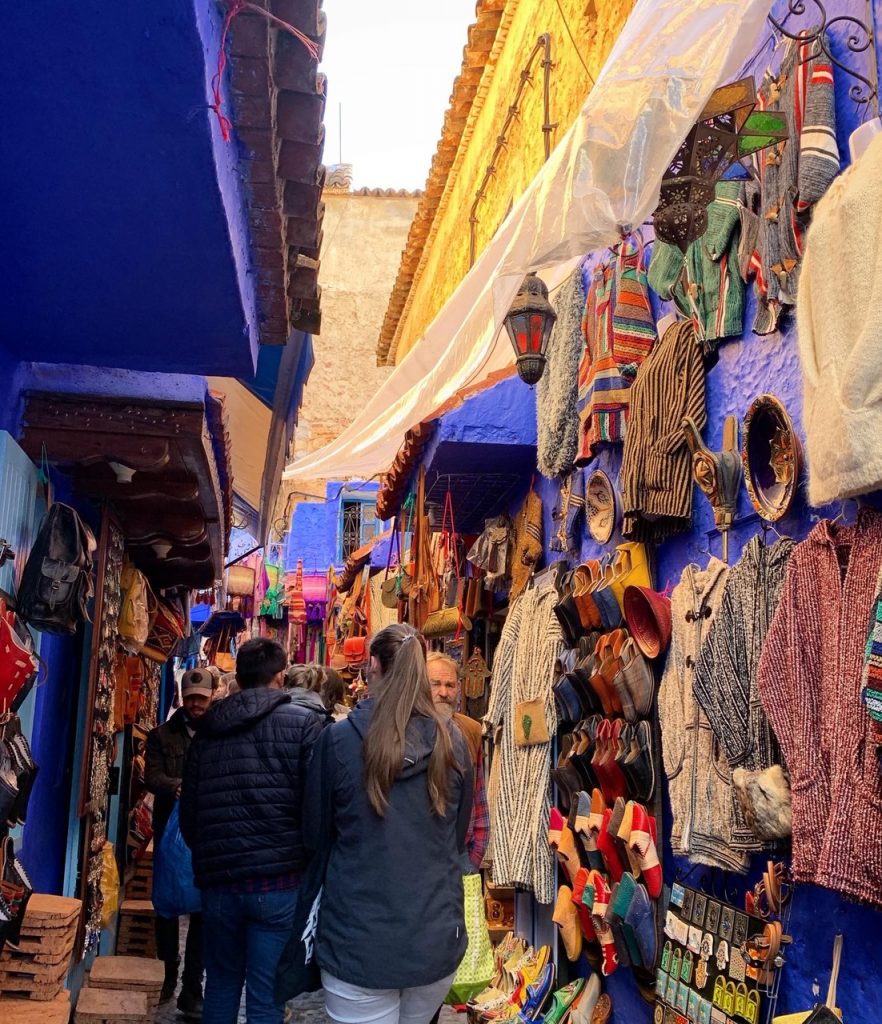
I definitely thought the street markets were the coolest part about Morocco, partly because of the things for sale but mostly because you have to bargain. I’d never done it before and was surprised at how much fun it was. I soon learned, however, that I had to decide if I wanted something or not before I showed any sign of interest in it. As soon as a shop owner saw us approaching, he or she would not let us leave until we had bought something. We were followed down an entire street by one man, insisting we buy his 6×6 foot rug even after we told him we couldn’t fit it in a suitcase. But there were many things I did want to buy, and I wanted to keep bargaining so I kept buying. It was a dangerous place to shop.
We were sad to leave, but it’s easy to return to a place as pretty as Seville. It’s like going from one vacation to the next except there are classes and finals while we’re in Seville. The sun is still shining and the trees have dropped almost no leaves but the oranges are ripe and all the main streets are decorated for Christmas. I love that that the atmosphere feels so Christmas-y, but it reminds me that I don’t have much time left here. I’m trying not to think about that too much and enjoy every day.
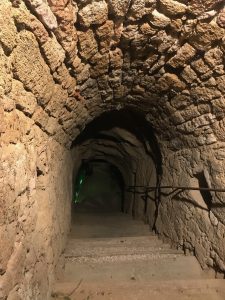
One of my favorite excursions was the Institute’s trip to Josef’s wine cellars and vineyards in a smaller area just outside of Vienna. Hermann has taken many groups to tour the area over the years, and even at AAIE reunions, it stays as a favorite activity to past program participants of AAIE.
The entrance of one of the MANY cellars in Austria
Josef’s philosophy of wine is very down to earth; humans do not need wine to survive, but they need it to live. To have good wine, one must take care of the land that grows the plants as happy grapes make good wine.
Wine is used to bring people together, and when you prost (cheers) with people over a glasses of wine it is a very special moment because no matter what or where life has taken every person, for a moment, they can all share in the virtues that the wine brings.
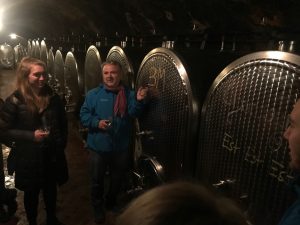
Hermann describes the wines before we taste them
Josef first took us to one of his fields where he told us about different stories about wine grapes. We even learned that every wine grape plant is half European and half American.
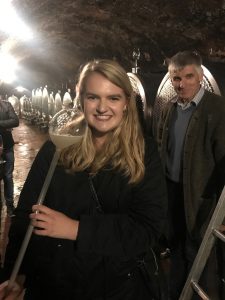
We then had the opportunity to try some wines straight from the barrel. Delanie, a Wine Studies minor, did the honors of sucking the wine out of the barrels with a special tool.
Delaine’s minor definitely came in handy; Josef is in the back
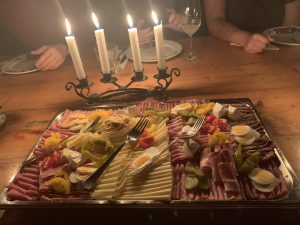
After all the wine tasting we all sat together and shared bread, cheese, meats, and more wine in a room in one of joseph’s cellars.
We managed to finish two of these plates and lots of bread!
It was amazing to see all the Austrian culture surrounding the wine industry. Josef’s cellars itself were an interesting experience and it was a great time learning about not only the process of producing wine but also the philosophy behind it.
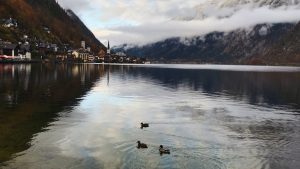
One of the most well-known places in Austria is the small town of Hallstatt in Upper Austria. It is especially popular among Chinese tourists since they have a Hallstatt of their own; a whole city built to be a replica of the Austrian Hallstatt.
The weather was perfect although it was still cold
After weekends of travel outside of Austria, Kara and I finally found some time to visit Hallstatt for the weekend. We took a train to the nearby city of Obertraun and stayed in an Airbnb in that area.
Hallstatt itself is a small town and the number of tourists they get is sometimes more than the town can handle.
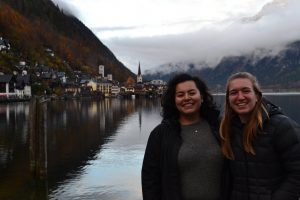
Kara and me in front of Lake Hallstatt
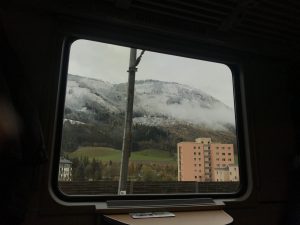
The views in this area of Austria are amazing. We decide to go around November, which meant that the area did get some snow but only in the mountains. The result became fall with a touch of winter wonderland.
View from the train to Obertraun
The town itself was not full as full of tourists as we thought it would have been. But I think we were just lucky going during the “off-season.” One of the most iconic and recognizable buildings in Hallstatt is the church which towers over the lake.
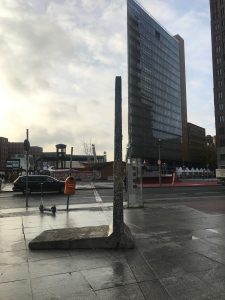
The left was east Berlin and the right was the west.
The weekend after that we made the trip to Berlin, Germany. The problem with choosing a place to go to in Germany is it’s so big that it’s hard to choose one place. However, the capital of a country is always a good place to start. I was excited to be visiting Berlin mainly because of its history. We had learned so much about WWII in class and Berlin was a city full of both remembrance and exploration; especially surrounding the Berlin Wall.
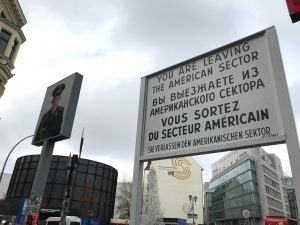
Sign warning people in English, Russian, French, and German that they were leaving the American sector
Check Point Charlie was an interesting take on the American perspective of the conditions with the allies after the war. Again, it was great to be able to see all these places I learned about in real life, it made understanding the history and its importance more rewarding. One of my favorite things we did in Berlin was visit the DDR Museum, an interactive museum about the lifestyle lived in East Germany.
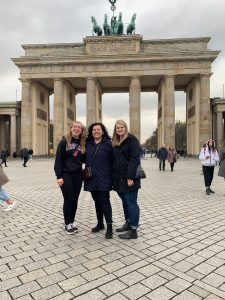
Us in front of the Brandenburg Gate
Studying abroad is an experience unlike any other. The classes I have taken along with the trips I have taken have really allowed me to understand history, culture, and global relations with deeper consideration for them.