To start off the month of July, we found ourselves in perhaps the most other-worldly place that I have visited, San Pedro de Atacama. What made this such an interesting and different experience was that the city is located in the desert of Northern Chile. Especially since we live in Washington, we’re very used to seeing green trees and mountains. Everything was different in San Pedro. Instead of being surrounded by shades of green we found ourselves in a wonderland of light pinks, oranges, purples and blues. It was as if the sunset had painted everything around us.
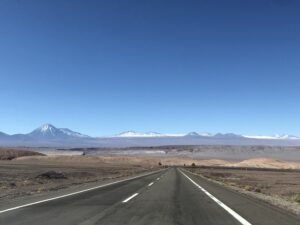
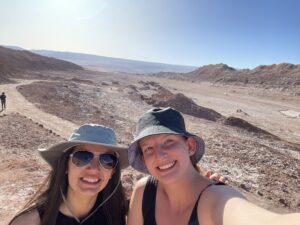
We left on a Wednesday on a super early flight into Calama, Chile which was an hour drive from San Pedro. This was one of our trips that Linfield helped pay for through the study abroad program, so we went with Florencia who is the professor who has worked with Linfield to coordinate everything for us. We decided to rent a car since Florencia had been there a few times before, which would be cheaper in the long run because we wouldn’t have to pay for as many guides on the trip to get around and see places. The entire drive from Calama to San Pedro we were just sitting stunned at the beautiful desert around us. Before arriving in town, we stopped at a famous viewpoint called Ruta del Desierto and took pictures of the incredible landscape.
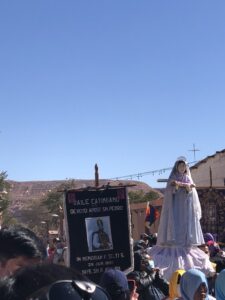
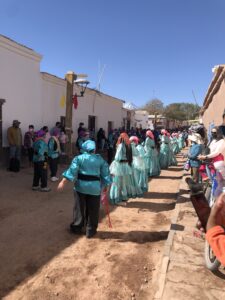
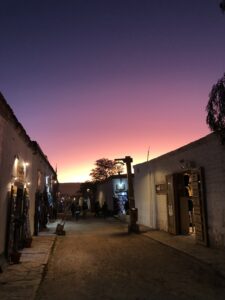
The rest of that day was spent exploring the cutest little town of San Pedro. The architecture is so interesting there because buildings are made using adobe, which is material made of cacti, chañar, tamarugo trees, volcanic rocks and wood. It gave the buildings a very rustic vibe, perfect for a desert town. We sat down for lunch at Adobe, one of Florencia’s favorite restaurants, and all of a sudden we hear what seems to be a parade going on outside the restaurant. We ordered our food and then went to go check it out. There were several groups of dancers and people playing instruments like drums, tambourines and guitars wearing traditional clothing from Northern Chile. We noticed from one of the banners that it was a parade meant for the remembrance of the death of Saint Peter (or San Pedro whom the town is named after and is an important figure in the Catholic faith). We loved how colorful and lively the festival was and the streets were packed with people watching the parade.
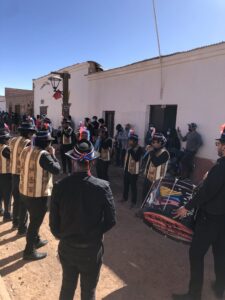
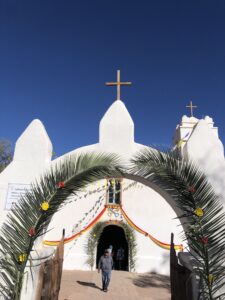
After lunch, we explored the many markets along the streets, packed with vibrant, artisanal crafts and trinkets. We also stopped by the famous white church of San Pedro, where they were holding masses all day for San Pedro. That night at dinner, a band was playing traditional music from Northern Chile and we loved them so much that we followed them to the next restaurant.
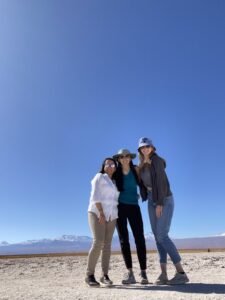
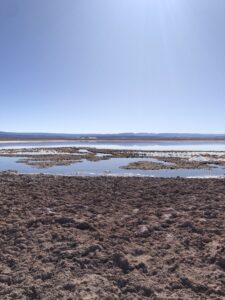
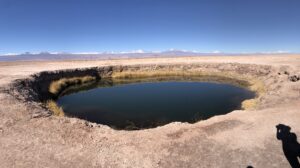
The next day, we went with Florencia to see the Lagunas Escondidas, (the Hidden Lagoons) and Ojos de Salar (or Salt Water Eyes). The lagoons are protected by the region and a small fee is required to enter. There are seven total hidden lagoons, but the ones we were able to see were the Laguna Cejar, Laguna Piedra, Laguna Baltinache and Laguna Tebinquiche, which was near the Ojos de Salar which are two small lagoons side by side that look like eyes. The water in these lagoons was so blue and the salt water sparkled in the sun. We even spotted flamingos in a couple of the lagoons!
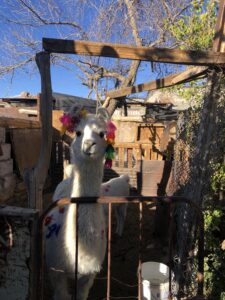
On the way back, we decided to grab a bite to eat in a town even smaller than San Pedro called Toconao. We explored their markets and found a well-known snack from Northern Chile which are quinoas but they’re light and fluffy and sweet. We also met a llama behind one of the markets, whose fur is used to weave some of the artisanal crafts and clothing. That night we returned to San Pedro and listened to a different band that played traditional music.
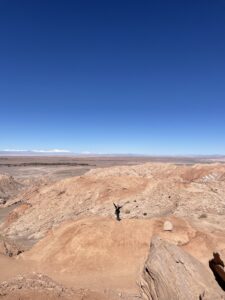
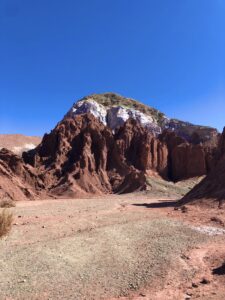
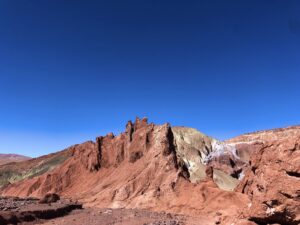
The next day would be an even longer day of touring outside the city. We went with Florencia again and first arrived at Valle de Arcoíris (Rainbow Valley). It has this name because the rocks surrounding the valley contain a variety of concentrations of clay, salts and minerals that have changed their colors over time to be red, beige, green, white and yellow. The contrast against the bright blue sky was amazing to see. It almost felt like we were walking through a Dr. Seuss book.
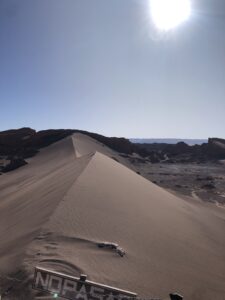
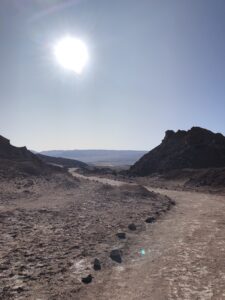
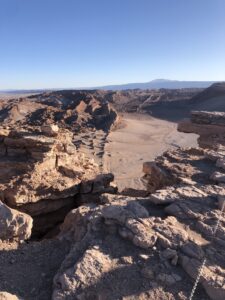
Later that day, we visited Valle de la Luna (Moon Valley). It’s called this because it is one of the best places in the world to see the moon at night, but we decided to go during the day to take advantage of the four viewpoints that you can hike/visit. It’s such an interesting place because it has various stone and sand formations which have been formed by wind and water. The range of color and texture is impressive, looking similar to the surface of the moon, literally making us feel like we were on another planet. There are also dry salt water lakes which create the white layer covering the area.
That night, we realized a little too late that we might need guides for the places we had left to see. After dinner, we found a tourism and guide business that happened to still be open and we were able to secure the last two spots on a tour to see the Geysers del Tatio the next morning and the Astronomical Tour during the night time.
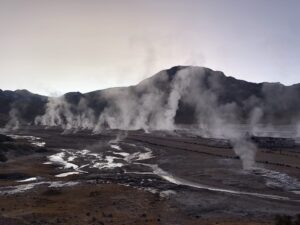
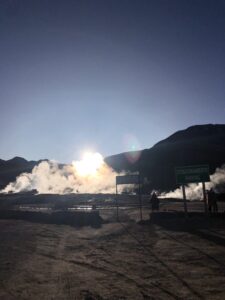
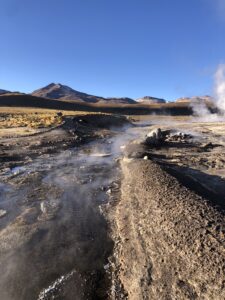
The only thing with the Geysers tour was that we had to wake up at 4 in the morning to get picked up by our tour bus. While the first hour was quite cold, we were much more comfortable after the sun came out and the pictures made the trip well worth it. These geysers are 4,200 meters or 13,779.53 feet high in the mountains and the water that spurts out from them is 185 degrees fahrenheit, which creates the steaming effect.
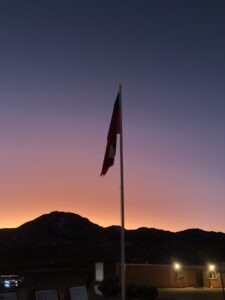
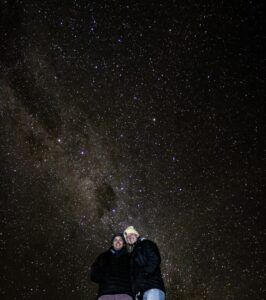
Later that night was our last activity of the trip, the Astronomical Tour. We met our tour guide in town and we took a van out to a closed off area where there were benches for us to see the stars and telescopes for us to get a closer look. First, we learned about all of the different constellations that were out that night. There were so many, I don’t remember all of the ones that our guide talked about. However, there was one that was especially cool called the Southern Cross, which is only visible to the naked eye from the Southern Hemisphere. Our guide even pointed out star signs such as Virgo, Capricorn, Sagittarius and Leo.
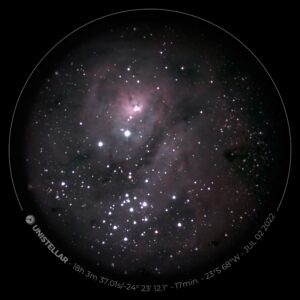
Next, it was our turn to take a photo with a special camera in front of the stars. After that, we looked at specific planets, stars and galaxies through a few different telescopes.

We already want to return to San Pedro, it was a completely magical experience. And, we can now say we’ve experienced all of the different environments of Chile, from the dry but pleasantly warm desert in the North, to the windy beaches, to the small town feel of Chillán and to the refreshing air and lush greens of the South.
Saludos,
Jordan Worthington