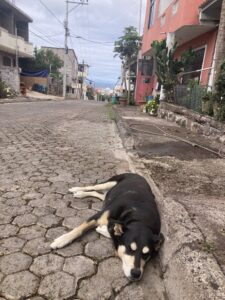
Adjusting to life on the Galápagos can be a little difficult at first. Quito is a massive city with tons of things to do and places to see, while within a few days on San Cristóbal you will have seen everything you possibly can within walking distance of Puerto Baquerizo Moreno. To some people this might feel stifling or trapping, but I personally enjoyed the change of pace. Besides, we also had our classes to keep us busy.
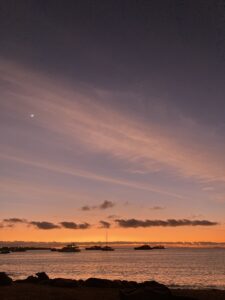
Our first course in the Galápagos was Island Biogeography, focused on the mechanics of island formation and how an island’s location and geography affect the species that move to and evolve on it. The Galápagos, with its extensive list of endemic species (‘endemic’ meaning that it is only found in a single area, in this case the Galápagos), is a prime location for learning these concepts. Our knowledge was also augmented by extensive field studies. Our first major one was a 3-day trip to the nearby island of Santa Cruz.
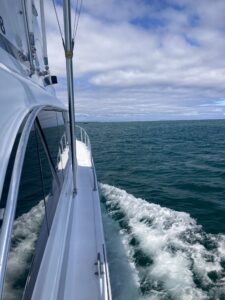
Santa Cruz is the most populated island on the Galápagos, with 15,000 people, and as such, it is generally considered the ‘main’ island, at least for tourism operations. To get there from San Cristobal, you must take a 2-hour ‘water taxi’; while I personally never have much trouble with boats, the high speed and rough seas were an issue for more seasick-prone people.
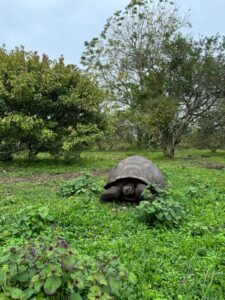
Once on Santa Cruz, we spent the first day on the southern half of the island, visiting a tortoise sanctuary and a highland preserve to get a better understanding of the Galápagos’ famous giant tortoises, and how they serve an important role in the Galápagos’ terrestrial ecosystems.
The second day was focused more on the aquatic environment; we traveled to the northern end of the island and spent the day on a boat to North Seymour Island, a small island (less than 1 square mile in size!) just north of Santa Cruz. There, we took a snorkeling trip to see the local marine wildlife and took a small hike on North Seymour to observe the nests of various seabirds like the blue-footed booby and magnificent frigatebird.
The rest of the second day and the first half of the third day, we essentially had to ourselves to explore Santa Cruz’s main town of Puerto Ayora. It was a significantly larger town than Puerto Baquerizo Moreno, with more shops, restaurants, and hotels, but definitely felt more ‘touristy’ than San Cristóbal did. However, having spent a couple weeks on San Cristóbal at this point, it was good to get a feel for a different island in the archipelago. Plus, the tourist aspect gave us a good opportunity to buy souvenirs!
Kai