
In the second week of our GIS class, Geographic Information Systems and Science, we had our first field study! As someone who picked out my Environmental Studies degree because of my positive experiences with conducting field work, I was looking forward to getting out there and getting our hands dirty.
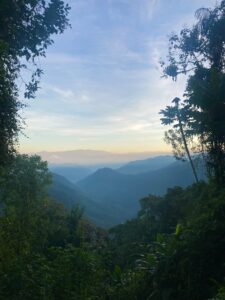
This first trip was to the Mindo cloud forest, a highland jungle area northwest of Quito. Because of the difficult mountain terrain around Quito, we had to take a roundabout way to the north to reach Mindo, but once we arrived we were blown away. Compared to Quito’s dry arid grasslands, the jungles of Mindo were a completely different world. We spent three days there in total, staying in the Bellavista Lodge, which was a super nice place with a really cool room layout where you used a central ladder to access the different floors with each floor being its own “room”.
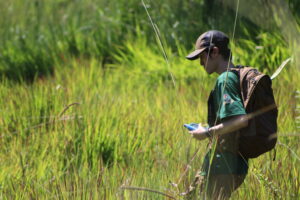
We spent most of the time hiking and logging points on GPS units to upload and work with later on, but we also had plenty of time to explore the area on our own time.
One of the biggest things about Mindo was its great diversity of wildlife, so we kept our eyes peeled for various jungle animals and we were not disappointed. We spotted several mammals, including a couple tayras – omnivorous animals related to weasels and wolverines – and a kinkajou, which is a tree-climbing animal that kind of looks like a lemur at first glance but is actually closer related to raccoons.
The most common and diverse animals we saw, however, were easily the birds. There were a wide array of tropical birds including toucans, trogons, and lots of hummingbirds. The hummingbirds, especially, were so unafraid of humans that if you held a cup of sugar water, they would just land on your hand to drink it!
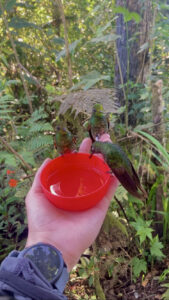
Some hummingbirds on my hand in Mindo.
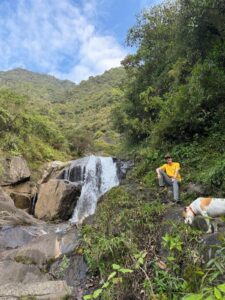
My friends and I also would make our own trips to the surrounding areas outside of class. We took advantage of one three-day weekend to go down south and visit Baños, a famous tourist town located in a low river valley that led into the Amazon jungle. As a result, like Mindo, it was a much more tropical environment than Quito’s highlands and had a variety of things for visitors to see and do.
One of the biggest surprises to us was how inexpensive everything was – while we had expected a big touristy destination like Baños to be expensive, it was actually very affordable – our lodging, for example, was a hostel that cost less than $10 per night which was surprising, considering how nice the premises were.
Overall, the start of this second month in Ecuador was filled with a lot of travel and adventure in a welcome change of scenery from the mountainous dry terrain of Quito. However, the real adventure is yet to come – the next course, focused on tropical ecology, will feature a week-long trip to the heart of the Amazon Rainforest.
Kai