Deprecated: Function WP_Dependencies->add_data() was called with an argument that is deprecated since version 6.9.0! IE conditional comments are ignored by all supported browsers. in /chroot/home/a1e0f025/dab19c68f8.nxcli.io/html/wp-includes/functions.php on line 6131 Deprecated: Function WP_Dependencies->add_data() was called with an argument that is deprecated since version 6.9.0! IE conditional comments are ignored by all supported browsers. in /chroot/home/a1e0f025/dab19c68f8.nxcli.io/html/wp-includes/functions.php on line 6131

Strolling the Streets of Pompeii

Today we went to the ruins of Pompeii, the ancient Roman city that was covered in Todaysash by the 79 CE eruption of Mt. Vesuvius. Since the city was buried in volcanic ash, it was hidden and therefore preserved for centuries. The city Today we went to the ruins of Pompeii, theToday we went to the ruins of Pompeii, the ancient Roman city that was covered in ash by the 79 CE eruption of Mt. Vesuvius. Since the city was buried in volcanic ash, it was hidden and therefore preserved for centuries. The city wasn’t unearthed until the 1700s and then it’s historical value was revealed. The ruins provided historians with an accurate picture of what life was like in the Roman empire. It showed that the Romans were a sophisticated society with things like amphitheater’s, markets and extravagant villas. Pompeii is also home to a significant number of ancient skeleton replicas from those who perished in the volcanic eruption. The originals reside in the national museum of Naples so they can be properly preserved. These remains give us even more clues about the lives these ancient people lead. From what they ate, to their social status and physical biology.

The entrance of Pompeii with Mt. Vesuvius looming in the background.
ancient Roman city that was covered in ash by the 79 CE eruption of Mt. Vesuvius. Since the city was buried in volcanic ash, it was hidden and therefore preserved for centuries. The city wasn’t unearthed until the 1700s and then it’s historical value was revealed. The ruins provided historians with an accurate picture of what life was like in the Roman empire. It showed that the Romans were a sophisticated society with things like amphitheater’s, markets and extravagant villas. Pompeii is also home to a significant number of ancient skeleton replicas from those who perished in the volcanic eruption. The originals reside in the national museum of Naples so they can be properly preserved. These remains give us even more clues about the lives these ancient people lead. From what they ate, to their social status and physical biology.

The entrance of Pompeii with Mt. Vesuvius looming in the background.
wasn’t unearthed until the 1700s and then it’s historical value was revealed. The ruins provided historians with an accurate picture of what life was like in the Roman empire. It showed that the Romans were a sophisticated society with things like amphitheater’s, markets and extravagant villas. Pompeii is also home to a significant number of ancient skeleton replicas from those who perished in the volcanic eruption. The originals reside in the national museum of Naples so they can be properly preserved. These remains give us even more clues about the lives these ancient people lead. From what they ate, to their social status and physical biology.

The entrance of Pompeii with Mt. Vesuvius looming in the background.
From a Wine Studies Sophomore

This post was written by Greyson Monaghan-Bergson, a sophomore Wine Studies major

At the vineyard with the professors from the University of Naples, we were able to see some of the stuff we were lectured about firsthand. Namely the soil that Dr. Antonello Bonfante spoke of and the pruning methods that Professor Veronica de Micco touched on. On top of that, Arturo Erbaggio showed us the experimental arch trellising method designed to create shade for the berries. They went on to explain that their goal for the project was to preserve the “freshness” of the wine which basically means keeping the acids high.

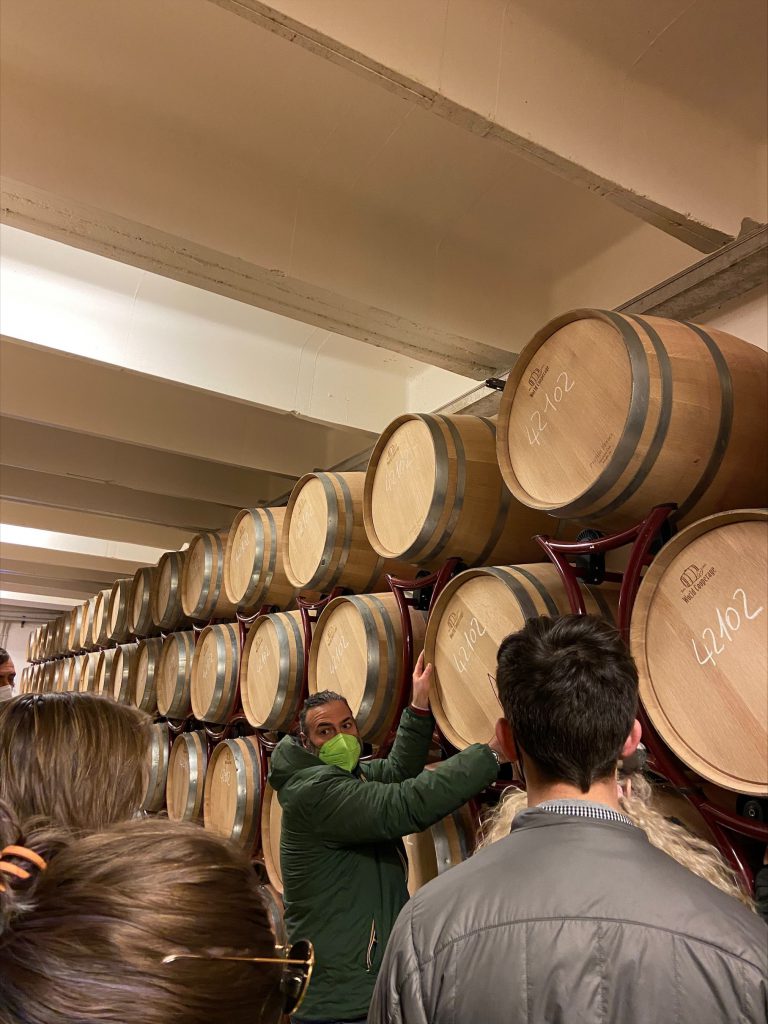
After the vineyard, we drove to Feudi di San Gregorio. The drive was only about half an hour but felt longer as the temperature of the bus slowly climbed to 30℃. At the winery, we got to look at the fermenting equipment. They had the biggest barrels I have ever seen! Their largest ones could hold 3000L. For comparison, the standard barrel used holds 255L, so those were pretty large. After that, we got to taste some of their wines. I’ll spare you the tasting notes but needless to say, they were very good. The wine they talked up the most was their Greco di Tuffo. This wine is one of the most desirable abroad from Campania and for a good reason. This wine was just beautifully elegant yet took over your palette. On top of that, since it had high acidity it could be laid down and aged. I am definitely going to try that because I bought two bottles.

Next, we went to Quintedecimo to see Luigi Moio. He is a big name in southern Italian wine and certainly earned that reputation. Not only is he a professor at the University of Naples, but he is also an amazing winemaker. We tasted four of his wines and once again the Greco took front stage. The best way I can describe it is as a wine whose depth keeps increasing with every sip. The thing that stuck out to me the most from all the wines today was that they were the opposite of anything people say about Southern Italian wines. They are usually described as big and jammy wines with no depth; but, these wines were insanely light and acidic making them taste super fresh!

Our Last Day in Sicily

Today’s post was written by Senior Daisy Tapia-Gonzalez, a Management major minoring in Wine Studies.

We started off the day with a visit to Tenuta Rapitalà, a winery located in Eastern Sicily and (to our surprise) run by a Count named Laurent Bernard de la Getanais! We learned that the qualities of the area, the landscape, the weather conditions, and other natural elements are significant in producing high- quality wines. We also learned the appreciation and importance of increasing organic farming techniques at both the vineyard and the cellar.

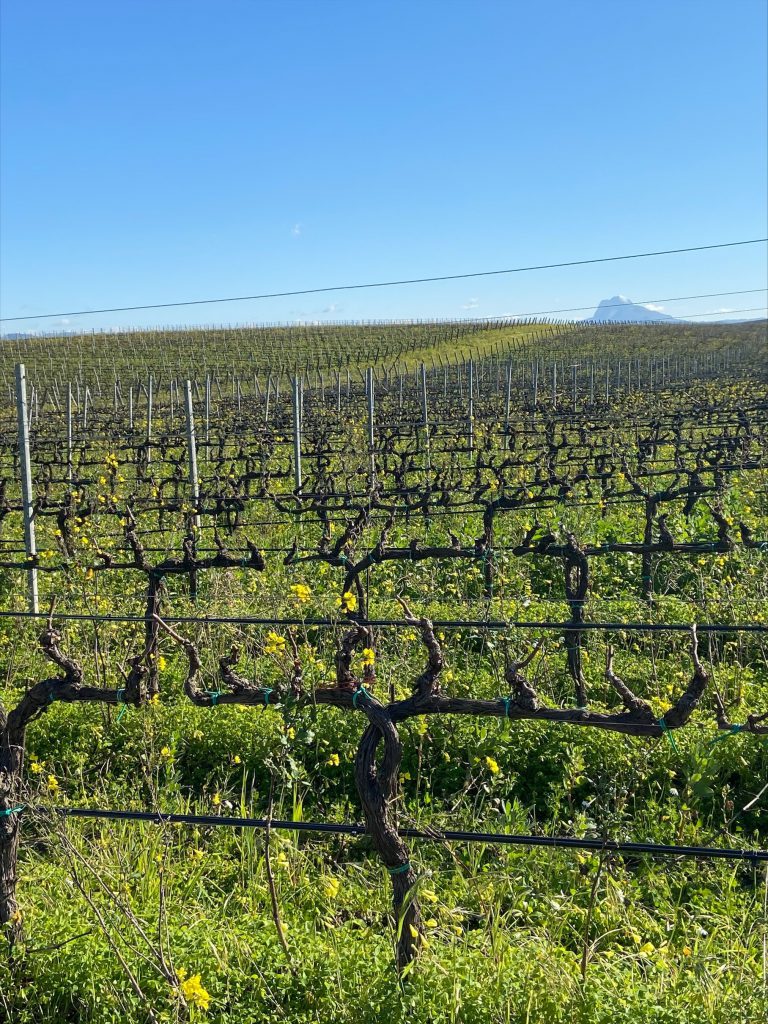
We began our visit with a tour of the vineyard and learning a few viticulture facts shared by Professor Antonino Pisciotta from the University of Palermo Department of Agriculture, Forestry, and Food Science. The winery had approximately 544 acres of land, of which 396 was dedicated for grape growing and the rest for olive trees and uncultivated land. We learned that thevineyards were characterized by having two prominent types of soils: clay and sand. These soils help both red and white varietals thrive in Mediterranean climate conditions and in the uniquelandscape where the vineyards are located. As we were walking, Professor Pisciotta also explained the double cordon as a vine training system and the use of manual and machine labor for harvest.

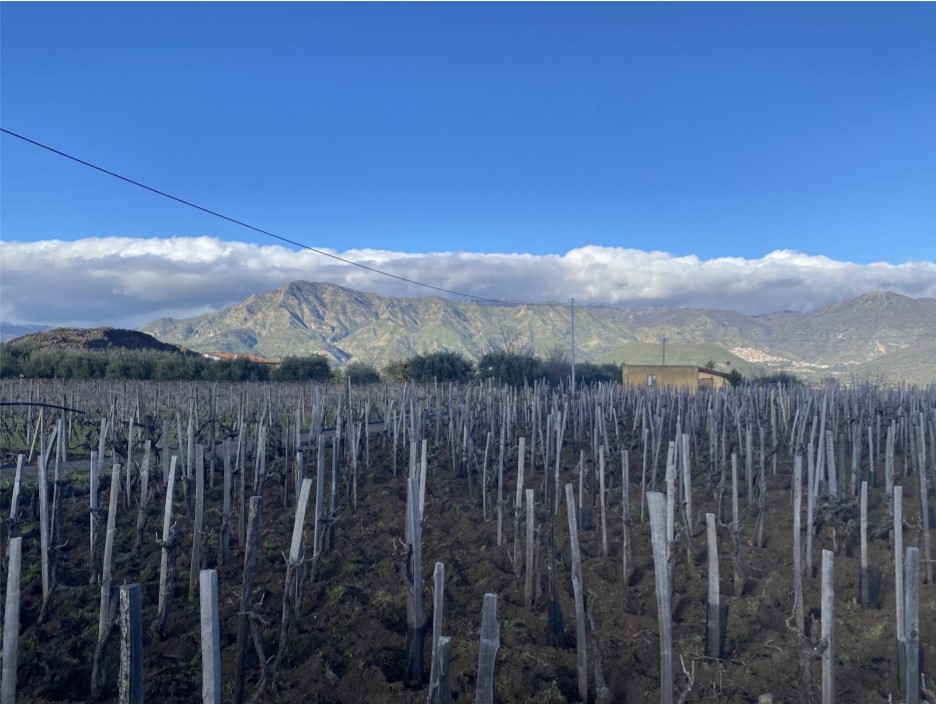
Trellised grapevines with a tip of a mountain in the background in Sicily.
The double-cordon trellising system.
After we visited the vineyard, we moved to the cellar to learn more about the winemaking process at Tenuta Rapitalà. Prof. Professor Antonino Pisciotta explained that the winery not only uses grapes collected from the vineyard (60% red and 40% white), but also buys grapes from other local vineyards. The wine is fermented in stainless steel tanks where the must (grape skins)is left for 46 hours. After, the wine is either stored in those tanks or aged in French oak barrels.
Inside a winery lined with steel storage tanks for wine fermentation.
Wine fermentation and storage tanks at Rapitala, in eastern Sicily
Winery in Sicily lined with French oak barrels.
Professor Antonino Pisciotta explains the role of French oak barrels

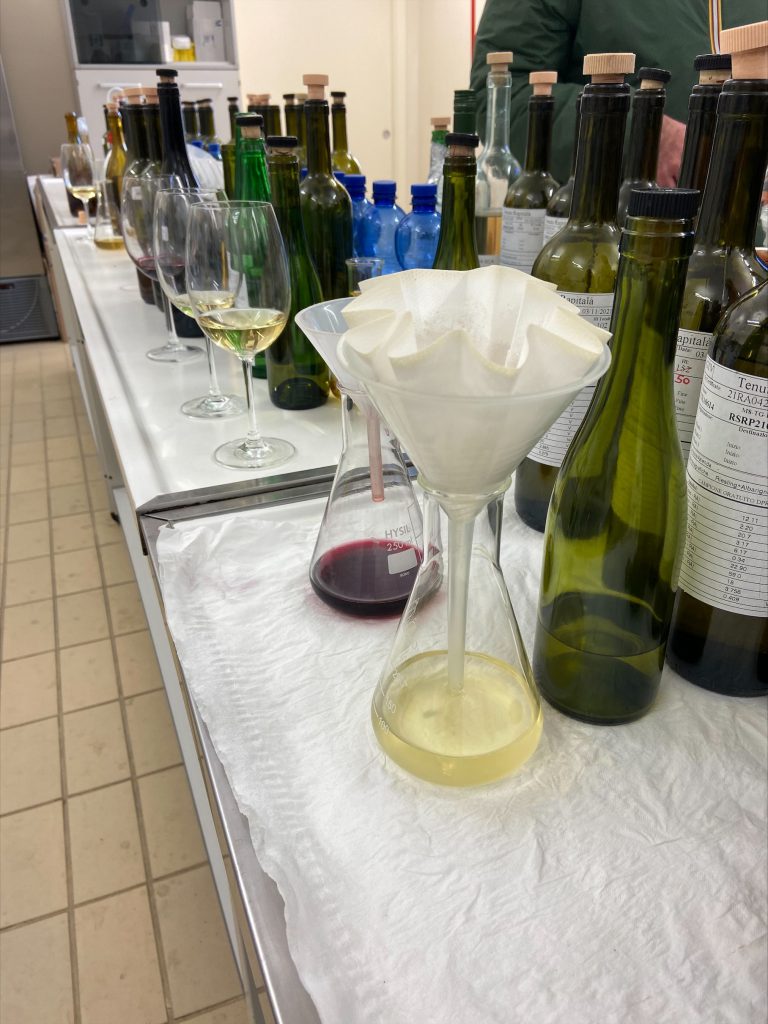
The process of making wine requires hard-work, effort, and analysis. We visited the wine lab located inside the cellar, where we observed technicians’ examples of their experiments and blending samples. This part was emphasized as essential in order to explore the different needs ofthe consumers and choose the kind of wine to create.

A lab lined with tables of various wine bottles, use for experimentation.
A current wine blending experiment.
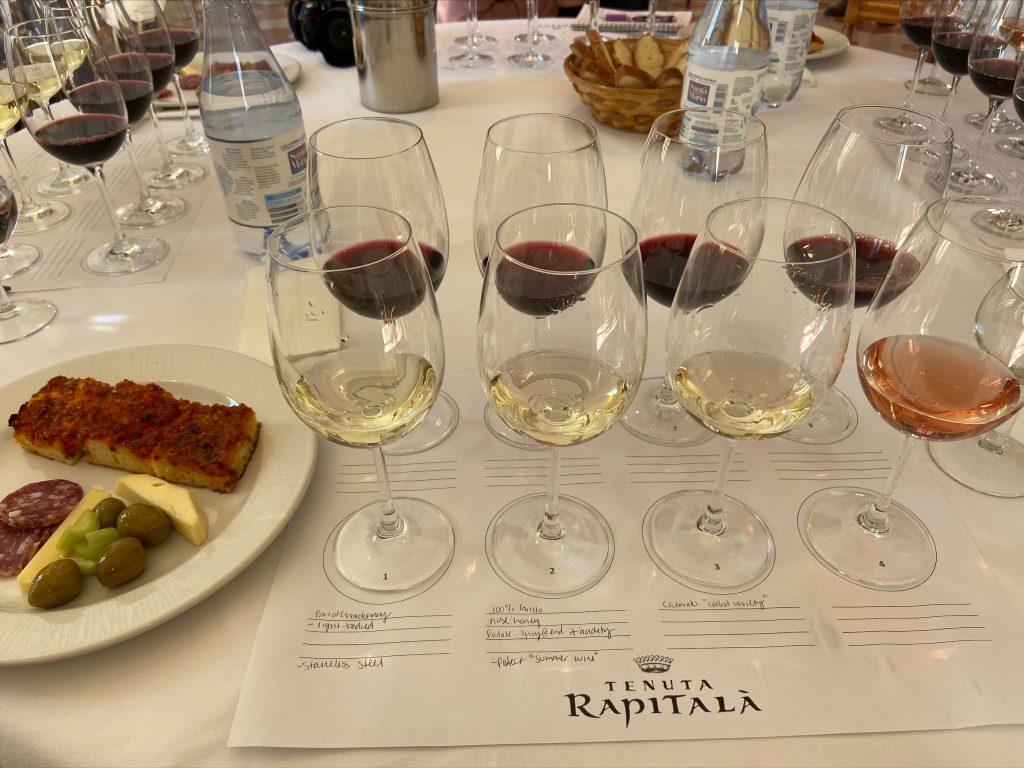
After the tour of the different facilities of Tenuta Rapitalà, we were welcomed to the tasting room by Count Laurent, to taste some wines! We tasted eight wines, all with their unique smell and taste characteristics. As we were tasting, Count Laurent guided us with a few historical facts and tasting notes, making the experience pleasant and complete. He even surprised us all by gifting everyone a bottle of red wine. What an experience!
A table line with glasses of red, white and rose wines for tasting.
Our tasting of red, white, and rose wines

Propagating Vines and Fortifying Wines

Ciao and good morning! This post was written by Megan Stanek, a junior majoring in Wine Studies
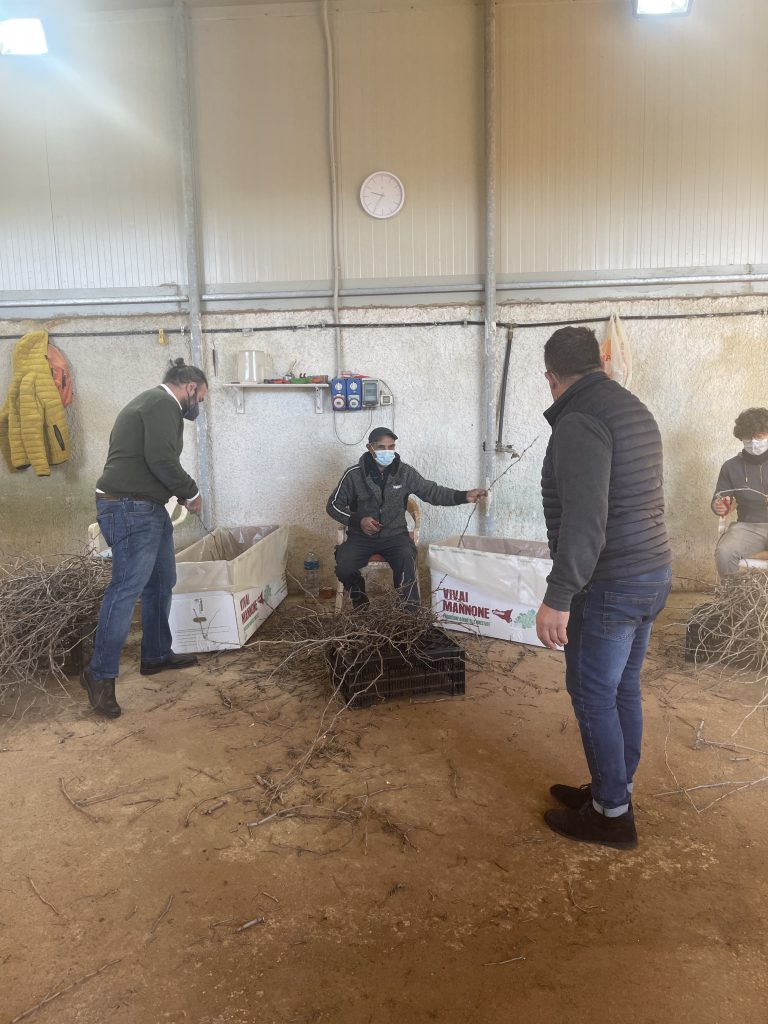
We started the day with an early wake up call to get on our bus and head to Marsala. Marsala is a region known for their production of the Marsala fortified wine, as well as a multitude of different foods and other indigenous products such as olive oil and seafood dishes. Our first stop of the day was to the Vivaio Manonne vine nursery. The nursery specializes in crafting rootstock to young vines to prevent against phylloxera outbreaks as well as several other pests and diseases that the vines can be exposed to. Vivaio Manonne has been working with vines since 1895 in the same location it is now, even with some of the original buildings from the beginning. They started cultivating vines in 1990 with around 20,000 hectares of workspace, to now having between 95,000 and 100,000 hectares. They work with every kind of varietal they can, using 15 international varietals and 54 varieties traditional to the area, furthering the information around the varietals they use, 70% of the vines are white wine and the remaining 30% are red. While touring we were taken along the journey of the vine to being cultivated for root stock. Starting with the cuttings being brought it, we were shown how they are trimmed and cleaned through an automatic machine to make sure they are in the best condition for production. After they are cleaned the vine gets cut into small pieces, cut so that they have one bud on each of them.
Workers at a nursery trim grapevines cuttings.
Skilled workers at the nursery trim grapevine cuttings that will become the trunk of a new grapevine after being grafted onto a rootstock

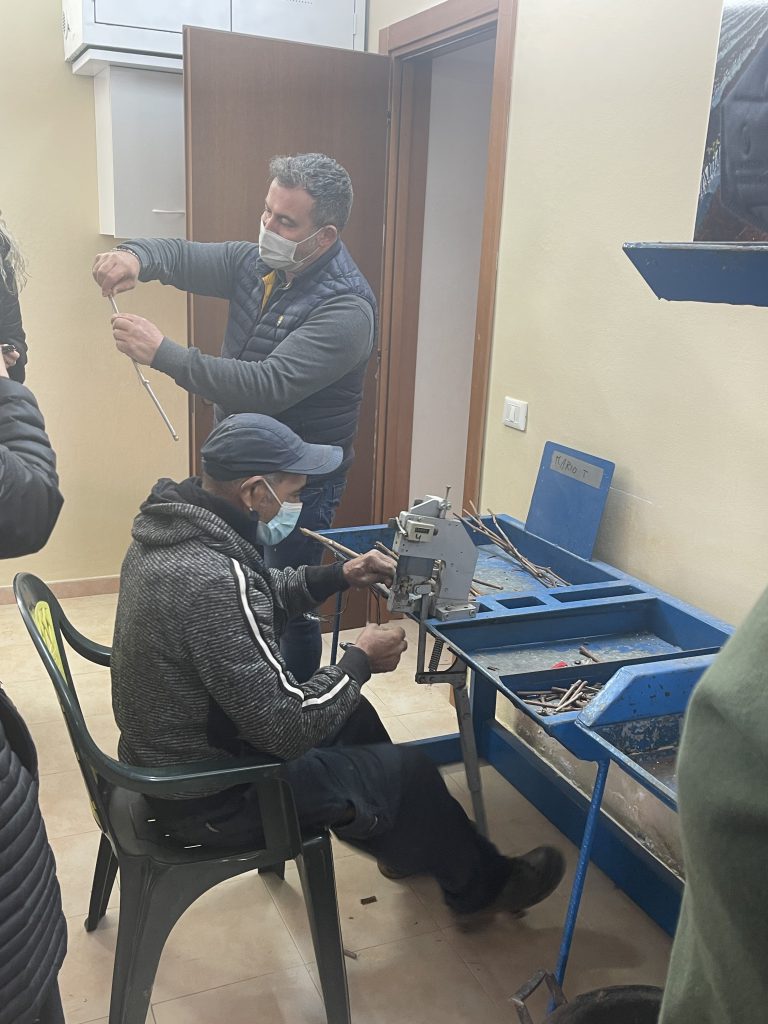
We got to see the method in which they cleaned the vines and cut them. After they are all set and properly taken care of the vines are grafted together using a machine that creates a puzzle-piece-type cut in the vine and the rootstock to ensure the best outcome. After they are grafted the vines are cultivated in a regulated room to start growing, after about 10 days they are moved into the vineyard where they establish roots. Once the roots are establishing the vines are analyzed for their growth then dipped in a specific color of paraffin to be sold. We as a group were also welcomed to try and graft our own vines with the machine they use!

Workers at the nursery use a machine to punch shapes out of the vine cutting.
The nursery team shows us how to use the machine that punches puzzle-piece shapes out of the vine cutting and rootstock so they can slip together to form a new vine customized for the vineyard for which its ordered
The next stop on our day was to Florio Marsala Winery. While at Florio Marsala we got to hear to history of Marsala wine. Our guide shared with us the story of an English man who came to Marsala in 1773 to try the wine, while he was there, he wanted to bring some wine back with him to England, but he had to add alcohol to the barrels to preserve the wine for the duration of the trip, thus the first fortified wine was created! Our tour of Florio took us though their barrel rooms, one of the first of many incredible sights was the second biggest barrel in the world, placing second in a contest held in San Francisco during 1915, This barrel could hold 62,000 liters of wine! After that we there was a part of their cellar called the Garibaldi room. Which if the name didn’t spoil it was dedicated to Giuseppe Garibaldi who just so happened to be close to the Florio family. So close that he donated some of the arms used in the unification of Italy to Florio, which are on displayed in the cellar. Hearing and seeing the history of the family and of the region really opened my mind to how historic this winery is to the region, and the story continued to grow when we got to the barrel room. Here they store more than 3,000 barrels of wine with varying vintages. The oldest being from 1939 and 1941 which are not only valuable because of their age but also because they survived the bombing from the second world war.
An enormous wine blending tank.
The enormous blending tank at the historic Florio winey in Marsala

After the tour, we were able to taste three of their wines:  Marsala Fini, Superiore Reserve from 2006, and Superiore. Each of the Marsala was unique in taste and flavor profile. The different types of wine are based on their time aging and the amount of boiled and concentrated grape must (unfermented juice) added to the blend.

Glasses of 3 premium Marsala wines paired with food.
Our tasting of three premium Marsala paired with a food at Florio

Next, we headed out to our last destination of the day Alagna Marsala Winery for a tour of the winery, lunch, and a tasting. Our tour of the grounds started with us meeting owner, who told us about the history and genral information of the winery. Alagna was founded 75 years ago in 1946, and has been a family business ever since, in its third generation now. The winery itself is around 3400 hectoliters producing 1,400,000 liters of wine. Something interesting I learned is that the temperature in the natural caves under the winery stays the same all year. One of the most fascinating parts of the winery tour was when they took us down to a 1,000-year-old“cave” were they blend Merlot, Nero D’avola, and Syrah for 6 months in oak wood. They use this “cave area because it keeps cool all year and the humidity levels are perfect for the aging barrels.

After tour we had a three-course meal all paired with wine. The appetizer consisted of olive oil with bread, pizza, salami, cheese with orange blossom honey, olives, and toast with olive spread all paired with the wines from the winery. After the appetizer we had arancino, which is a Sicilian delicacy made with rice, vegetables, and a tomato and meat sauce traditionally. Lastly, we had a baked pasta to finish the main course. Dessert was oranges with one of the sweetest Alagna Marsalas poured on top, cannoli, sesame biscuit, candy biscuits and a 1,000-year-old Sicilian dessert of traditional bread soaked in Marsala. The wines that we were paired with the meals were threetypes of Marsala, Grillo, Syrah, Lanni, Vermouth, Zibbibo, Mascato, and a variety of Marsala-based cremes.

A table set with multiple styles of Marsala wine paired with food from the region.
Our lunch of multiple styles of Marsala paired with traditional dishes of the region

After a full day of exploring the wine region and getting to taste some of the best wines in the world, we decided to see a salt farm on the coast. Sadly, the facility was closed, but we did get to explore the area and see the areas where the cultivate the salt and how they produce it. Our guide told us that they harvest the salt through evaporation over time. The saltwater gets pushed in from the sea into the calderas where the water gets trapped and slowly evaporates leaving behind fresh crystals of salt to be harvested and sold. Fun fact about the evaporation process:  you can tell how much evaporation has occurred based on the color of the water- the pinker it gets the more it has evaporated.

A large stream used for salt production,  which slowly evaporates leaving the salt;  blue skies above.
Salt production in Trapani

Ancient Vines, Young Soil

This post was written and photographed by Sofia Zielinski, who’s majoring in Wine Studies and minoring in Studio Art

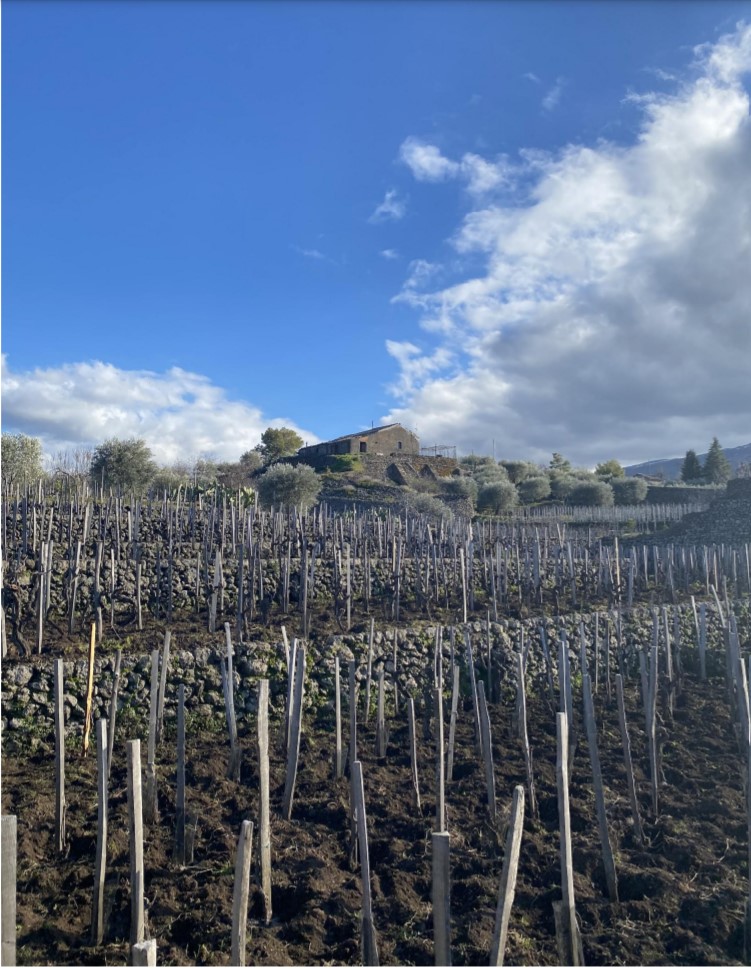
Chestnut wood stakes and centuries-old terraces fill this vineyard on Mt. Etna’s northern slope

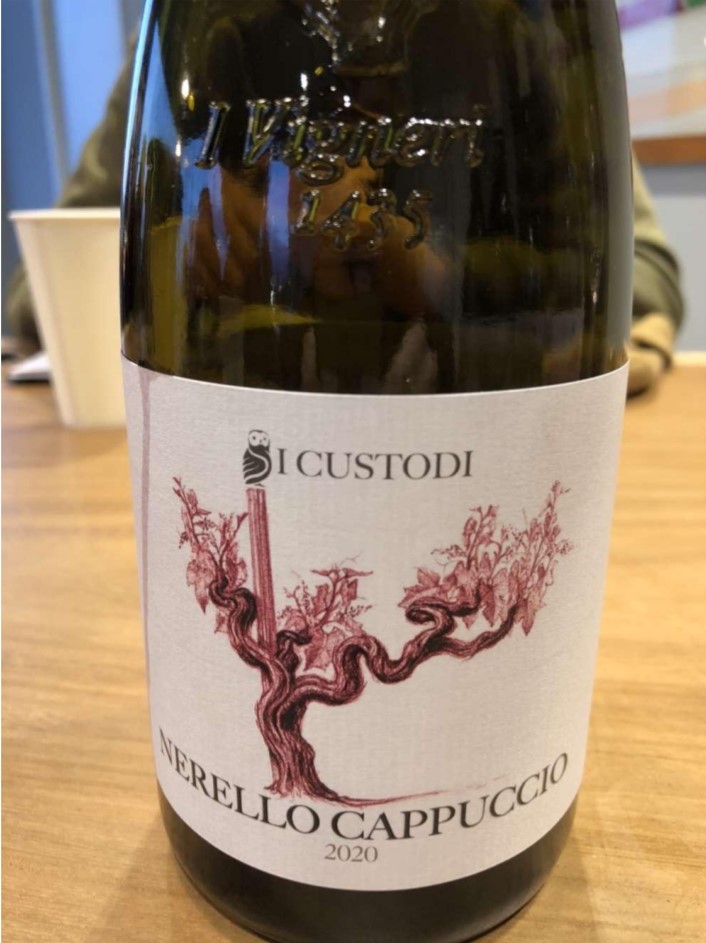
Today we visited Mario Paoluzi’s vineyard and winery ‘I Custodi,’ which is located in Sicily, Italy, in the Etna DOC wine region. Mount Etna is one of the most active volcanoes in the world, erupting around 50 times last year. His vineyard is located on the northern side of the volcano with the lowest elevation on his property being 650 meters, which is about 1950 feet above sea level. I Custodi operates very traditionally and naturally, using only chestnut wood poles and string to train the vines, and having no plastic, metal or other foreign materials in the vineyard. Everything is done in an organic way in order to respect the land, the people and the traditions
that have been practiced there for centuries.

Each grapevine in this 200-year-old vineyard is individually staked in a system called “albarello,” meaning little trees

The Custodi vineyard has a wide range of vine ages, some newer, being less than 10 years old and some up to 200 years old. Grape vines are of the few fruit producing plants that remain productive after so many years. The older vines produce less fruit than the young, and for this reason Mario has planted much more vines per acre than we would typically see in a younger vineyard in the US. Oregons oldest vines go back only to the 1960s and seem old to us, yet have nothing on these old world vines.

Mario’s vineyards aren’t particularly large but the location of his vines have led to very unique high quality fruit that have allowed him to have a very successful career.

The wines have very distinct characteristics that you will only find in this region. They are very complex in mineralogy given the volcanic soil the vines grow in, and they also have very prominent acidity to them. It’s fascinating just how much wines vary throughout the different areas surrounding mount Etna. A wine grown on the north side can taste completely different than one made with the exact same grapes and vinificarion process that was grown on the westside.

I Custodi’s wines show a minerality and acidity that runs through the wines from this part of the Etna DOC

Tourists in Palermo

Chloe McDaniel, a senior majoring in Exercise Science wrote today’s post.

Because we had arrived at our new hotel in San Guiseppe Jato late last night, it was too dark to see much of it. This morning, we all emerged from our rooms and were delighted to see a gorgeous view of green hills blanketed by the glowing orange sun. After being awoken by the blindingly beautiful view, we made our way into the dining room for warm croissants and cappuccinos for breakfast. On the agenda today, was a day trip to the nearby city of Palermo. We were all excited, as it was our last day to visit a big city and just be tourists for the day.

The bus ride to Palermo was about 40 minutes. For tonight, we had planned to do a big group antipasti dinner in true Italian style. Each person volunteered to contribute something. For this to happen, our first priority in Palermo was to go to a market.

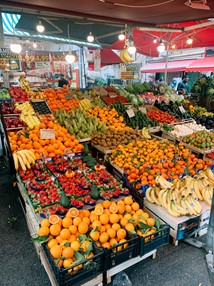
We went to Mercato di Ballaro, one of the two famous markets in the city. “Ballaro” was likely named after the city “Ballhara,”where Arab merchants lived when they occupied Sicily. The merchants would go to what is now called Palermo to sell their goods, similar to what Mercato di Ballaro is known for today. It was overwhelmingly loud, with stand owners shouting bargains at you. It was lively, crowded, and especially colorful. Fruits and vegetables were the star of the show, but there was also bread, clothing, flowers, street food, and more. After a stroll through the market and purchasing things for dinner, we split up into smaller groups to explore the city of Palermo.

An array of vibrant fruits and vegetables at a stand in the market.Mercato di Ballaro, Palermo, Sicily.
An array of vibrant fruits and vegetables at a stand in the market.

My group and I walked just under a mile to a street with lots of cute shops and cafes. Many of us purchased some souvenirs, clothing, and jewelry to take home. The city was gorgeous, with colorful buildings and cobblestone streets. It seemed that each new street we walked had a different feel than the previous. We sat down for lunch and, before we knew it, it was time to head back to the bus. I was sad to leave Palermo, as it seemed there was so much of the city I didn’t get to see.

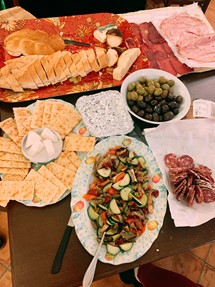
After returning to the hotel, we all met up again for our group dinner with foods we gathered from the market. We feasted on bread, crackers, an assortment of meats and cheeses, olives, fruit salad, and sauteed vegetables. The market food did not disappoint. We all enjoyed trying the array of yummy foods, and then finished with a small pastry. I can’t believe our trip is nearing the end!

bread, crackers, an assortment of meats and cheeses, olives, fruit salad, and sauteed vegetables.
Our group antipasti dinner!

Picking Up some Food and Culture at the Market

Hello everyone!

My name is Giselle, I am  a sophomore majoring in psychology and minoring in communications and neuroscience, and I am in Sicily.

I am currently abroad on a wine studies Jan Term program about volcanic vineyards, and I am here to talk to y’all about what we did today (being January 17th, 2021).

Real quick though, I wanted to address the following:  for those who are thinking about doing a jan term or studying abroad but feel like you don’t have the pre-reqs or the “right major”, what it takes is passion!  I care about wine, I love Italy, and I love traveling.  While on paper it may seem like my major does not fit the syllabus, but let me tell you, it doesn’t matter if you are invested in the subject.  So, if the person reading this has heard about a program that sounds interesting, and you care, and let’s say you have no experiences with the affiliated classes (like me), let me be the first to say, do not let that stop you from applying. I have never taken a wine class but this has been the best adventure and I am enjoying learning everything I have been given the opportunity to experience, and I am an aspiring personality neuroscientist loving learning about volcanoes and grape varieties.

So, onto the point of this blog post. We are in Italy (Sicily specifically) and today was our day to be immersed in Sicilan culture by first hand walking the Catanian fish market. A little background information:

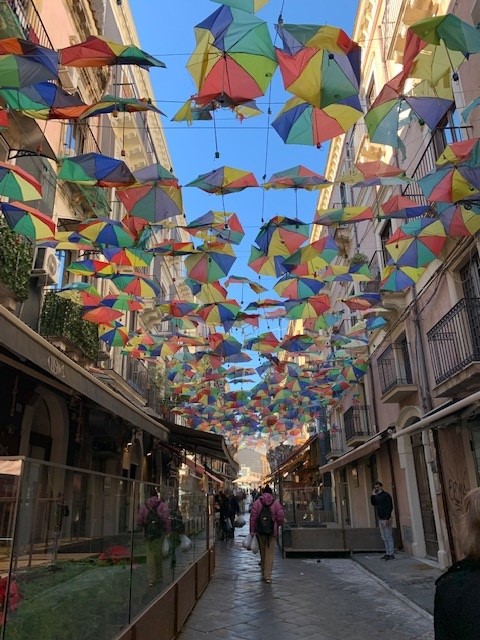
Fish market decorated with hundreds of umbrellas located at Alonzo Piazza, Sicily, Italy.
The colorful Pescheria Catania

This fish market is located in the Alonzo Piazza by the Ameanno Fountain built in the 1800s. This historical fountain was dedicated to the Ameano river that once flowed beneath the city before the Etna explosion of 1669. and happens every Monday-Saturday from morning to afternoon. While it is called the fish market, seafood galore is not only what is being sold. Cheese cashiers, spice sellers, and vegetable vendors alike line the streets to sell their wares. Let me just tell you, you have never seen such fresh food. The fruits and such had been picked that day, and were every color of the rainbow. And most of the seafood was so fresh, it was still alive. 

Wandering around the streets of Catania and stocking up on the best food I have had the privilege to buy, was awesome. We also had a sense of the culture of the fish market. You could tell who sold the best foods, and for the best prices by the size of their lines. The more people, the better the food. Everybody there was also the nicest people I have met. All they wanted to do was talk and feed you, not a bad situation if you ask me. I especially loved it because I am Sicilian and it felt like I was finally experiencing first hand what my mother would always describe her grandmother’s house to be like:  full of life, good food, and good people.

So overall, this little day trip held more genuine cultural experience in three hours than most full day guided tours or sightseeing bus rides. So, 10/10, I would recommend, and for me, all it took was taking the chance to apply. Me, a psych major in a wine studies course!

Sincerely,
Giselle G

Adventures on Mt Etna

This post was written by Caitlyn Connely, a senior accounting major.

I never thought that one day I would be able to say that I hiked up a volcano, nor did I think I would want to, but here I am! My name is Caitlyn Connely, I am a senior accounting major with a love for wine. On our first full day on the island of Sicily, Italy, we got to hike up Mt. Etna and learn all about the volcano and its surroundings. For some background, this volcano is located on the east coast of Sicily and is one of the world’s most active volcanoes. Just this last year, it erupted fifty times, the most recent one being this past December.

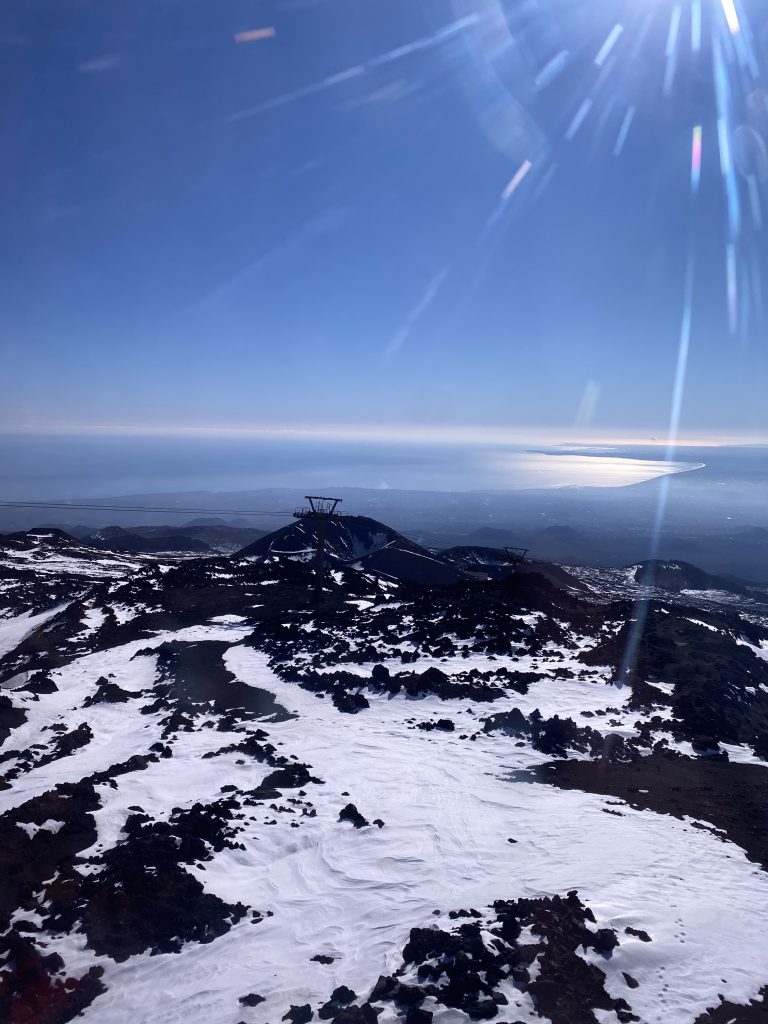
view of mt Etna from cable cars, showing bright blue sky, snowy mountains.
The view from the cable cars up Mt. Etna.

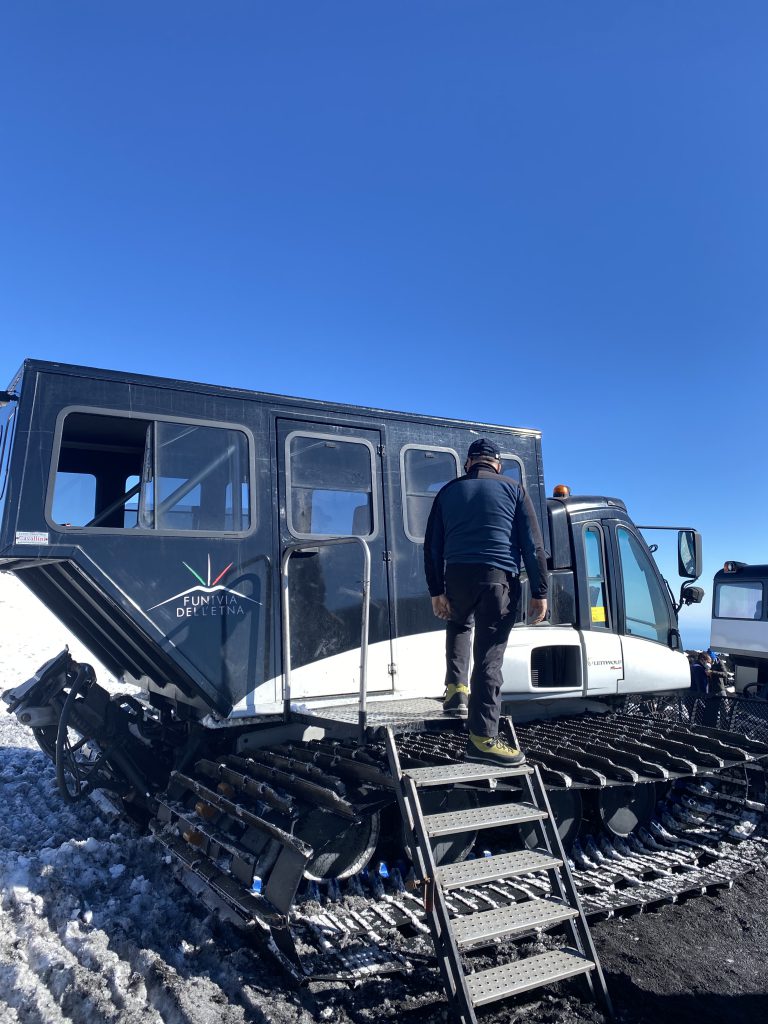
We started off today’s adventures by grabbing some gear that was needed to head up to the top of the mountain. Luckily, it was blue skies and sunny all day which made the day even better. We hopped into some cable cars that took us to the top which was about a thirty-minute ride and let me just say, the views were incredible, you could see the whole city! From there, we drove some sort of a tank to the most active crater on the volcano, which had been smoking all day. The smoke is typically white which is a good sign, once it shifts to a greyish black, that can be a sign of an upcoming eruption. The tank (snowcat) we rode in was very interesting as I had never seen anything like it, it was definitely prepared for any and all weather conditions. When we made it to our destination, we met with a volcanologist who shared all about the volcano and the crater we were stopped at.

Cable car climbing up the mountain.
The “tank” that took us up the mountain.

I learned that Mt. Etna, unlike other volcanoes, is a mix between windy and cold desert environments that allows for many plants to grow and creates very fertile soil, which is especially good for wine grapes. There are more than three hundred craters on the mountain but only four of them are active. One thing I found particularly interesting is that even though there are eruptions every few weeks with emergency plans set in place, the eruptions really aren’t something the citizens are worried about. The eruptions are typically very controlled and if there is any lava flow, they can create a path for it so the surrounding villages are safe. My favorite part was playing in some Italian snow, which is surprisingly different than our stubborn Oregon snow!

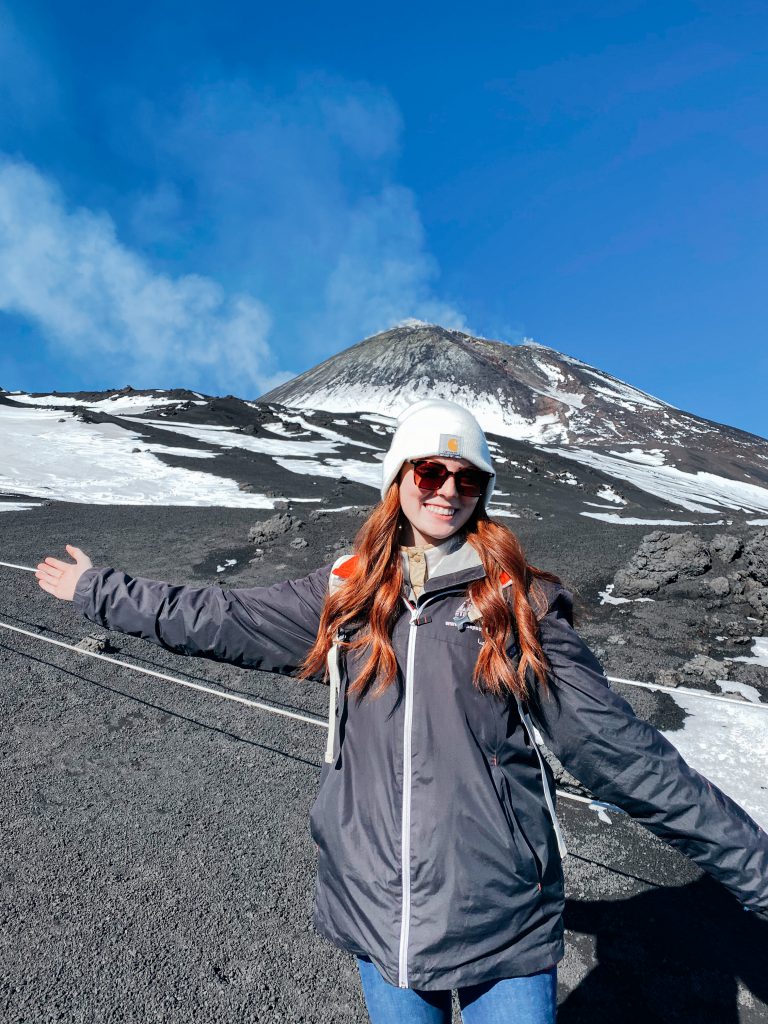
Student posing in front of snow-capped Mount Etna.
The most active crater on Mt. Etna.

Ciao,

Caitlyn

Let the Learning Begin!

Today’s post is written by Jakob Longbottom, a senior majoring in applied physics and math, and minoring in wine studies

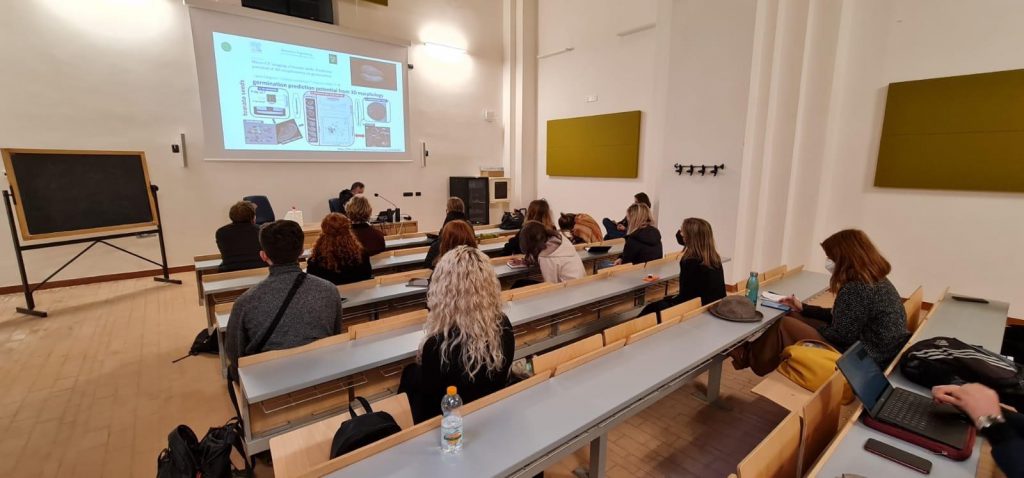
With the jet lag finally getting towards the end of its course, it was set to be a perfect Monday. To start the day off we took a short stroll down the road to theUniversity of Napoli Federico II, here we were able to listen to a couple of lectures given by professors as well as members of the Department of Agriculture. Weheard about research into different tressling systems and how they affected vines at a cellular level, how they were looking back in time to how vines were adapting in the past, how they were using 3D imaging of seeds to predict their effectiveness, as well as information about Mount Vesuvius, the great volcano that destroyed Pompeii.

Students facing a screen while sitting at tables, studying.
Professors and researchers from the University of Napoli Federico II shared information about their research.

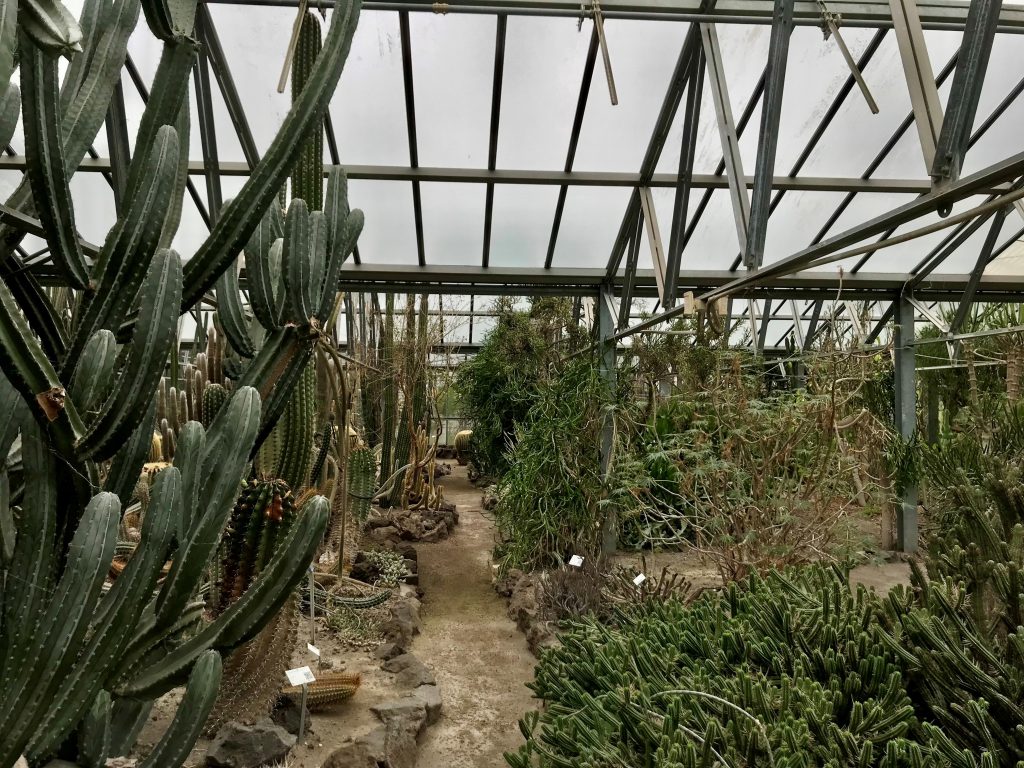
The university is the oldest public university in the world and is housed in an old palace, so it had amazing architecture with wonderful views. The grounds housed at least 12 cats (we had a short walk, so I am sure there are many more) that roamed freely around. We then proceeded across the street to the Botanical Garden of the Faculty of Agriculture of Naples. This was home to plants from allover the world and allowed for a beautiful walk. Inside the greenhouse, there were more cacti than I think knew existed.

Cacti in a greenhouse.
The university’s greenhouse contained more types of cacti than we ever knew existed

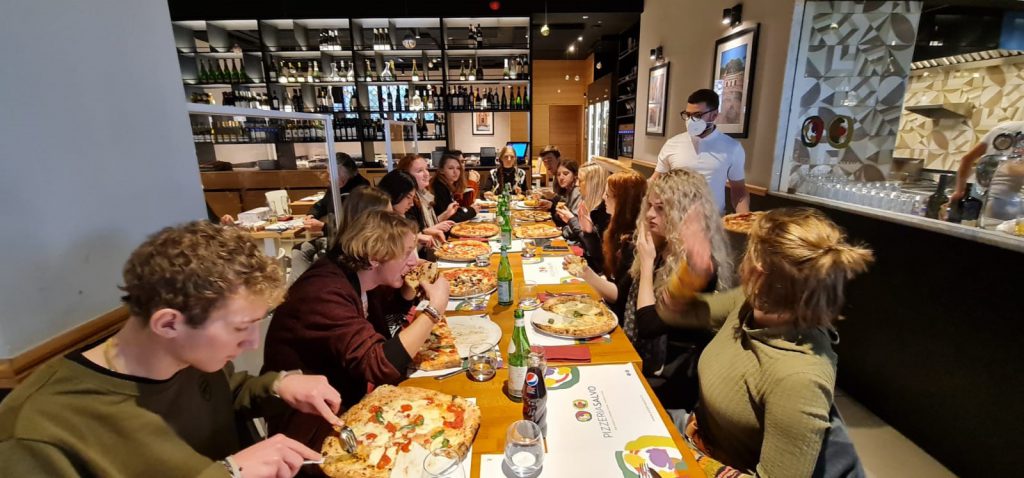
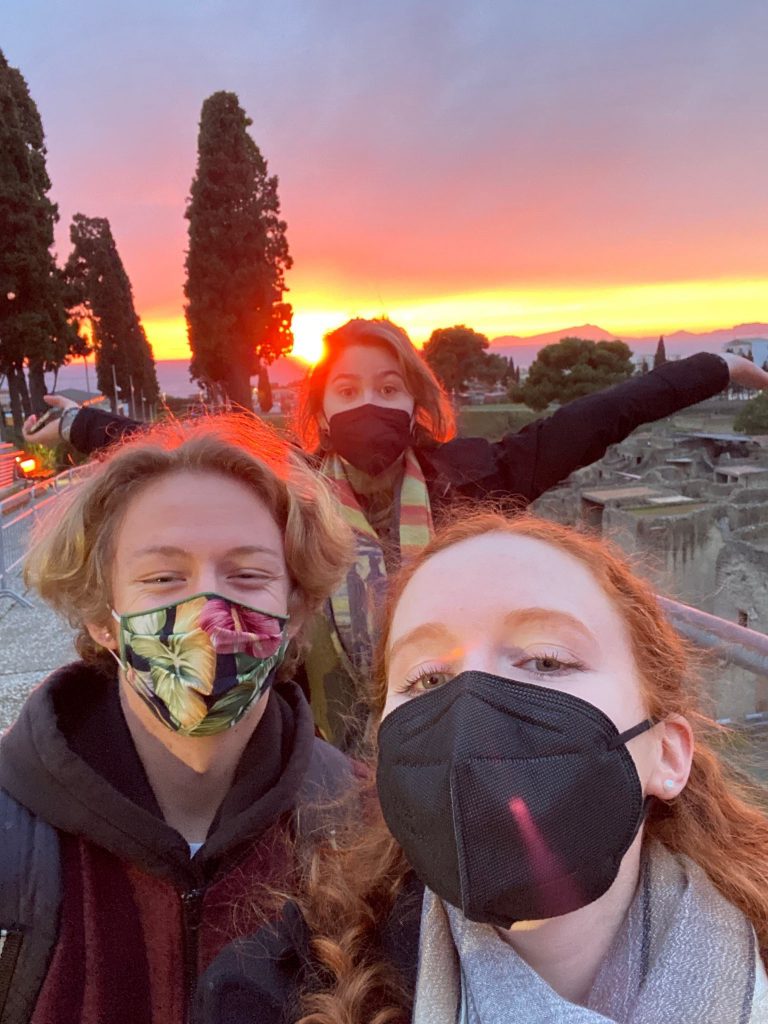
For lunch we had some delicious food at a pizzeria that was life changing. I think everyone was able to leave both happy and full. Our perfect first Monday of the trip was finished off with a beautiful sunset that we all enjoyed.

students eating pizza
We have eaten a lot of pizza, but it’s unanimous that this was the best!
Students basking in the sunset over Herculaneum
Soaking in the sunset over Herculaneum

A Day in Ancient Rome

This post was written by sophomore Kate Stamper,  who is majoring in Wine Studies and minoring in Studio Art

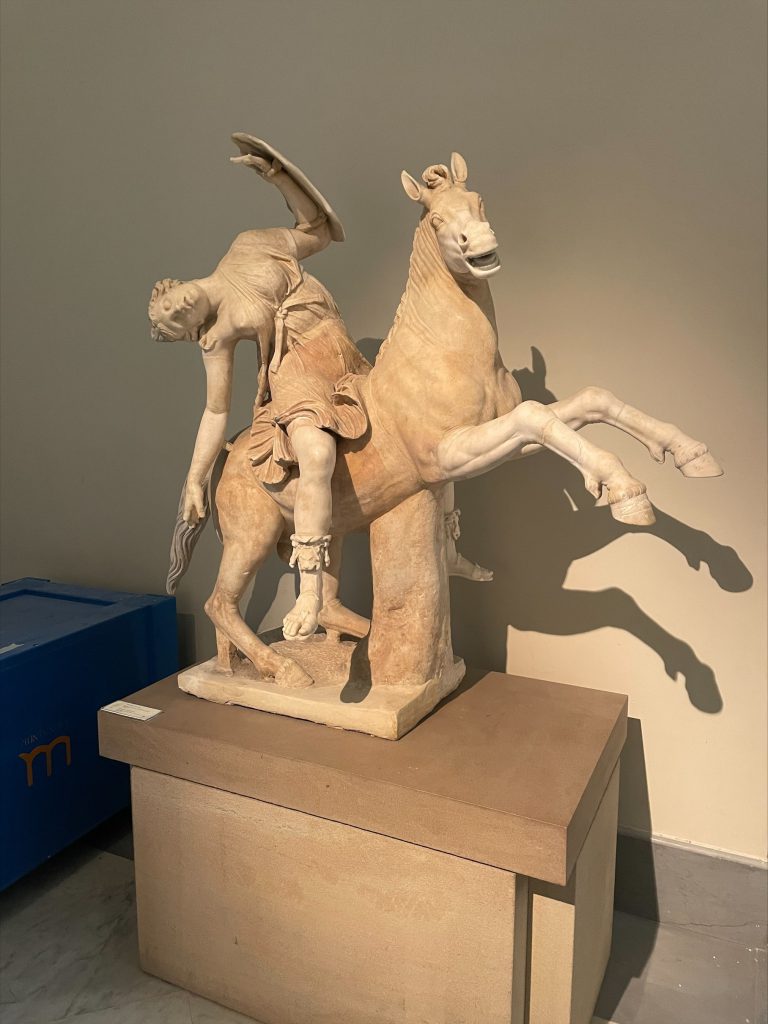
Today was a gorgeous day in Ercolano. For me, the day started with a delicious Italian cappuccino and cornetti pastries. Our first stop: The Archeological Museum of Italy in Naples.The entrance was a gorgeous ornate wooden door, followed by rows upon rows of ancient Greekand Roman sculptures. Every room had anoverwhelming amount of works, eachsculpture more life-like than the next. The ethereal beauty started to fade after a couplerooms and the sculptures actually started tocreep me out a bit.

A statue of a female warrior who was slain on her horse.
A statue of a female warrior who was slain on her horse. I loved that this statue depicted a woman in a role which is perceived as male most often.

A nice break from the sculptures was a modern art exhibit comparing ancient roman children’s toys to Barbies and Disney characters throughout the past couple decades. I spent a solid half hour in that room because of an interactive art piece that used pegs to create a pointillism style art piece.

Many of the sculptures and artifacts depicted vessels like amphorae which were used to store wine. It was interesting to see them outside of a textbook and see the pottery up close and in person. Many of our winemaking techniques and technologies have evolved from Greek and Roman winemaking. The process is largely the same, but the materials we use are a bit more refined now.

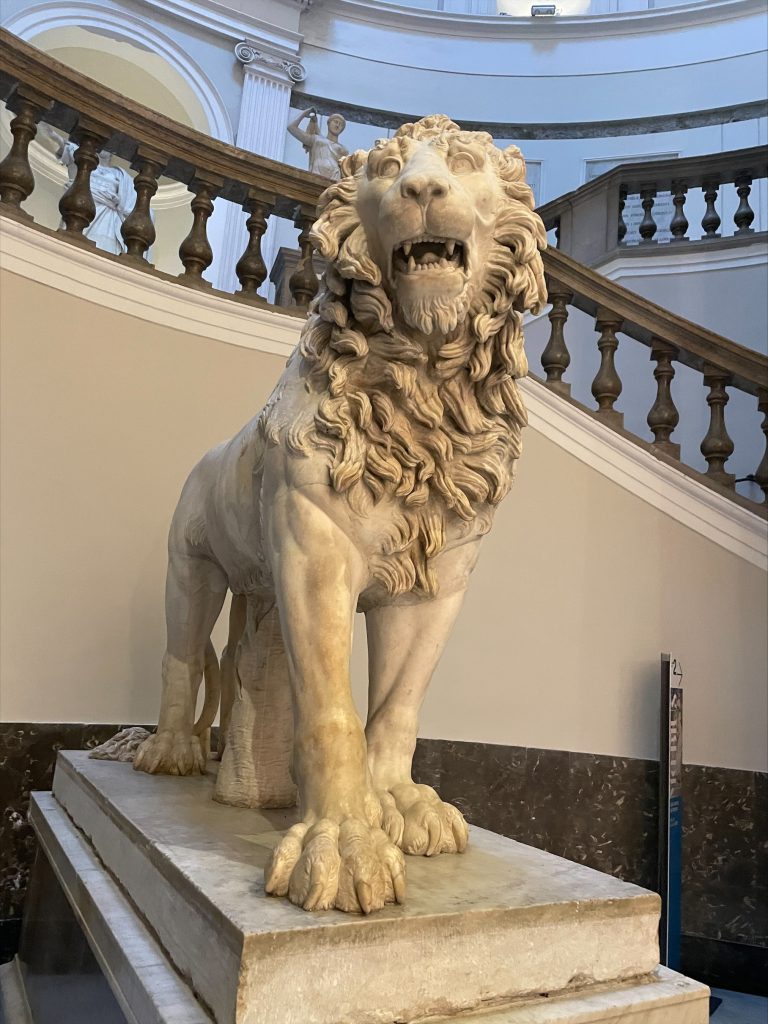
This Roman statue of a lion carved out of marble.
This Roman statue of a lion carved out of marble. This statue guarded the staircase to the second floor.

After the museum, we stopped for lunch at a pizzeria with a stunning view of the sea in Ercolano. This was only a short walk from our next destination:  Herculaneum. This ancient city was preserved by the same eruption which coated Pompeii in pyroclastic material. The key difference between the sites is the nature of the materials which coated each city. Herculaneum contains many wooden objects like doors and furniture, which did not survive in Pompeii. The structure of the city is very different as well. Herculaneum used a brick-laying method involving diamond-shaped stones which were much sturdier and more earthquake-resistant than the architecture in Pompeii.

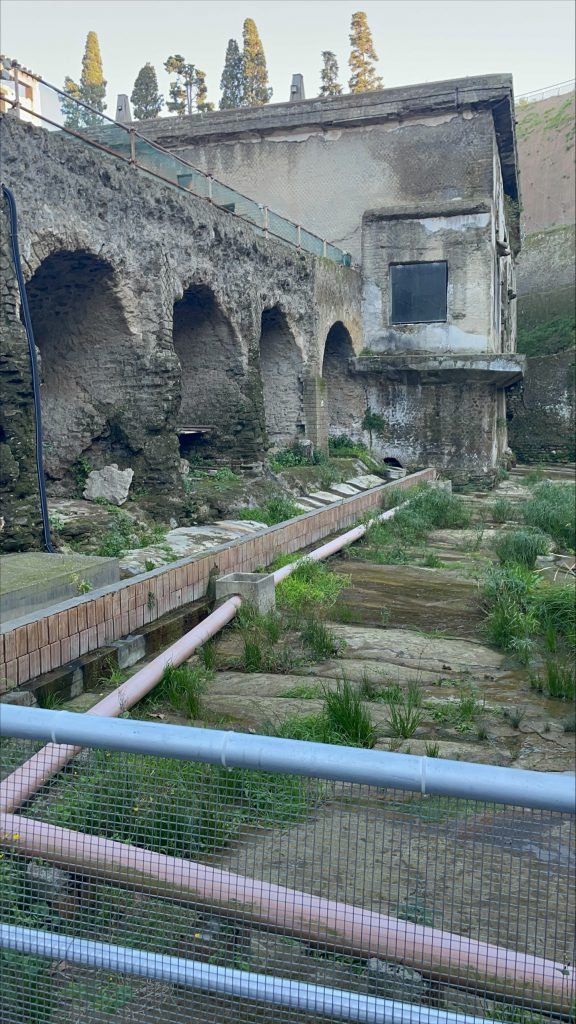
Stone ruins along the original coastline of Herculaneum, Italy.
This is the original coastline of Herculaneum. Many of the citizens of Herculaneum fled here during the eruption of Mount Vesuvius but were unable to escape.

Walking through Herculaneum felt like taking a walk through the past. The grooves in the roads from ancient chariots are still visible in the cobblestone streets. Ancient paintings and mosaics help mark important buildings and give hints about their purposes. It was fun to imagine the streets bustling with life thousands of years ago.

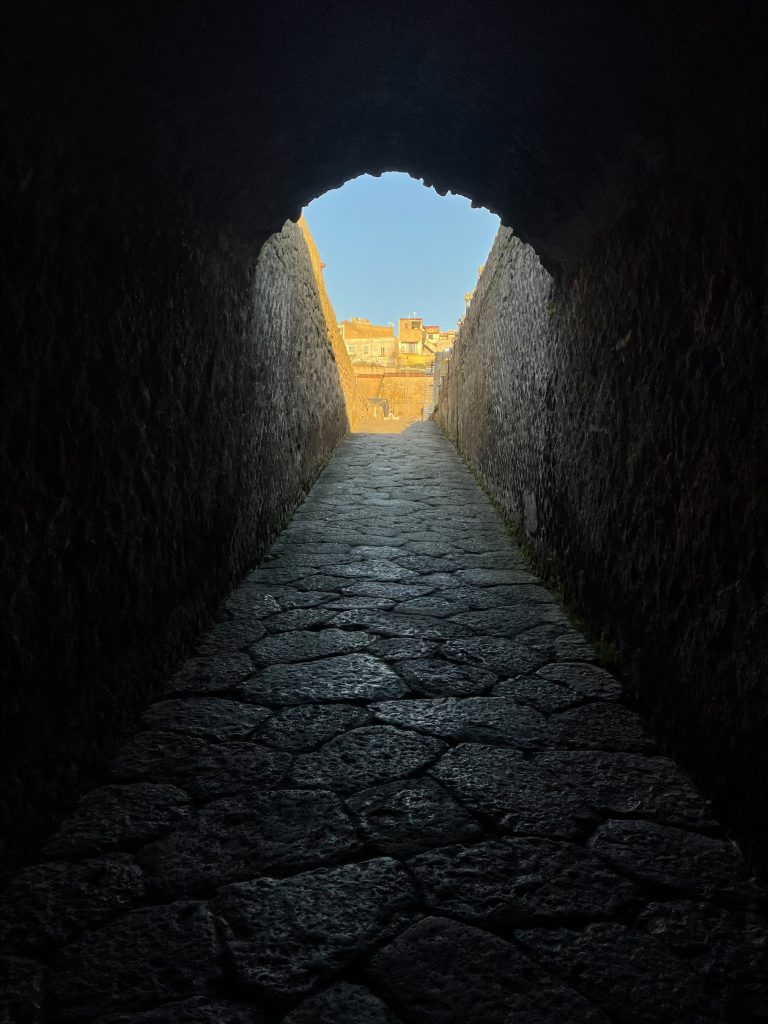
A tunnel leading to a city.
This tunnel leads from the original coastline and docks to the higher ground where most of the city was built.

Between the sculptures at the museum and the ruins at Herculaneum, I was able to understand the purpose and role wine played in Roman life. Wine was important, and it was consumed by everyone in Roman society. In American society less than half of us drink wine, but that isn’t truein many European countries. Wine is much more than a beverage, it is a product of culture and holds an incredible amount of traditions in cultures across Italy and the world. Wine is a way of life for many Italians today, just as it was for many Romans and Greeks.

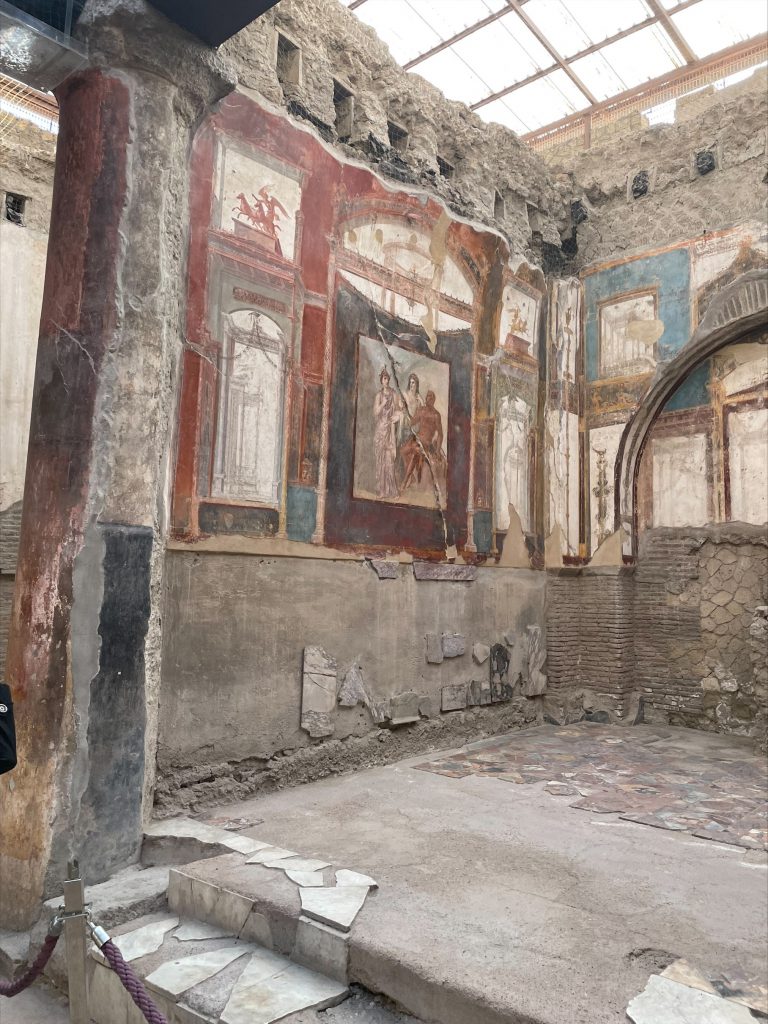
paintings in Herculaneum, Italy
Many of the paintings in Herculaneum are still intact due to the type of volcanic material which coated this side of the volcano.